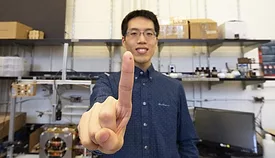
ALBUQUERQUE, NM—Sandia National Laboratories has developed a 3D-printable material for enclosures that changes color when it has been tampered with. The material is made of metal ion microspheres.
The appeal of 3D printing is strong and growing among manufacturers in all sectors. For those in the aerospace industry, this technology offers a way to quickly and economically produce lighter parts that reduce airplane mass and fuel consumption.
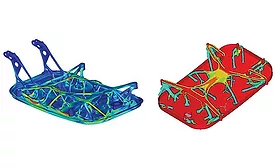
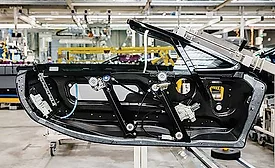
Automotive engineers are intrigued by the numerous benefits of metal additive manufacturing for applications ranging from seat brackets to under-the-hood components.
Plastic injection molding, metal casting and metal stamping are age-old processes that form the backbone of manufacturing. Traditionally, there's no better way to mass-produce plastic or metal parts.
HUNTSVILLE, AL—The University of Alabama's Office for Operational Excellence here will participate in a recently funded program to integrate additive manufacturing into the United States Army, and pilot an additive manufacturing-based supply chain.
WEST CONSHOHOCKEN, PA—ASTM International’s committee on additive manufacturing technologies is developing a standard for mechanical testing of additive-manufactured plastics.
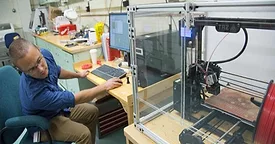
TORONTO—Assembling a microrobot used to require a pair of needle-nosed tweezers, a microscope, steady hands, and at least eight hours. But, now University of Toronto engineering researchers have developed a method that requires only a 3D printer and 20 minutes.
Many technologies that we take for granted today were originally "invented" in science fiction. These include mobile phones, smart watches, tablet computers, holograms, electric submarines, antidepressants, radio, television, nuclear weapons, lasers, video conferencing, credit cards, wireless headphones, self-driving cars, unmanned aerial vehicles, escalators, radar, automatic doors, Tasers, virtual reality, space travel, individually targeted advertising, and even insect-derived foods.
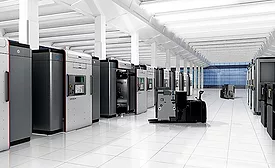
Factories of the future will feature advanced technology, such as additive manufacturing, artificial intelligence, augmented reality, data analytics and digital twins. While many manufacturers are still ramping up their Industry 4.0 initiatives, several assembly plants are already at the forefront. They are embracing the Fourth Industrial Revolution and reaping the benefits.