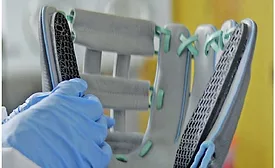
If you're trying to lose weight, some types of sandwiches are good. In particular, structural sandwiches are popular with engineers engaged in vehicle lightweighting efforts, because they can produce subassemblies that are both light and stiff.
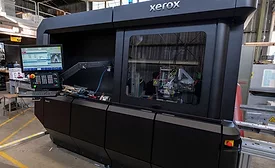
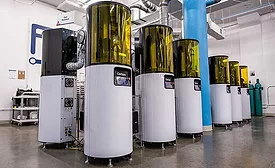
CARY, NC—Xerox Elem Additive Solutions has installed an ElemX 3D metal printer at the Manufacturing Demonstration Facility at Oak Ridge National Laboratory (ORNL).
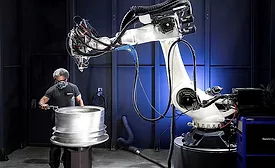
Traditionally, additive manufacturing has been used in the aerospace industry to print small metal parts, such as brackets and fuel nozzles. But, Relativity Space Inc. hopes to change that scenario by thinking big.
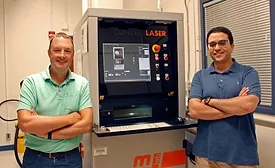
TUCSON, AZ—NASA is spending $750,000 on a project undertaken by two University of Arizona researchers who use machine learning methods to mitigate defects that occur during the 3D printing of jet engine parts.
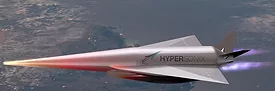
SYDNEY—Hypersonix Launch Systems, an Australian engineering, design and build company, is investigating the use of 3D printing to make flight-critical components for its green hydrogen-powered launch vehicles at the University of Sydney.
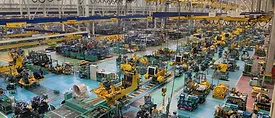
Demand for "big iron" is booming, fueled by the rebounding global economy and the Biden administration’s infrastructure initiative. That’s good news for manufacturers of tractors and other types of agricultural and construction equipment.
An increased concern for personal appearance is leading to an increased need for razors in a big way. In fact, researchers are projecting the global razor market to surpass $22 billion by 2030.
The best fielders in Major League Baseball are annually rewarded a Gold Glove. But, only one of them, shortstop Francisco Lindor of the New York Mets, can claim that his glove, the REV1X, is 3D printed.
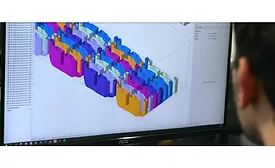
Additive manufacturing is a popular alternative to traditional plastic injection molding, metal casting and metal stamping, because it enables engineers to consolidate parts and produce components in complex shapes.
HOUSTON—Local Motors, a motor-vehicle manufacturer, and SABIC, a chemical company, have completed a joint study on the feasibility of recycling scrap thermoplastic parts and shavings from the 3D printing process, rather than sending them to a landfill.