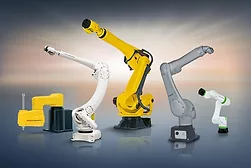
CHICAGO—The number of industrial robot installations in the United States increased 11 percent to reach 38,000 units in 2025, according to new data just released by the International Federation of Robotics.
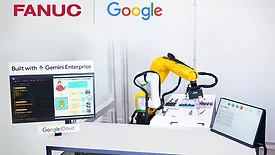
BIRMINGHAM, Mich. — FANUC Corp. is collaborating with Google to advance “physical AI” capabilities in industrial robots, combining FANUC’s automation systems with Google’s artificial intelligence technologies to support more adaptive manufacturing applications.
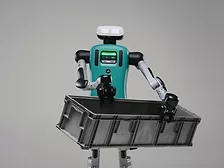
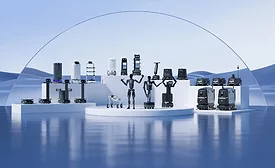
DALLAS—Pudu Robotics is opening a new U.S. headquarters in Dallas as part of a broader effort to expand its robotics footprint across industrial and commercial environments.
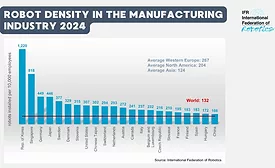
FRANKFURT, GERMANY—Robot density increased across major manufacturing regions in 2024, as companies continued investing in automation to improve productivity and address labor challenges, according to new data from the International Federation of Robotics.
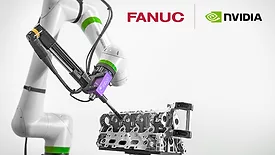
ROCHESTER HILLS, MI — FANUC America is collaborating with NVIDIA to advance the use of physical AI in industrial robotics, combining automation systems with AI computing and simulation technologies to support more adaptive manufacturing environments.
BIRMINGHAM, Mich. — As National Robotics Week highlights the rapid evolution of automation, manufacturers are beginning to deploy a new generation of intelligent robotic systems capable of adapting to real-world production environments.
Robotics is no longer defined by motion alone. The next phase of automation is being driven by intelligence — systems that can perceive, decide and adapt in real time on the factory floor.
BIRMINGHAM, Mich. —
As National Robotics Week highlights advances across automation and AI, manufacturers are seeing those innovations move rapidly from concept to production environments.
Industrial robotics is entering a new phase. What began as fixed automation for repetitive tasks is evolving into flexible systems designed to work alongside people, adapt to changing conditions and take on increasingly complex assembly work. Recent developments across manufacturing show a clear shift: robots are no longer just improving efficiency — they are expanding what can be automated.
ROCHESTER HILLS, MI — FANUC America is investing $90 million to expand its U.S. manufacturing footprint, with plans to build a new 840,000-square-foot facility in Michigan to support future robot production.
FREMONT, Calif. — Manufacturers have long automated repetitive, high-volume production tasks, but many assembly operations that require dexterity and adaptability have remained difficult to automate. eBots Robotics, a Silicon Valley-based company, is among those focusing on these applications. The company has developed dual-arm robotic systems designed to perform assembly work that traditionally required skilled human operators, particularly in industries such as electronics, semiconductors, medical devices and electric vehicles.
PALO ALTO, Calif. — Rhoda AI has introduced FutureVision, a robotic intelligence platform designed to help robots operate reliably in real-world production environments where materials, layouts and workflows constantly change. The system uses video-predictive control to continuously observe and predict physical interactions, enabling robots to adapt in real time rather than follow fixed, pre-programmed trajectories.