National Robotics Week
Where Robotics Is Headed: From Tools to Teammates on the Factory Floor
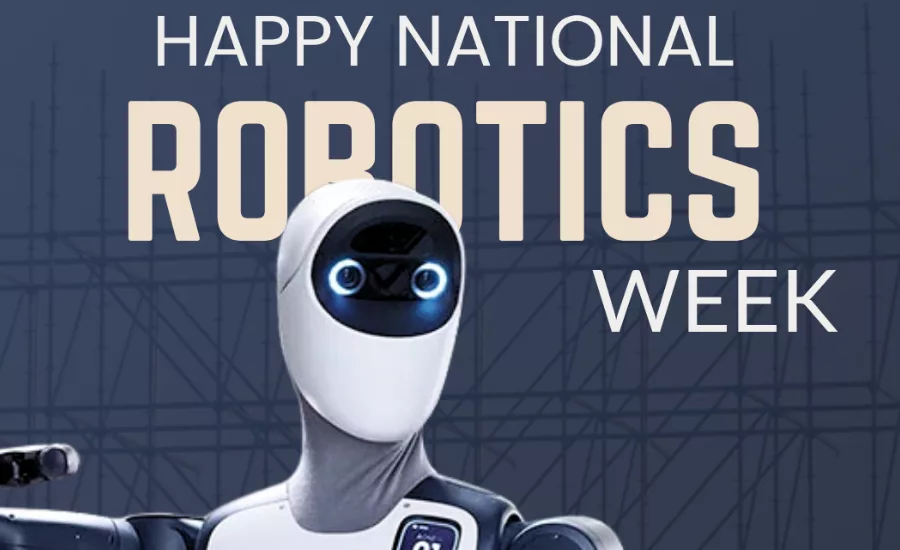
BIRMINGHAM, Mich. — As National Robotics Week highlights advances across automation and AI, manufacturers are seeing those innovations move rapidly from concept to production environments. Industrial robotics is entering a new phase. What began as fixed automation for repetitive tasks is evolving into flexible systems designed to work alongside people, adapt to changing conditions and take on increasingly complex assembly work. Recent developments across manufacturing show a clear shift: robots are no longer just improving efficiency — they are expanding what can be automated.
Traditional industrial robots were built for consistency, excelling at repeatable, high-volume tasks with little variation. But manufacturers are now pushing automation into environments where parts vary, processes change and human judgment has historically been required. New systems highlighted in recent product developments are targeting these high-variability applications, including cable routing, precision component placement and complex multi-step assembly.
Humanoid robots are beginning to move into production environments. In some facilities, these systems are being used for assembly tasks, particularly in automotive manufacturing, where they can operate in spaces designed for human workers. Their ability to use existing tools and navigate conventional workspaces allows manufacturers to expand automation without redesigning entire production lines.
One of the clearest trends emerging this year is the focus on robotic hands and manipulation. Technologies such as multi-finger, high-degree-of-freedom hands are being developed to enable robots to handle delicate components and perform tasks traditionally done by human operators. The launch of new systems such as Tesollo’s robotic hand, alongside broader investments in manipulation technologies, reflects growing industry focus on dexterity as a key barrier to automation.
This shift is happening alongside a broader move toward Industry 5.0, where collaboration between humans and machines becomes central to production strategy. Rather than replacing workers, robotics is increasingly being deployed to enhance human capabilities, improve ergonomics and enable workers to focus on higher-value tasks.
Taken together, these developments point to a broader transformation in manufacturing. Robots are moving from fixed automation to adaptive systems, from single-task machines to multi-function platforms and from isolated equipment to integrated teammates on the factory floor. The next phase of robotics will be defined less by speed and repeatability, and more by flexibility, intelligence and interaction with human workers.
For manufacturers, that means the scope of automation is expanding — not just into new technologies, but into new types of work.
The pace of robotics development suggests these technologies will continue expanding into new areas of manufacturing and beyond, making robotics an ongoing focus rather than something confined to a single week of attention.
Looking for quick answers on assembly and manufacturing topics? Try Ask ASM, our new smart AI search tool. Ask ASM
Looking for a reprint of this article?
From high-res PDFs to custom plaques, order your copy today!