Engineers at Stanford University have developed a new way to make lithium-ion battery packs last longer and suffer less deterioration from fast charging. It could enable electric vehicle batteries to handle more charge cycles and last longer.
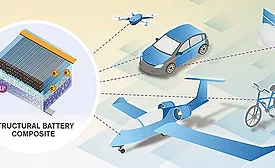
Lightweight batteries will be one of the next big breakthroughs in EV technology. One possibility that intrigues engineers is structural batteries, which can be built into the structure of a vehicle’s body or chassis to fulfill load-bearing needs while producing power.
Solid-state batteries use solid electrolytes, not liquid, which results in a higher energy density than traditional lithium-ion chemistries. After years of development, they promise to be the next big trend in electric vehicle technology.
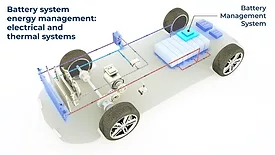
Whether it rolls, floats or flies, every electric vehicle needs sensors to monitor current, temperature and voltage. Battery management systems (BMS) are the “brains” responsible for the efficiency, safety and longevity of lithium-ion batteries.