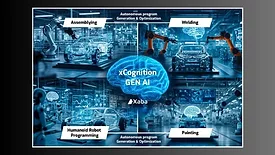
Is ML Useful In Integration? You may (still) be wondering whether any of this stuff is actually useful in real-world integration and factory automation scenarios.
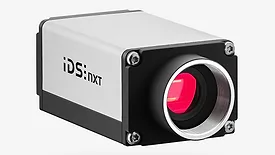
All the robots in the world won’t help your assembly process if your parts are not in the right place or the right orientation for pick up. Vision systems can help. Here’s a look at four of the latest technologies.
The question is not whether manufacturers should adopt AI, but how quickly they can start reaping its benefits.
February 3, 2025
AI is revolutionizing quality control in electronics manufacturing by enhancing inspection processes and reducing costs. Anna-Katrina Shedletsky emphasized the power of machine learning and deep learning to automate tasks, improve product quality, and deliver significant ROI, making quality control the perfect starting point for AI implementation.
The manufacturing industry is evolving due to Artificial Intelligence (AI) and robotics, significantly impacting job outlooks, as highlighted by the U.S. Bureau of Labor Statistics. This article will explore quality trends and provide guidance for future changes.
AI is profoundly reshaping manufacturing, enabling businesses to achieve higher quality standards, greater operational efficiency and more imaginative resource utilization.
AI-powered predictive maintenance helps anticipate machine failures, allowing for proactive action that saves time and costs. According to a Deloitte study, 86% of manufacturing executives believe that AI and intelligent technologies will enhance competitiveness in the next five years.
Machine vision is vital for industrial automation, providing essential image analysis amid labor shortages. Effective implementation relies on precise lighting to ensure high-quality images, with different applications requiring specific setups, such as backlights for measurements and line scan lights for fast-moving materials.