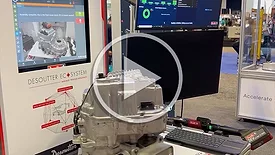
What happens when assembly systems, process control, motion tracking and production data all operate in separate silos? In this episode of ASSEMBLY Audible, Russ Hughes of Desoutter Industrial Tools discusses the manufacturing challenges that inspired the Desoutter Ecosystem and why manufacturers are increasingly focused on connecting fragmented assembly operations across the factory floor.
BIRMINGHAM, Mich. — Ford has rehired some 300 experienced engineers and technical specialists over the past three years after determining that artificial intelligence and automated quality systems alone were not enough to improve vehicle quality.
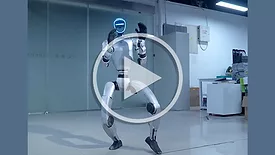
Joe Teague, owner and organizer of the Advanced Manufacturing Expo, says humanoid robots will be a major part of this year’s event in Grand Rapids. DOBOT will bring Atom, its humanoid robot, for a keynote and live demonstration.
Aron Semle, CTO of HighByte, explains the “Diet Coke problem” — a real example of tribal manufacturing knowledge that often exists only inside the heads of experienced operators and how manufacturers can solve this issue before workers leave for good.
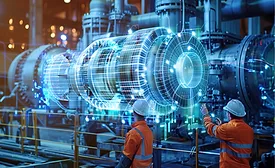
NEW YORK — AI-enabled digital twins are moving deeper into high-volume manufacturing as producers look for faster ways to reduce waste, improve quality and adjust production processes in real time.
Manufacturers are rapidly adopting AI, but most deployments remain limited to small-scale pilots. In this episode, Mike Sabin, CEO of Revalize, explains why scaling AI across the enterprise is proving far more difficult than expected.
Jon Sobel, CEO and co-founder of Sight Machine, discusses how the company’s updated AI platform is designed to help process experts turn plant-floor signals, equipment data and operational knowledge into recommendations that can improve production performance.
AUBURN HILLS, Mich. — ABB Robotics is collaborating with PSYONIC to advance robotic gripping and dexterity by using real-world manipulation data generated from human prosthetic use.
AHMEDABAD, India — Adani Group and Jabil Inc. plan to form a strategic alliance to manufacture AI data center infrastructure hardware in India, including liquid-cooled AI racks, servers, storage, networking systems and related power and thermal management equipment.
AI is changing machine vision, but not in the way many manufacturers expect. Matt Moschner, CEO of Cognex, explains where AI vision systems outperform traditional tools, where they don’t and why most real-world applications rely on a hybrid approach.




.webp?height=168&t=1781635555&width=275 "3 ABB Robotics and PSYONIC collaborate to revolutionize grasping and dexterity, a core capability for Autonomous Versatile Robotics (AVR™).jpg")