The company’s technology uses AI and 3D vision to provide adaptive control of the adhesive dispensing process.
October 29, 2025
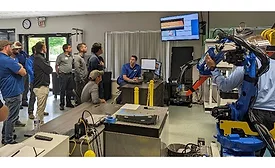
ANN ARBOR, MI—Coherix is expanding its production and product development space to meet growing demand for AI-based systems to control the application of adhesives during assembly of automotive and electronic products.
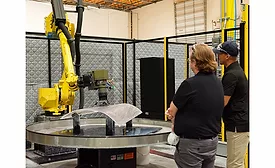
CARSON, CA—The U.S. Air Force has awarded a contract to GrayMatter Robotics to develop an AI-powered robotic system to reduce optical distortion and defects on transparent acrylic and polycarbonate structures.
U.S. manufacturing executives remain moderately optimistic about the year ahead, despite persistent challenges such as inflation, supply chain disruptions, and tariff pressures.
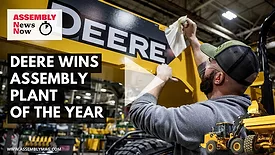
Deere & Co.'s flagship factory in Davenport, IA is transforming itself with productivity enhancing tools, such as 5G networks, data analytics and digital twins. We take you behind the scenes at this world-class facility.
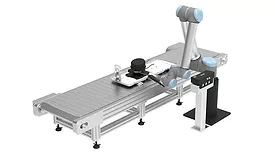
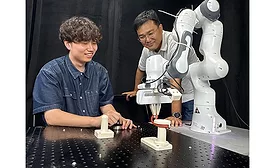
DAEJEON, South Korea—Engineers at the Korea Advanced Institute of Science and Technology have developed a way for robots to precisely grasp deformable objects and manipulate them.