Assembly Magazine logo
search
Ask ASSEMBLY AI
cart
facebook twitter linkedin youtube
  • Sign In
  • Create Account
  • Sign Out
  • My Account
Assembly Magazine logo
  • TRENDS
    • Ask ASSEMBLY AI
    • Trends
    • News
    • New Products
  • INDUSTRIES
    • Aerospace
    • Appliance
    • DFMA Assembly
    • Medical Devices
    • Green Manufacturing
    • Lean Manufacturing
    • Machinery Assembly
    • Electronics Assembly
    • Automotive
  • TECHNOLOGIES
    • Adhesives & Dispensing
    • Assembly Presses
    • Automated Assembly Systems
    • Manufacturing Management
    • Manufacturing Software
    • Motion Control
    • Screwdriving & Riveting
    • Robotics
    • Test & Inspection
    • Plastics & Metal Welding
    • Wire Processing
    • Workstations
  • AUTONOMOUS & ELECTRIC MOBILITY
    • AEM Magazine Archives
    • Autonomy
    • Electrification
    • Mobility Services
    • Assembly & Testing
    • AV/EM News
  • MEDIA
    • Ask ASSEMBLY AI
    • Podcasts
    • Assembly News Now
    • Assembly TV
    • Webinars
    • eBooks
  • EVENTS
    • Calendar
    • The ASSEMBLY Show
  • MORE
    • Exclusives >
      • Plant of the Year
      • Capital Spending
    • Buyers Guide >
      • Supplier Insights
    • Classifieds
    • Featured Products
    • Newsletters
    • Store
    • White Papers
    • Columns
    • Sponsor Insights
  • INFOCENTER
    • Assembly & Test Solutions
  • EMAGAZINE
    • eMagazine
    • Archive Issues
    • Advertise
    • Contact Us
    • Sign Up
TechnologiesColumnsOn Campus

Artificial Intelligence Helps Make Titanium More Useful
By Austin Weber
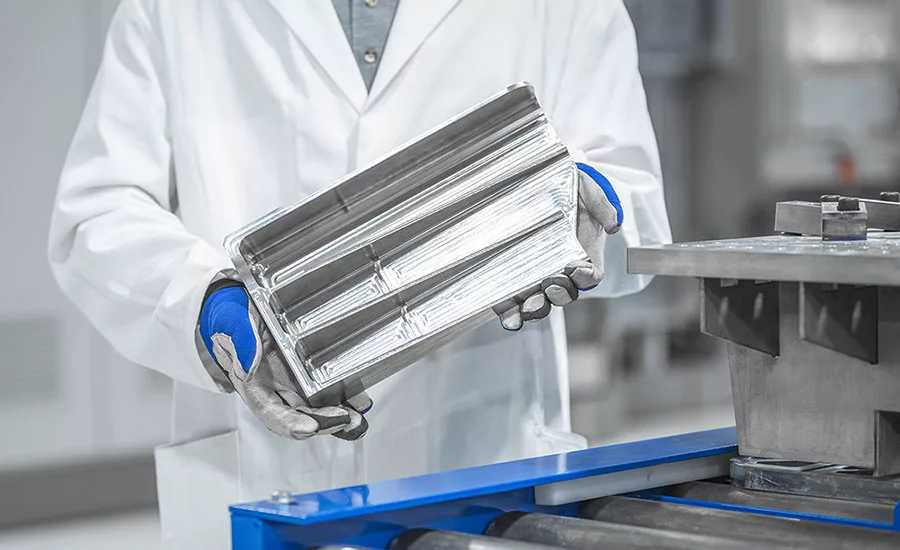
Titanium

Titanium has the highest strength to weight ratio of any metal.

Photo courtesy Norsk Titanium

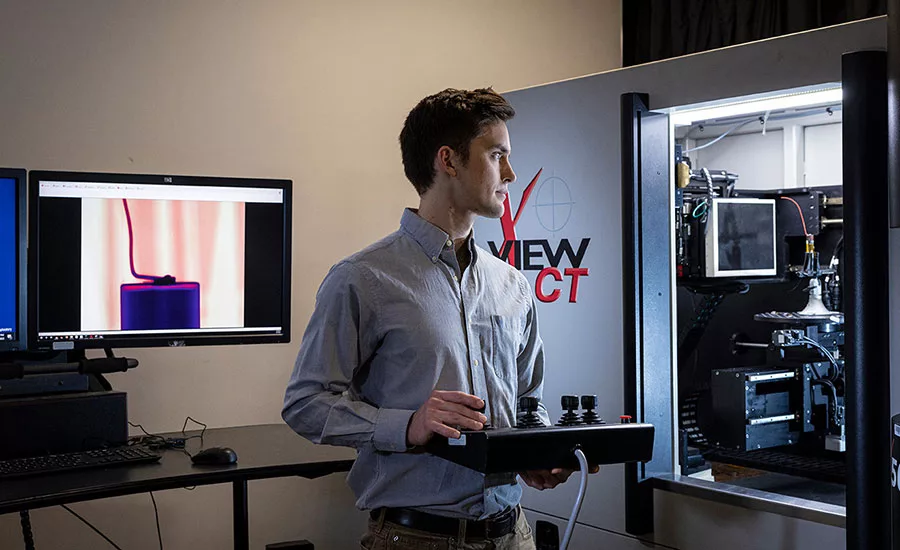
using high-resolution imaging to optimize titanium alloys

Engineers are using high-resolution imaging to optimize titanium alloys.

Photo courtesy Johns Hopkins Applied Physics Laboratory

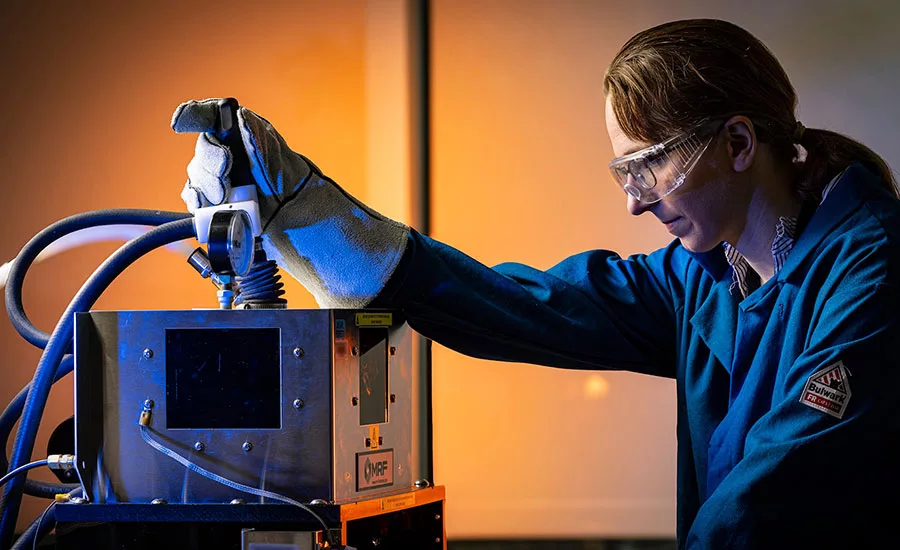
arc melting

Additive manufacturing, arc melting and artificial intelligence technology are used to develop next-generation applications for titanium.

Photo courtesy Johns Hopkins Applied Physics Laboratory
Titanium
using high-resolution imaging to optimize titanium alloys
arc melting
June 16, 2025

Titanium has the highest strength-to-weight ratio of any metal. It’s used to make everything from golf clubs to rocket engines and brake calipers to orthopedic implants. However, the lightweight metal has traditionally required an expensive, slow and resource-intensive manufacturing process.

Engineers at the Whiting School of Engineering at Johns Hopkins University and the Johns Hopkins Applied Physics Laboratory (APL) are harnessing additive manufacturing and artificial intelligence technology to develop new ways to improve both the speed of production and the strength of titanium parts. The goal of the initiative is to enable manufacturers to use more titanium in applications ranging from deep sea to outer space.

“We’re not just making incremental improvements,” says Steve Storck, Ph.D., chief scientist for additive manufacturing at APL. “We discovered processing conditions that pushed performance beyond what was thought possible. We’re finding entirely new ways to process these materials, unlocking capabilities that weren’t previously considered.”

Storck and his colleagues are focusing their R&D efforts on Ti-6Al-4V, a titanium alloy known for its high strength and low weight. They leveraged AI-driven models to map out previously unexplored manufacturing conditions for laser powder bed fusion, a popular method of metal 3D printing.

Their findings challenge long-held assumptions about process limits, revealing a broader processing window for producing dense, high-quality titanium with customizable mechanical properties.

“Producing Ti64 parts often requires significant material removal from a billet, resulting in a high buy-to-fly ratio, meaning much of the raw material is wasted and not used in the final product,” explains Storck. “While additive manufacturing provides a promising alternative to reduce material waste and the associated costs, it can be slower. [Our] recent work demonstrates one method to reduce the production time for near-net-shape-parts, making the process more efficient.”

The research revealed a high-density processing regime previously dismissed due to concerns about material instability. With targeted adjustments, the team unlocked new ways to process Ti-6Al-4V, which can be used for additive manufacturing applications.

Looking for quick answers on assembly and manufacturing topics? Try Ask ASM, our new smart AI search tool. Ask ASM →

“Laser powder bed fusion is a process in which a high-powered laser fuses layers of metal powder to produce dense, high-strength parts with complex geometries,” says Storck. “This technique is useful for applications requiring precision and performance.

“Titanium’s properties can be affected by the way the material is processed,” Storck points out. “Laser power, scan speed and spacing between laser tracks determine how the material solidifies—whether it becomes strong and flexible or brittle and flawed. Traditionally, finding the right combination required slow trial-and-error testing.”

When Storck began studying additive manufacturing a decade ago, materials availability was a challenge. “Each design required a specific material, but robust processing conditions didn’t exist for most of them,” he explains. “Titanium was one of the few that met Department of Defense needs and had been optimized to match or exceed traditional manufacturing performance. We knew we had to expand the range of materials and refine processing parameters to fully unlock additive manufacturing’s potential.”

Stock and his colleagues focused on defect control and material performance. Building on that groundwork, they used machine learning technology to explore a wide range of processing parameters.

“We’re leveraging AI tools to optimize the manufacturing process and improve materials performance,” says Storck. “Our findings hold promise for industries that rely on high-performance titanium parts. For instance, the ability to manufacture stronger, lighter components at greater speeds could improve efficiency in aviation, medical devices and shipbuilding.

“We envision a paradigm shift where future additive manufacturing systems can adjust as they print, ensuring perfect quality without the need for extensive post-processing, and parts that can be born qualified,” adds Storck.

See more articles from our July 2025 issue!


For more information on titanium, read these articles:

  • Aerospace Assembler Forms Titanium Parts.
  • Hot Forming Titanium.
  • Additive Manufacturing Helps Boom Supersonic Produce Complex Parts.
KEYWORDS: additive manufacturing Artificial Intelligence (AI) lightweight materials lightweighting titanium

Share This Story

Looking for a reprint of this article?
From high-res PDFs to custom plaques, order your copy today!

Austinweber headshot
Austin has been senior editor for ASSEMBLY Magazine since September 1999. He has more than 21 years of b-to-b publishing experience and has written about a wide variety of manufacturing and engineering topics. Austin is a graduate of the University of Michigan.

Recommended Content

JOIN TODAY
To unlock your recommendations.

Already have an account? Sign In

  • Made in the U.S.A.

    Consumer Products Manufacturing: Made in the USA

    Supply chain lessons learned during the coronavirus...
    Automated Assembly Systems
    By: Austin Weber
  • Best Practices for Press-Fit Assembly

    Best Practices for Press-Fit Assembly

    In manufacturing, ironclad formulas for success are hard...
    Assembly Presses
    By: Jim Camillo
  • aem0523leader-tesla1.jpg

    Tesla Rethinks the Assembly Line

    Engineers at Tesla Inc. have developed a new process that...
    Automotive Assembly
    By: Austin Weber
Manage My Account
  • eMagazine Subscription
  • Assembly Newsletters
  • Online Registration
  • Subscription Customer Service
  • Manage My Preferences

More Videos

Sponsored Content

Sponsored Content is a special paid section where industry companies provide high quality, objective, non-commercial content around topics of interest to the ASSEMBLY audience. All Sponsored Content is supplied by the advertising company and any opinions expressed in this article are those of the author and not necessarily reflect the views of ASSEMBLY or its parent company, BNP Media. Interested in participating in our Sponsored Content section? Contact your local rep!

close
  • ultrasonic welding
    Sponsored bySonobond Ultrasonics

    Engineering Efficiency in High-Performance Assembly: How Ultrasonic Welding Enhances Throughput, Reliability and Quality

  • UV curing system
    Sponsored byDymax

    Why UV Intensity Alone Doesn’t Define Curing Performance

  • wooden pallets
    Sponsored byLEAN Manufacturing Products

    Eliminating Waste on the Shop Floor: Applying Lean Principles to Improve Manufacturing Efficiency

Popular Stories

Ferrari

Ferrari Unveils Four-Door EV

ASSEMBLY News Now, episode-30: Volvo Redesigns EV Manufacturing

Volvo Redesigns EV Manufacturing

Robots working at Toyota Plant in Japan

Toyota Deploys Geekplus Robots for Factory Material Handling

Watch the latest episode of ANN now!

Events

July 24, 2025

From Shop Floor to CFO: How Manufacturers Are Closing the Loop Between Operations and Finance

On Demand Learn how manufacturers are bridging the gap between the shop floor and ERP systems to gain real-time visibility, streamline operations, and kick-start digital transformation—without waiting years.

Sponsored by:

PicoStratusGreen
July 30, 2025

Buffer Analysis and Design Fundamentals for Manufacturing Excellence

On Demand In this presentation, Dr. Herman Tang shares practical insights from his industry experience and research on buffer management in manufacturing operations.

View All Submit An Event

Poll

Difficult Assembly Processes

Which assembly process gives you the most difficulty?
View Results Poll Archive

Products

Manufacturing Cost Policy Deployment (MCPD) Profitability Scenarios: Systematic and Systemic Improvement of Manufacturing Costs

Manufacturing Cost Policy Deployment (MCPD) Profitability Scenarios: Systematic and Systemic Improvement of Manufacturing Costs

See More Products
ebook

Related Articles

  • MIT.jpeg

    Artificial Intelligence Helps Streamline Assembly

    See More
  • Man in factory working on a tablet with robots in the background.

    The Future of Manufacturing: Navigating the Impact of Artificial Intelligence

    See More
  • ford livonia assembly plant

    Artificial Intelligence Enables Robots to Assemble Transmissions

    See More

Related Products

See More Products
  • leaner

    Leaner Manufacturing: How to Make the Lean Production Process Easier, Faster, and More Cost-Effective

  • Kaizen Assembly: Designing, Constructing, and Managing a Lean Assembly Line

  • smart.jpg

    Handbook of Smart Manufacturing Forecasting the Future of Industry 4.0

See More Products

Related Directories

  • Ergo-Help Inc.

  • IAI America (Intelligent Actuator)

    DistributorsCALIFORNIAValin Corp.1941 Ringwood Ave.San Jose,  CA(800) 774-5630  https://www.valin.cominfo@valin.comINDIANABlettner Engrg.8919 Southeastern Ave.Indianapolis,  IN(317) 862-9580  www.blettnerinc.comsales@blettnerinc.comMASSACHUSETTSGibson Engrg.90 BroadwayNorwood,  MA(781)...
×

Never miss the latest news and trends driving the manufacturing industry

Stay in the know on the latest assembly trends.

JOIN TODAY!
  • RESOURCES
    • Advertise
    • Contact Us
    • Directories
    • Manufacturing Division
    • Store
    • Want More?
  • SIGN UP TODAY
    • Create Account
    • eMagazine
    • Newsletters
    • Customer Service
    • Manage Preferences
  • SERVICES
    • Marketing Services
    • Reprints
    • Market Research
    • List Rental
    • Survey/Respondent Access
  • STAY CONNECTED
    • LinkedIn
    • Facebook
    • Instagram
    • YouTube
    • X (Twitter)
  • PRIVACY
    • PRIVACY POLICY
    • TERMS & CONDITIONS
    • DO NOT SELL MY PERSONAL INFORMATION
    • PRIVACY REQUEST
    • ACCESSIBILITY

Copyright ©2026. All Rights Reserved BNP Media, Inc. and BNP Media II, LLC.

Design, CMS, Hosting & Web Development :: ePublishing