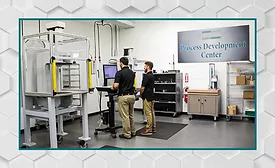
Reduce risk, improve quality, and accelerate production with real-world assembly process validation, testing, and engineering support at the Promess Process Development Center.
BIRMINGHAM, Mich. — Manufacturers are increasingly treating automation maintenance as a production strategy rather than a reactive repair function as factories become more dependent on robotics, automated systems and continuous uptime.
Electric vehicles were supposed to be the future, but the reality has been more complicated. Eddy Azad, founder and CEO of Parsec Automation, explains why shifting demand and infrastructure challenges highlight the need for manufacturers to focus on long-term strategy and adaptability.
For many automakers, early investments in EV infrastructure were driven in part by regulatory pressure and incentives aimed at accelerating adoption. But as those policies evolve, manufacturers are being forced to reassess their strategies.
Disruptions are inevitable—but being unprepared isn’t. Eddy Azad, founder and CEO of Parsec Automation, explains how manufacturers can build resilience through continuous improvement, visibility and long-term thinking to stay competitive.
AMHERST, MA—New research from the University of Massachusetts Amherst shows that programming robots to create their own teams and voluntarily wait for their teammates results in faster task completion, with the potential to improve manufacturing, agriculture and warehouse automation.
South Bend, home to the University of Notre Dame, has a long history of manufacturing. In the past, the city in northern Indiana hummed with large factories belonging to companies such as Bendix Corp. (automotive and aircraft brakes), Oliver Chilled Plow Works (agricultural equipment) and Studebaker Corp. (cars, trucks and wagons).
Industry 4.0 and the digital manufacturing revolution are all about collecting - and, more importantly, acting on - data gathered from the assembly process in real time.