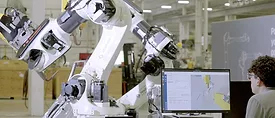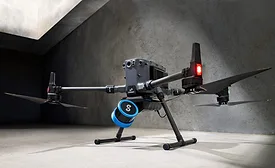
BIRMINGHAM, Mich. — As National Robotics Week highlights advances in automation, one trend is becoming clear: robotics is no longer confined to pilot projects or isolated applications. It is being deployed across production lines to solve specific manufacturing challenges. In many cases, the shift is happening at the process level.
BIRMINGHAM, Mich. — As National Robotics Week highlights the rapid evolution of automation, manufacturers are beginning to deploy a new generation of intelligent robotic systems capable of adapting to real-world production environments.
Robotics is no longer defined by motion alone. The next phase of automation is being driven by intelligence — systems that can perceive, decide and adapt in real time on the factory floor.
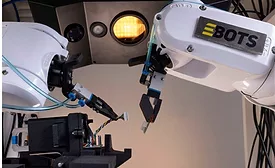
FREMONT, Calif. — Manufacturers have long automated repetitive, high-volume production tasks, but many assembly operations that require dexterity and adaptability have remained difficult to automate. eBots Robotics, a Silicon Valley-based company, is among those focusing on these applications. The company has developed dual-arm robotic systems designed to perform assembly work that traditionally required skilled human operators, particularly in industries such as electronics, semiconductors, medical devices and electric vehicles.
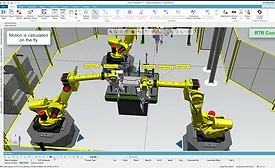
Software optimizes motion of robots that work closely together in automated cells.
October 5, 2024
Boston startup is lauded for its fully automatic motion planning software for industrial robots. The software develops an optimized “choreography” for robots that work closely together in cells. By coordinating the motion of each robot, the software prevents collisions.
Traditionally, many small- and medium-sized manufacturers avoided robots, because they were intimidating. Companies lacked the necessary programming knowledge and technical expertise. And, they simply weren’t willing to make investments in personnel that bigger manufacturers could afford.