Robotics
Automotive Manufacturing Expected to Fuel Humanoid Robot Growth
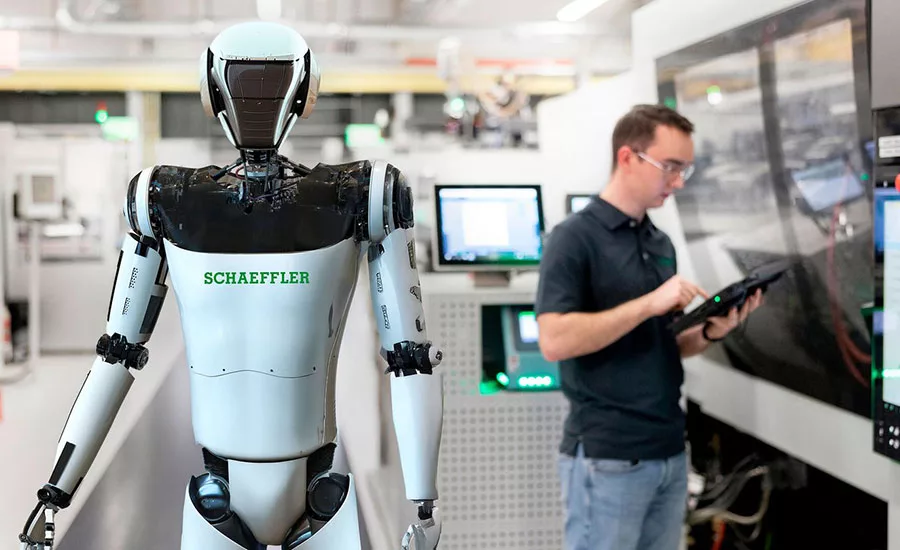
Humanoid robots are being developed for use in shipyards and other manufacturing environments.
Photo courtesy Schaeffler Group
BIRMINGHAM, Mich. — Humanoid robots are moving closer to commercial deployment in manufacturing and logistics operations, with automotive assembly expected to become one of the largest early adoption markets, according to a new report from market intelligence firm IDTechEx.
The firm said automotive manufacturing and logistics are likely to drive demand for humanoid robots over the next decade because of structured workflows, repetitive tasks and growing labor-cost pressures.
IDTechEx projects the humanoid robot market across automotive, logistics and home-use applications will reach approximately $25 billion by the early 2030s, with annual shipments approaching 1.8 million units by 2036. Automotive manufacturing is expected to account for much of that growth.
The report said falling hardware costs are improving the economic case for humanoid robot deployment. According to IDTechEx, average selling prices are expected to decline from approximately $114,700 in 2024 to about $37,000 by 2030.
However, the firm cautioned that lower robot prices alone will not guarantee widespread adoption.
Instead, the report said return on investment will depend heavily on deployment efficiency, task continuity, workflow integration and operational stability inside factories and logistics environments.
IDTechEx said high-utilization industrial deployments could reduce humanoid robot operating costs below $5 per hour by around 2030, although medium- and low-utilization environments may struggle to achieve similar economic advantages.
Looking for quick answers on assembly and manufacturing topics? Try Ask ASM, our new smart AI search tool. Ask ASM
The report also found that favorable industrial deployment scenarios could reduce humanoid robot payback periods to approximately six months by 2026.
According to IDTechEx, near-term deployment is most likely to focus on repetitive, labor-intensive and hazardous manufacturing tasks where the economic value of automation is easier to validate.
Looking for a reprint of this article?
From high-res PDFs to custom plaques, order your copy today!