PODCAST | Short-Duration Training Programs Help Close Manufacturing Skills Gap
Manufacturers across the United States continue to face a pressing challenge: finding workers with the skills needed to contribute effectively on the shop floor. While demand for talent remains high, traditional education pathways often do not align with the immediate needs of industry.
Programs like America’s Cutting Edge (ACE) are working to address that gap by providing accelerated, hands-on training designed to prepare individuals for manufacturing roles in a matter of days rather than years.
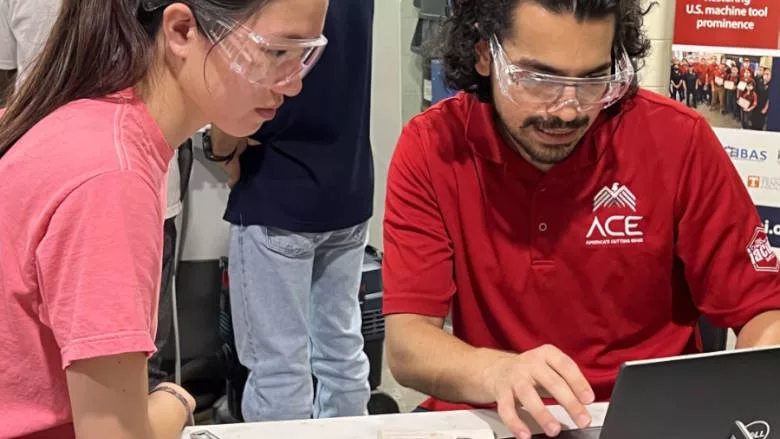
ACE, a national workforce development initiative supported by IACMI, combines online instruction with in-person training to introduce participants to key manufacturing concepts. The program focuses on practical skills such as print reading, CAD/CAM fundamentals and machining operations, while also giving participants direct experience with equipment and processes.
“We’re creating short-duration on-ramps for people to learn new skills and enter manufacturing quickly,” says Justin Brooks, deputy director of workforce development at IACMI.
The structure is designed to meet the needs of both workers and employers. Participants complete several hours of online training before attending an intensive, one-week boot camp, where they apply what they’ve learned in a hands-on environment.
For manufacturers, the benefit is clear. New hires who complete the program arrive with a foundational understanding of terminology, processes and expectations, reducing the time required for onboarding and training.
“Industry needs people, and they need them right now,” Brooks explains. “This helps shorten the time to independence when someone enters the workforce.”
Looking for quick answers on assembly and manufacturing topics? Try Ask ASM, our new smart AI search tool. Ask ASM
The demand for these programs continues to grow. Participation has expanded rapidly, reflecting both industry need and increased interest from individuals exploring manufacturing careers.
At the same time, perceptions of manufacturing are shifting.
“Manufacturing is becoming a place where innovation happens,” Brooks says. “People are starting to see that.”
One of the most impactful aspects of programs like ACE is the hands-on experience they provide. For many participants, working directly with tools and equipment creates a level of engagement that traditional classroom learning cannot replicate.
“When people make something themselves, it changes their perspective,” Brooks says. “It builds confidence and creates interest in pursuing a career in manufacturing.”
The program has also expanded beyond its initial focus on CNC machining. New offerings now include training in composites, smart manufacturing, metrology and other specialized areas. Additional programs, such as METAL, address skills in casting, forging and plate rolling, further broadening the range of opportunities available.
This expansion reflects ongoing collaboration between education providers and industry. By working closely with manufacturers, program developers can adapt training to match evolving workforce needs.
“We’re constantly asking industry what they need and adjusting accordingly,” Brooks says.
That collaboration extends to hiring as well. Many manufacturers engage directly with training sites, attending boot camps, conducting interviews and building relationships with participants. This creates a more direct pipeline from training to employment.
Beyond technical skills, the program also addresses gaps in foundational capabilities such as measurement, problem solving and teamwork. These competencies are essential for success in manufacturing but are not always emphasized in traditional education.
Another emerging focus is the integration of advanced technologies, including automation and data-driven manufacturing. Participants are introduced to concepts such as sensors, data collection and process monitoring, helping them understand how modern manufacturing systems operate.
As these technologies become more prevalent, workforce development efforts are increasingly focused on preparing workers to interact with and benefit from them.
Looking ahead, Brooks emphasizes the importance of early exposure. Introducing manufacturing concepts to students before they make career decisions can help expand the talent pipeline and change perceptions about the industry.
“We need to get in front of people earlier and show them what’s possible,” he says.
Ultimately, closing the skills gap will require continued collaboration between industry, education and government. Programs like ACE demonstrate how targeted, practical training can create meaningful pathways into manufacturing while helping companies meet their workforce needs.Looking for a reprint of this article?
From high-res PDFs to custom plaques, order your copy today!