Digital Transformation Is Essential, Claims New Study
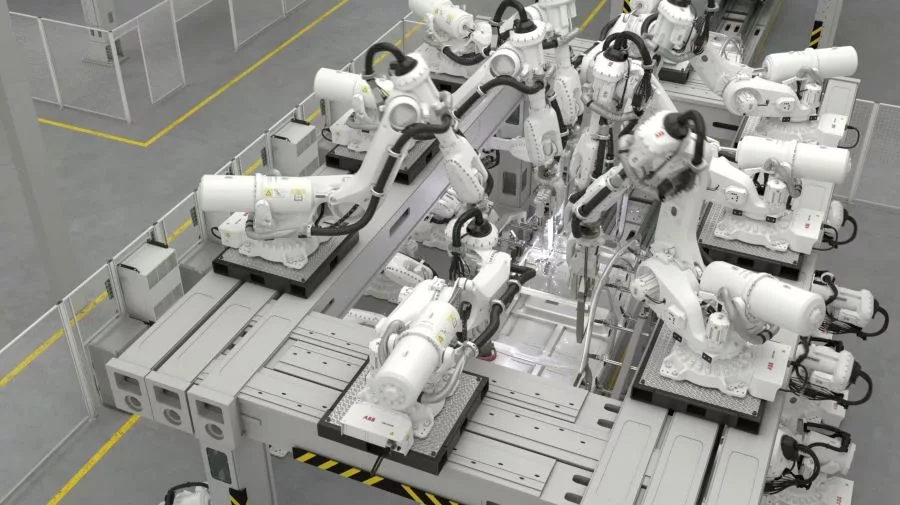
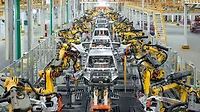
Manufacturers are no longer debating whether to adopt digital technologies, but how to execute, scale and deliver measurable value from them. Photo courtesy ABB Robotics
MILWAUKEE—Manufacturers are no longer debating whether to adopt digital technologies, but how to execute, scale and deliver measurable value from them. That’s the key finding in Rockwell Automation Inc’s 11th annual State of Smart Manufacturing report. The global study is based on input received from more than 1,500 manufacturers in 17 countries.
"Across the industry, manufacturers are facing more complexity and pressure than at any point in the last decade," says Blake Moret, chairman and CEO of Rockwell Automation. "What stands out in this year's research is not just the challenges, but how leaders are responding—by making digital transformation a core operating priority.
“The organizations that are seeing results are those that connect technology, people and processes to turn insight into better decisions, stronger performance and greater resilience,” claims Moret.
“Many manufacturers [are moving] beyond experimentation and toward broader deployment of digital capabilities,” explains Moret. “Fewer organizations are operating in pilot mode, while more report active use of smart manufacturing technologies to support day-to-day operations.”
According to Moret, 90 percent of manufacturers believe that digital transformation is essential to staying competitive, noting that it has evolved in “a baseline business requirement.”
One-third of operations (34 percent) are AI-augmented today, supporting functions such as quality, cybersecurity and process optimization. “Manufacturers expect more than half of operations to be AI-supported by 2030, reinforcing AI's role as a core operational capability,” says Moret.
While manufacturers continue to collect growing volumes of data, only 43 percent is being used effectively, which means that execution—not data availability—is a constraint on performance.
Manufacturers are also targeting transformation investments toward measurable outcomes, such as improving quality, reducing cost, lowering operational risk or increasing overall equipment effectiveness. “One-third of operating budgets remain dedicated to industrial technology, signaling sustained, execution-focused investment rather than short-term experimentation,” says Moret.
Looking for quick answers on assembly and manufacturing topics? Try Ask ASM, our new smart AI search tool. Ask ASM
Looking for a reprint of this article?
From high-res PDFs to custom plaques, order your copy today!