Digital Twin
Accenture AI Digital Twins Help Cut Waste, Improve Throughput
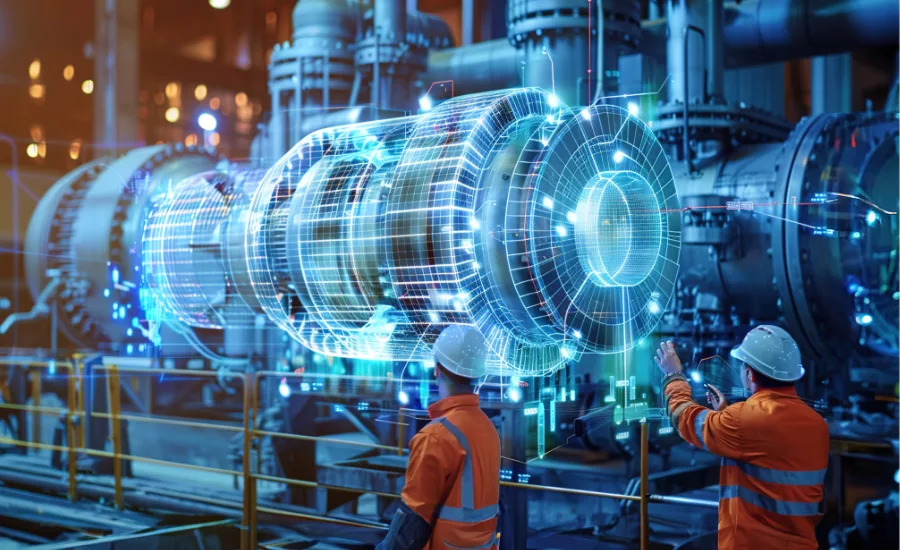
NEW YORK — AI-enabled digital twins are moving deeper into high-volume manufacturing as producers look for faster ways to reduce waste, improve quality and adjust production processes in real time.
Accenture is working with manufacturers to scale AI-enabled digital twins across factory operations.
They have already begun to do this through a partnership with Unilever, which plans to build more than 40 new digital twins across its global manufacturing network over the next 18 months. And the potential impacts for assembly lines are significant: fewer quality defects, less waste, faster troubleshooting, more stable throughput and eventually more real-time process adjustments with human oversight.
The multiyear program is designed to help factories improve quality, increase efficiency and respond more quickly to consumer demand. The digital twins will be integrated with AI-enabled insights and agentic capabilities to help manufacturing teams identify issues earlier, simulate scenarios faster and make decisions across the production cycle.
“Scaling AI across our operations isn’t just a technological shift, it’s a commitment to superior products, sustainability and empowering our teams across our factories,” said Adam Raeburn-James, global vice president for digital business operations at Unilever. “Through our partnership with Accenture to accelerate digital twins, we are turning innovation into measurable impact.”
Accenture is supporting Unilever in deploying industrial AI capabilities that use advanced analytics and AI agents to predict maintenance needs, improve performance and help teams act faster. As the system learns and workers gain confidence in its accuracy, it can progressively take on some adjustments automatically, with human oversight.
Unilever said digital twins already are delivering measurable benefits across several manufacturing sites:
- At the company’s plant in Raeford, North Carolina, a digital twin predicts 95% of process flow restrictions, contributing to a 20% reduction in waste and a 10% increase in capacity.
- At Haldia, India, an energy digital twin optimizes fan speeds, temperature setpoints and moisture controls to reduce thermal energy consumption.
- In Poznan, Poland, a digital twin is being used to stabilize viscosity variation in production. Unilever said the system has reduced minor stoppages by up to 20% and cut waste by nearly 30%.
- At Gandhidham, India, a digital twin helped reduce quality defects by 30% over four years through real-time control recommendations.
- In Cu Chi, Vietnam, an intelligent mixer powered by an AI digital twin optimizes raw material dosing. Unilever said the system prevents overuse and saves 1% to 2% in premium ingredients while maintaining product quality.
“Unilever has long been recognized for its supply chain excellence, and expanding the use of manufacturing digital twins reflects the company’s continued focus on both technology and people,” said Nicole van Det, CEO of Accenture Netherlands. “Having invested early in AI, the company is setting the standard for pairing advanced tools with smart process design and disciplined execution on the shop floor. Together, we’re setting the benchmark for how industrial AI creates long-lasting value.”
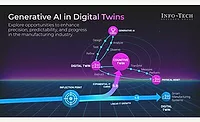
Digital twins are virtual models of factory equipment and production lines. They use live data from physical systems on the shop floor to monitor and predict machine and process performance.
Looking for quick answers on assembly and manufacturing topics? Try Ask ASM, our new smart AI search tool. Ask ASM
Looking for a reprint of this article?
From high-res PDFs to custom plaques, order your copy today!