VIDEO | How Detroit's Auto Industry Could Accelerate U.S. Drone Manufacturing
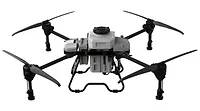
DETROIT — The United States does not have a drone technology problem—it has a drone manufacturing problem. That's according to Keith Miao, CEO of Birdstop, who believes the automotive industry's manufacturing expertise offers the best path toward scaling domestic drone production.
Miao says the United States continues to lead in drone software and autonomy, but lacks the manufacturing capacity and supply chain needed to produce commercial drones at scale.
“America does not have a drone technology problem,” Miao says. “America has a drone manufacturing problem.”
To address that challenge, Birdstop relocated its operations to Detroit in late 2025 to take advantage of the region's automotive manufacturing ecosystem.
Rather than relying primarily on aerospace suppliers, Miao believes commercial drone manufacturers can benefit from the automotive industry's production methods, automation and domestic supply chain.
“We wanted to tap into an industrial-based supply chain that could really scale and have the right economics for our users,” Miao says.
According to Miao, nearly 79% of the components used in Birdstop's flagship drone platform already correspond to identical or similar automotive components, allowing the company to leverage existing automotive suppliers while reducing costs and improving scalability.
Looking for quick answers on assembly and manufacturing topics? Try Ask ASM, our new smart AI search tool. Ask ASM
“When we talk again in a year or two, it's not 79% of components mapping over to automotive components,” Miao says. “It's maybe 95, it's maybe close to 100%.”
Miao also sees increasing similarities between modern automobiles and advanced drones as both become highly integrated systems combining mechanical components, electronics, software and autonomy.
Looking ahead, Birdstop plans to increase manufacturing automation by adapting production practices common in the automotive industry.
“We want to catch up to that level of automation really, really quickly,” Miao says. “So that when we talk again in a year or two, we're going to have those floors that are nearly at a lights-out level.”
Looking for a reprint of this article?
From high-res PDFs to custom plaques, order your copy today!