Assembly Magazine logo
search
Ask ASSEMBLY AI
cart
facebook twitter linkedin youtube
  • Sign In
  • Create Account
  • Sign Out
  • My Account
Assembly Magazine logo
  • TRENDS
    • Ask ASSEMBLY AI
    • Trends
    • News
    • New Products
  • INDUSTRIES
    • Aerospace
    • Appliance
    • DFMA Assembly
    • Medical Devices
    • Green Manufacturing
    • Lean Manufacturing
    • Machinery Assembly
    • Electronics Assembly
    • Automotive
  • TECHNOLOGIES
    • Adhesives & Dispensing
    • Assembly Presses
    • Automated Assembly Systems
    • Manufacturing Management
    • Manufacturing Software
    • Motion Control
    • Screwdriving & Riveting
    • Robotics
    • Test & Inspection
    • Plastics & Metal Welding
    • Wire Processing
    • Workstations
  • AUTONOMOUS & ELECTRIC MOBILITY
    • AEM Magazine Archives
    • Autonomy
    • Electrification
    • Mobility Services
    • Assembly & Testing
    • AV/EM News
  • MEDIA
    • Ask ASSEMBLY AI
    • Podcasts
    • Assembly News Now
    • Assembly TV
    • Webinars
    • eBooks
  • EVENTS
    • Calendar
    • The ASSEMBLY Show
  • MORE
    • Exclusives >
      • Plant of the Year
      • Capital Spending
    • Buyers Guide >
      • Supplier Insights
    • Classifieds
    • Featured Products
    • Newsletters
    • Store
    • White Papers
    • Columns
    • Sponsor Insights
  • INFOCENTER
    • Assembly & Test Solutions
  • EMAGAZINE
    • eMagazine
    • Archive Issues
    • Advertise
    • Contact Us
    • Sign Up
Columns

For Stable Loads and Speeds Under 1,000 Rpm, Stepper Motors Are Cost-Effective

By John Sprovieri
May 1, 2004

By some estimates, half of the motion systems requiring less than 1 kilowatt of power can be equally served by either step motors or servomotors. In applications with stable loads and speeds under 1,000 rpm, engineers can save the cost of feedback devices by choosing steppers over servos.

There are three main types of step motor: permanent magnet, variable reluctance and hybrid. For industrial motion control applications, hybrid steppers are used more often than the other two.

In a permanent magnet stepper, the rotor shaft is surrounded by a magnet with radially opposing poles. It has no teeth. The stator is a series of poles with wound wire coils. Energizing a coil creates an electromagnetic field that attracts the rotor's poles. The rotor snaps to the energized position and stays there. Energizing the coils in sequence causes the rotor to spin as it follows the moving electromagnetic field. Because of the magnet, the rotor will resist movement even when the motor is not energized.

"Permanent magnet step motors are used in low-cost, low-power applications," says Rich Lenzing, senior product manager with Danaher Motion (Rockford, IL). "The bill feeder inside vending machines is driven by a permanent magnet step motor."

Variable reluctance step motors are like permanent magnet steppers, except that the rotor does not have magnets. Instead, the rotor is made of solid iron or steel laminations with multiple teeth projecting outward. Without power, the rotor spins freely. These motors are used in applications that do not require much torque, such as micropositioning tables.

Hybrid steppers combine the characteristics of permanent magnet and variable reluctance motors. In a hybrid stepper, the rotor shaft is surrounded by a magnet with axially opposing poles. The magnet is complemented by iron or steel laminations with multiple teeth. The rotor is configured so the teeth on either end of the magnet do not line up with the stator teeth.

The resolution of a hybrid stepper depends on the number of teeth in its rotor. A rotor with 50 teeth provides 200 steps per revolution, or 1.8 degrees per step. A rotor with 200 teeth provides 800 steps per revolution, or 0.45 degree per step.

Looking for quick answers on assembly and manufacturing topics? Try Ask ASM, our new smart AI search tool. Ask ASM →

"If you pair a motor that moves 200 steps per revolution with a leadscrew that turns 5 revolutions per inch, you can position a load in increments of 0.001 inch," says Lenzing.

Even finer resolution can be obtained through the motor controller with a process called microstepping. "Instead of putting full voltage on one winding, and then putting full voltage on the next winding, you could put half the voltage on one winding and half on the other. That would produce a half step," explains Lenzing. "If you put 80 percent voltage on one coil and 20 percent in the next, the rotor would move 20 percent of a full step."

Besides increasing the resolution of the motor, microstepping enables the motor to run more smoothly with less noise. It also helps prevent problems with motor resonance.

Every step motor has a resonant frequency, which varies with the application and the load. When the step rate equals the motor's resonant frequency, the motor may vibrate or even miss steps.

Key specifications for hybrid step motors include step angle, positional accuracy, rotor inertia, holding torque, detent torque, dynamic torque, phase voltage, phase current, DC phase resistance, phase inductance, operating temperatures and frame size.

Share This Story

Looking for a reprint of this article?
From high-res PDFs to custom plaques, order your copy today!

John has been with ASSEMBLY magazine since February 1997. John was formerly with a national medical news magazine, and has written for Pathology Today and the Green Bay Press-Gazette. John holds a B.A. in journalism from Northwestern University, Medill School of Journalism.

Recommended Content

JOIN TODAY
To unlock your recommendations.

Already have an account? Sign In

  • Made in the U.S.A.

    Consumer Products Manufacturing: Made in the USA

    Supply chain lessons learned during the coronavirus...
    Automated Assembly Systems
    By: Austin Weber
  • Best Practices for Press-Fit Assembly

    Best Practices for Press-Fit Assembly

    In manufacturing, ironclad formulas for success are hard...
    Assembly Presses
    By: Jim Camillo
  • aem0523leader-tesla1.jpg

    Tesla Rethinks the Assembly Line

    Engineers at Tesla Inc. have developed a new process that...
    Automotive Assembly
    By: Austin Weber
Manage My Account
  • eMagazine Subscription
  • Assembly Newsletters
  • Online Registration
  • Subscription Customer Service
  • Manage My Preferences

More Videos

Sponsored Content

Sponsored Content is a special paid section where industry companies provide high quality, objective, non-commercial content around topics of interest to the ASSEMBLY audience. All Sponsored Content is supplied by the advertising company and any opinions expressed in this article are those of the author and not necessarily reflect the views of ASSEMBLY or its parent company, BNP Media. Interested in participating in our Sponsored Content section? Contact your local rep!

close
  • ultrasonic welding
    Sponsored bySonobond Ultrasonics

    Engineering Efficiency in High-Performance Assembly: How Ultrasonic Welding Enhances Throughput, Reliability and Quality

  • UV curing system
    Sponsored byDymax

    Why UV Intensity Alone Doesn’t Define Curing Performance

  • wooden pallets
    Sponsored byLEAN Manufacturing Products

    Eliminating Waste on the Shop Floor: Applying Lean Principles to Improve Manufacturing Efficiency

Popular Stories

ASSEMBLY News Now, episode-30: Volvo Redesigns EV Manufacturing

Volvo Redesigns EV Manufacturing

automated consumer goods assembly system

Best Practices for Cycle Time Optimization

Toyota factory workers assembling vehicles on an automotive production line using advanced manufacturing automation and Factory of the Future technologies in a high-volume assembly plant

Tariffs, AI and Automation Reshape Global Manufacturing Strategy

Watch the latest episode of ANN now!

Events

July 24, 2025

From Shop Floor to CFO: How Manufacturers Are Closing the Loop Between Operations and Finance

On Demand Learn how manufacturers are bridging the gap between the shop floor and ERP systems to gain real-time visibility, streamline operations, and kick-start digital transformation—without waiting years.

Sponsored by:

PicoStratusGreen
July 30, 2025

Buffer Analysis and Design Fundamentals for Manufacturing Excellence

On Demand In this presentation, Dr. Herman Tang shares practical insights from his industry experience and research on buffer management in manufacturing operations.

View All Submit An Event

Poll

Difficult Assembly Processes

Which assembly process gives you the most difficulty?
View Results Poll Archive

Products

Manufacturing Cost Policy Deployment (MCPD) Profitability Scenarios: Systematic and Systemic Improvement of Manufacturing Costs

Manufacturing Cost Policy Deployment (MCPD) Profitability Scenarios: Systematic and Systemic Improvement of Manufacturing Costs

See More Products
Register for webinar - Modernizing Automotive Assembly: Why Upgrading Legacy MES is a Business Imperative

Related Articles

  • Smart Function Kit for Handling

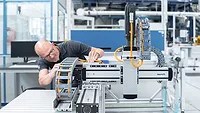
    Cartesian Robots: Simple and Cost-Effective

    See More
  • Yaraship.jpg

    Electric Cargo Ships Could Be Cost-Effective

    See More

Related Products

See More Products
  • leaner

    Leaner Manufacturing: How to Make the Lean Production Process Easier, Faster, and More Cost-Effective

  • cost engineering.jpg

    Cost Engineering

  • 9781138498730.jpg

    Manufacturing Cost Policy Deployment (MCPD) Profitability Scenarios: Systematic and Systemic Improvement of Manufacturing Costs

See More Products

Related Directories

  • AeroGo Inc.

    AeroGo manufactures innovative load moving equipment, utilizing wheels and hovercraft technology that move heavy, awkward, or delicate loads in factories. Companies large and small benefit from a worldwide dealer network, experienced product specialists, and skilled engineers. We work with you to find a load moving solution that is safe, efficient and cost-effective.
  • ARS srl

×

Never miss the latest news and trends driving the manufacturing industry

Stay in the know on the latest assembly trends.

JOIN TODAY!
  • RESOURCES
    • Advertise
    • Contact Us
    • Directories
    • Manufacturing Division
    • Store
    • Want More?
  • SIGN UP TODAY
    • Create Account
    • eMagazine
    • Newsletters
    • Customer Service
    • Manage Preferences
  • SERVICES
    • Marketing Services
    • Reprints
    • Market Research
    • List Rental
    • Survey/Respondent Access
  • STAY CONNECTED
    • LinkedIn
    • Facebook
    • Instagram
    • YouTube
    • X (Twitter)
  • PRIVACY
    • PRIVACY POLICY
    • TERMS & CONDITIONS
    • DO NOT SELL MY PERSONAL INFORMATION
    • PRIVACY REQUEST
    • ACCESSIBILITY

Copyright ©2026. All Rights Reserved BNP Media, Inc. and BNP Media II, LLC.

Design, CMS, Hosting & Web Development :: ePublishing