Medical Assembly: User Friendly Features Propel Packaging
Strict clean room constraints and numerous regulatory requirements have always made medical devices extremely difficult products to package. Now, engineers are faced with a dichotomy. They're scrambling to create packaging that is hermetically sealed, tear and puncture-resistant, and terminally sterile, yet extremely easy for healthcare professionals and patients to open.
The number of surgical procedures performed in the United States is on the rise due to the aging population, the active baby boomer generation and increased elective surgeries. At the same time, the percentage of procedures performed on an inpatient basis is declining with the increasing use of outpatient and same-day surgery.
According to Medtech Insight LLC (Newport Beach, CA), the total number of minimally invasive surgical procedures and device implantations in the U.S. will exceed 38 million in 2012 vs. 28.5 million in 2004. The large increase will be driven by cardiovascular, thoracic, orthopedic, spinal and cosmetic surgery procedures.
That's good news for the $1.6 billion sterile medical packaging industry, which includes the materials and equipment used to make blister packs, header bags, pouches, trays and other types of primary packages. A recent study conducted by the Freedonia Group Inc. (Cleveland) claims that demand will grow 5.4 percent annually through 2008.
Numerous Challenges
In the complex world of packaging, medical devices are considered to be "high maintenance" products. They require specialized films, foils, papers and polymers that meet strict validation protocols, such as steam and ethylene oxide compatible materials that can withstand sterilization processes. And, unlike most product categories, quality is always more important than cost in the healthcare arena.
"The easiest medical device to package is one which is rugged, has a relatively simple shape, does not require any special retaining features, has only one packaging configuration, and does not have special atmospheric or environmental frailties," says Eric Carlson, an engineer at Adalis Packaging Solutions Group (Minneapolis). However, that's often easier said than done.
"All the parts we assemble require packaging solutions beyond the capabilities of a standard packaging machine," notes Paul Nordin, head of project management at Sortimat Technology Production Systems (Schaumburg, IL). "Features on complex parts that cannot be changed, such as notches, buttons and valves, need to be accommodated.
Looking for quick answers on assembly and manufacturing topics? Try Ask ASM, our new smart AI search tool. Ask ASM
"Flexible components like tubing, or parts that don't keep memory, are challenging to package," adds Nordin. "Other parts, such as inhalers with buttons or levers that should not be activated, must be accommodated."
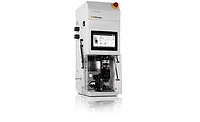
Sortimat recently unveiled an automated tray handler that acts as a retainer for flexible parts. "It can hold parts without touching an actuator mechanism, thus preventing activation of a subassembly or finished medical device," Nordin points out. "We see more subassemblies being produced in different areas of the country and other parts of the world, making the use of a tray handler a necessary step in the packaging process.
"The tray handler will populate a variety of matrix-style trays that can be transported to another location, while maintaining a consistent orientation, and fed into a final assembly line and subsequent packaging machine," adds Nordin. He says one of the most challenging aspects of medical device packaging is matching the speed of the assembly machine to that of the packaging machine. "The tray handler acts as a part sorter or accumulator at the end of the assembly line to supply the packaging line with the volume of parts required to meet the high speeds of a packaging machine," explains Nordin.
While medical devices come in many different sizes and shapes, sterilization is a common element that influences most packaging decisions. Cannulas, catheters, diagnostic test kits, dialysis aids, filters, gloves, implant material, inhalers, pumps, surgical kits, syringes, tubes, valves and other medical devices require sterile packaging material and equipment that does not contaminate the product.
"A major packaging challenge is dependent on the style of sterilization required," says Laurence Oldacre, business development manager at ATS Automation Tooling Systems Inc. (Cambridge, ON). "For instance, if steam or ethylene oxide sterilization is required, the primary package typically has to be batch processed through a sterilization chamber, after which it needs to be refed into secondary packaging equipment, such as a cartoner and case packer. This translates into additional material handling between packaging processes.
"By comparison, when electron-beam or gamma irradiation sterilization is utilized, the product can be transferred directly from primary packaging into secondary packaging equipment followed by sterilization of the entire set of packages," adds Oldacre. "This reduces the risk of damage to the product and reduces packaging cost through greater throughput efficiencies."
Global demand for medical devices is also causing packaging headaches. While exports from the U.S. to Europe and Japan continue, American manufacturers are tapping into the booming market in China.
"Device packagers need to keep up to date on FDA regulations, but also foreign regulations," notes Balaji Capaloor, senior research analyst at Frost & Sullivan Inc. (San Antonio). "The regulations play a major role in materials selection, sterilization techniques, seal-strength and other factors." For example, a new European Union directive on packaging and packaging waste requires the use of packages that increase reuse and recovery.
"One challenging issue is interpretation of FDA regulations, as well as guideline documents such as ISO11607," says Kent Hevenor, account manager of CeraTek products at Sencorp Inc. (Hyannis, MA). "Efforts are underway to provide easier-to-understand guideline documents that should make interpretation and implementation easier and more consistent."
Packaging engineers also face growing pressure to reduce the thickness of polymer-based films to address cost concerns. Fortunately, they have a wide variety of new materials to work with. Increased usage of form, fill and seal packaging equipment by medical device manufacturers is driving growth of formable films and nonwoven roll stocks. As a result, some observers predict that demand for traditional trays and pouches will decrease.
"One of the biggest changes that we have seen is the emergence of new packaging materials and material combinations," notes Hevenor. "We are seeing a move away from materials that require an impulse-style pouch sealer because of difficulties with the validation and calibration of the heat sealers, as well as maintenance-related down-time issues. We are also seeing more products being packaged that require an evacuated or nitrogen-flushed atmosphere inside the sealed pouch."
"The cost pressure on the converters has forced them to find out new ways to down gauge the package without compromising the required properties," adds Capaloor. "Converters are experimenting with materials that can reduce cost and improve or at least meet the required specifications.
"Use of multilayer structures is increasing to meet the high-barrier package requirements," adds Capaloor. "Materials such as cyclo olefin copolymer, polyesters vacuum-coated with aluminum oxide, and nylon vacuum-coated with aluminum oxide are increasingly used to provide high barrier and visibility to the package."
In addition, nanocomposite-based polymers are being developed for use in medical device packaging. "It will be a boon for the device packaging market due to its strength, thermal stability, excellent barrier and formability," Capaloor predicts.
Convenience and Ease of Use
Today, medical device manufacturers want creative, cost-effective packaging that can make their products easier to use, deliver and store. That demand is forcing the industry to put greater emphasis on customer friendly package attributes.
"Companies that develop packages that offer easy-to-open features, excellent stackability or compartments for multiple products are at a distinct advantage," says Mike Lynch, director of sales at Multivac Inc. (Kansas City, MO). "These features add significant value to medical products and can help manufacturers establish brand identity in a competitive and dynamic market."
There is an ongoing shift toward home-based medical device usage. "Many hospitals and care centers face space constraints, and insurance companies are pressuring hospitals to reduce patient stay," explains Frost & Sullivan's Capaloor. "Hence, there is an increasing trend toward home care setup and remote monitoring, which has increased demand for home care products and services."
With that increase in patients managing their own care, Capaloor says easy-to-open features on medical device packages are no longer a value-added attribute, but a necessity. The elderly, as well as those suffering from chronic illness, often have physical limitations, such as arthritis. As a result, the user interface becomes more critical.
There is tremendous opportunity for packaging engineers to make products more acceptable for the home environment. To ensure cost-effective production of these new customized packaging systems, some engineers are turning to thermoform fill-seal (TFFS) technology.
Multivac's Lynch claims that TFFS allows packaging engineers to "easily incorporate features such as elongated header tabs, linear tear components or finger holes that provide leverage and facilitate effortless product access. Other designs include corner tabs that are separated from the preformed portion of the package and allow for easy separation."
Another way in which medical device manufacturers are addressing the convenience and ease of use issue is by creating versatile kit packages that house multiple components used in a single procedure. Traditionally, hospitals have used individually wrapped instruments, sutures and gloves, which medical professionals then unwrap and gather together as needed. However, this process can be time-consuming and introduces room for human error.
Ready-made medical kits save time and ensure that the right tools are available when needed for procedures such as angioplasties, biopsies or wound care. The kits are popular in emergency rooms and high-volume surgery wards where timing is critical.
While kitted medical device packages offer unique advantages to end users, they create headaches for manufacturers. "Packagers may have a large selection of stock keeping units (SKUs), each requiring a unique kit of components to be packaged," says ATS Automation Tooling Systems' Oldacre. "Finding the balance between automating the packaging process to gain throughput capacity and providing the flexibility required to handle the large selection of SKUs is the major hurdle.
"Many packagers revert to semiautomatic or manual packaging techniques to contend with the large content variations," Oldacre points out. To address that issue, his company recently unveiled a reconfigurable, modular automated platform called FlexsysPAK that boosts uptime and packaging productivity.
"To cost-effectively capitalize on the demand for medical kits, companies must invest in a packaging system that can efficiently produce various packaging configurations," adds Multivac's Lynch. For example, with automated roll stock machines, specialized dies are created so each package contains customized sections where each device can be easily snapped into place. "When different product lines need to be packaged, these dies can be quickly changed, thus minimizing downtime," Lynch points out.
For instance, Merit Medical Systems Inc. (South Jordan, UT) recently employed a customized TFFS system to produce specialized kits. The company created up to 47 different packaging configurations for kits that secure different variations of tubing, catheters and needles. Merit realized a 15 percent increase in demand for its products after the integration.
Looking for a reprint of this article?
From high-res PDFs to custom plaques, order your copy today!