Assembly Magazine logo
search
Ask ASSEMBLY AI
cart
facebook twitter linkedin youtube
  • Sign In
  • Create Account
  • Sign Out
  • My Account
Assembly Magazine logo
  • TRENDS
    • Ask ASSEMBLY AI
    • Trends
    • News
    • New Products
  • INDUSTRIES
    • Aerospace
    • Appliance
    • DFMA Assembly
    • Medical Devices
    • Green Manufacturing
    • Lean Manufacturing
    • Machinery Assembly
    • Electronics Assembly
    • Automotive
  • TECHNOLOGIES
    • Adhesives & Dispensing
    • Assembly Presses
    • Automated Assembly Systems
    • Manufacturing Management
    • Manufacturing Software
    • Motion Control
    • Screwdriving & Riveting
    • Robotics
    • Test & Inspection
    • Plastics & Metal Welding
    • Wire Processing
    • Workstations
  • AUTONOMOUS & ELECTRIC MOBILITY
    • AEM Magazine Archives
    • Autonomy
    • Electrification
    • Mobility Services
    • Assembly & Testing
    • AV/EM News
  • MEDIA
    • Ask ASSEMBLY AI
    • Podcasts
    • Assembly News Now
    • Assembly TV
    • Webinars
    • eBooks
  • EVENTS
    • Calendar
    • The ASSEMBLY Show
  • MORE
    • Exclusives >
      • Plant of the Year
      • Capital Spending
    • Buyers Guide >
      • Supplier Insights
    • Classifieds
    • Featured Products
    • Newsletters
    • Store
    • White Papers
    • Columns
    • Sponsor Insights
  • INFOCENTER
    • Assembly & Test Solutions
  • EMAGAZINE
    • eMagazine
    • Archive Issues
    • Advertise
    • Contact Us
    • Sign Up
Columns

X-Y-Z: Encoders Read the Line

By John Sprovieri
August 6, 2005

A rotary encoder cannot measure the position of a linear stage, at least not directly. What it actually measures is the position of the motor shaft. The linear position of the stage can then be calculated based on the pitch and diameter of the ballscrew. How closely the calculation matches the actual position of the stage depends on the amount of backlash and other mechanical error in the system.

To obtain the exact position of the stage, regardless of any play in the system, a linear encoder is needed. There are several types to choose from, but the most common is the optical linear encoder.

These encoders work much like their rotary cousins. But, instead of reading light signals passing through a rotating disk, optical linear encoders read light signals that pass through or reflect off a graduated linear scale made from glass or steel, says Todd Drane, marketing manager for Fagor Automation Corp. (Millersport, OH). The scale usually has two parallel tracks. The main, or incremental, track consists of thousands of finely spaced lines. These are what the encoder counts to measure movement. The other track consists of intermittently spaced reference marks, which enable the encoder to determine its absolute position.

To simplify cable routing, the read head is usually mounted to a stationary machine part, while the scale is mounted to the stage. Linear encoders should not be mounted near heat sources or subjected to constant, strong vibration.

Optical linear encoders are available in sealed and exposed versions. Sealed encoders are protected against swarf and oil by an aluminum housing with flexible sealing lips. For greater protection, the housing can be pressurized with compressed air. The read head travels on a low-friction guide within the scale unit. It's connected to the external mounting block with a coupling that compensates for misalignment between the scale and the machine guideways. Exposed encoders operate with no mechanical contact between the read head and the scale. This eliminates backlash or hysteresis.

Both sealed and exposed encoders are available in lengths of more than 30 meters. Because of their noncontact operation, exposed encoders are a bit more accurate than sealed models, says Kevin Kaufenberg, product manager at Heidenhain Corp. (Schaumburg, IL). The accuracy of sealed encoders ranges from ±2 to ±10 microns, while the accuracy of exposed versions can be as low as ±0.1 micron.

A magnetic linear encoder, such as the Lincoder from Sick Stegmann (Dayton, OH), relies not on a graduated scale, but on a magnetic tape laminated to a steel strip. Absolute positional information is magnetized onto the tape in a 12-bit sequential code. This information is enhanced by interpolation of sine-cosine signals that are provided on an additional incremental track on the tape. A noncontact magnetic sensor is mounted to the stage or other device whose position is to be measured. As the sensor moves over the tape, its position is output with a resolution as low as 1 micron over a 16-meter range or 10 microns over a 40-meter range.

Looking for quick answers on assembly and manufacturing topics? Try Ask ASM, our new smart AI search tool. Ask ASM →

The Spherosyn linear encoder from Newall Electronics Inc. (Columbus, OH) operates on the principle of induction. The "scale" is a stainless steel tube containing precision ball bearings under compression. The read head, which fits around the scale and slides along it, contains a drive coil and four sets of pick-up coils. When current is passed through the drive coil, it induces a voltage in each of the pick-up coils, which varies according to their position relative to the balls in the scale. By measuring these variations, the encoder determines its position.

A cable-draw encoder, such as the LCE from Encoder Products Co. (Sagle, ID), operates a bit like a tape measure. This encoder contains a stainless steel or composite cable wound on a precise, constant-diameter spool. Attached to the stage, the cable extends and retracts as the apparatus moves. A spring on the spool keeps the cable taught. Position feedback is provided by a rotary encoder or potentiometer.

Share This Story

Looking for a reprint of this article?
From high-res PDFs to custom plaques, order your copy today!

John has been with ASSEMBLY magazine since February 1997. John was formerly with a national medical news magazine, and has written for Pathology Today and the Green Bay Press-Gazette. John holds a B.A. in journalism from Northwestern University, Medill School of Journalism.

Recommended Content

JOIN TODAY
To unlock your recommendations.

Already have an account? Sign In

  • Made in the U.S.A.

    Consumer Products Manufacturing: Made in the USA

    Supply chain lessons learned during the coronavirus...
    Automated Assembly Systems
    By: Austin Weber
  • Best Practices for Press-Fit Assembly

    Best Practices for Press-Fit Assembly

    In manufacturing, ironclad formulas for success are hard...
    Assembly Presses
    By: Jim Camillo
  • aem0523leader-tesla1.jpg

    Tesla Rethinks the Assembly Line

    Engineers at Tesla Inc. have developed a new process that...
    Industries
    By: Austin Weber
Manage My Account
  • eMagazine Subscription
  • Assembly Newsletters
  • Online Registration
  • Subscription Customer Service
  • Manage My Preferences

More Videos

Sponsored Content

Sponsored Content is a special paid section where industry companies provide high quality, objective, non-commercial content around topics of interest to the ASSEMBLY audience. All Sponsored Content is supplied by the advertising company and any opinions expressed in this article are those of the author and not necessarily reflect the views of ASSEMBLY or its parent company, BNP Media. Interested in participating in our Sponsored Content section? Contact your local rep!

close
  • ultrasonic welding
    Sponsored bySonobond Ultrasonics

    Engineering Efficiency in High-Performance Assembly: How Ultrasonic Welding Enhances Throughput, Reliability and Quality

  • UV curing system
    Sponsored byDymax

    Why UV Intensity Alone Doesn’t Define Curing Performance

  • wooden pallets
    Sponsored byLEAN Manufacturing Products

    Eliminating Waste on the Shop Floor: Applying Lean Principles to Improve Manufacturing Efficiency

Popular Stories

ASSEMBLY News Now, episode-30: Volvo Redesigns EV Manufacturing

Volvo Redesigns EV Manufacturing

Boeing CEO Kelly Ortberg announces 1 billion investment

Boeing Plans $1 Billion Wichita Investment, Workforce Training Center

GE Appliances Worker on Line

GE Appliances Expands Factory AI With 800 Gemini Enterprise Agents

Watch the latest episode of ANN now!

Events

July 24, 2025

From Shop Floor to CFO: How Manufacturers Are Closing the Loop Between Operations and Finance

On Demand Learn how manufacturers are bridging the gap between the shop floor and ERP systems to gain real-time visibility, streamline operations, and kick-start digital transformation—without waiting years.

Sponsored by:

PicoStratusGreen
July 30, 2025

Buffer Analysis and Design Fundamentals for Manufacturing Excellence

On Demand In this presentation, Dr. Herman Tang shares practical insights from his industry experience and research on buffer management in manufacturing operations.

View All Submit An Event

Poll

Difficult Assembly Processes

Which assembly process gives you the most difficulty?
View Results Poll Archive

Products

Manufacturing Cost Policy Deployment (MCPD) Profitability Scenarios: Systematic and Systemic Improvement of Manufacturing Costs

Manufacturing Cost Policy Deployment (MCPD) Profitability Scenarios: Systematic and Systemic Improvement of Manufacturing Costs

See More Products
Register for webinar - Modernizing Automotive Assembly: Why Upgrading Legacy MES is a Business Imperative

Related Articles

  • X-Y-Z: Encoders Measure Rotary Motion

    See More
  • From the Ford Line to the Front Line, an Assembler Is Killed Serving his Country

    See More
  • Saving Energy on the Line

    See More

Related Products

See More Products
  • foreman.jpg

    The Foreman on the Assembly Line

  • Kaizen Assembly: Designing, Constructing, and Managing a Lean Assembly Line

  • lean.jpg

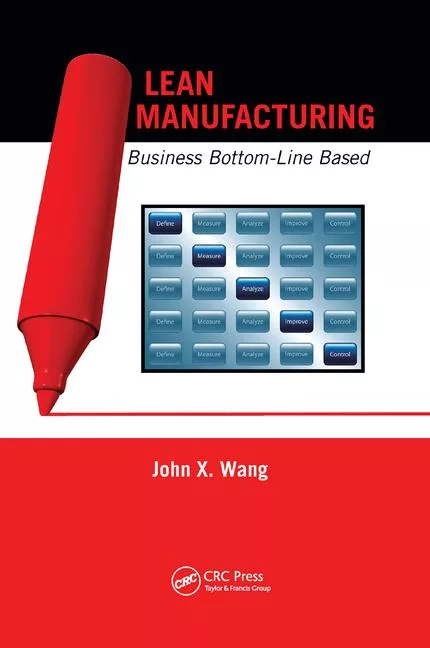
    Lean Manufacturing: Business Bottom-Line Based

See More Products
×

Never miss the latest news and trends driving the manufacturing industry

Stay in the know on the latest assembly trends.

JOIN TODAY!
  • RESOURCES
    • Advertise
    • Contact Us
    • Directories
    • Manufacturing Division
    • Store
    • Want More?
  • SIGN UP TODAY
    • Create Account
    • eMagazine
    • Newsletters
    • Customer Service
    • Manage Preferences
  • SERVICES
    • Marketing Services
    • Reprints
    • Market Research
    • List Rental
    • Survey/Respondent Access
  • STAY CONNECTED
    • LinkedIn
    • Facebook
    • Instagram
    • YouTube
    • X (Twitter)
  • PRIVACY
    • PRIVACY POLICY
    • TERMS & CONDITIONS
    • DO NOT SELL MY PERSONAL INFORMATION
    • PRIVACY REQUEST
    • ACCESSIBILITY

Copyright ©2026. All Rights Reserved BNP Media, Inc. and BNP Media II, LLC.

Design, CMS, Hosting & Web Development :: ePublishing