Automation Profiles: Integrator Enjoys Sweet Smell of Success
Continuous motion system assembles 40,000 perfume pumps per hour.
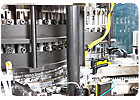
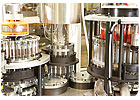 High-speed automated assembly doesn’t get any faster than with a continuous motion system. But, speed isn’t the only benefit of this technology.
In a continuous motion system, multiple processes occur without interruption for every cycle, effectively overlapping. Because the tooling never loses contact with the individual components, part alignment is maintained during assembly. This results in smoother processes that are much less likely to damage either the components or the machinery itself.
Haumiller Engineering in Elgin, IL, specializes in continuous motion assembly systems. Recently, the company built a system to assemble an eight-piece perfume pump. It’s a small assembly, but it can make or break the consumer’s experience with the product. A $100 bottle of perfume with a defective pump creates an unhappy consumer. To add complexity to the project, the pump is assembled in three sizes, which vary the amount of perfume dispensed with each spritz.
In this profile, Pat Phillips, continuous motion engineer at Haumiller, describes the system. For more information, call 847-695-9111 or visit www.haumiller.com.
Describe the system. This project consists of two, multiple dial, continuous motion machines. They are connected by a transfer track. The first machine has six geared dials moving in synchronous motion. The second has seven.
What are the dimensions of the assembly? The pump is less than 1 inch tall and less than 0.375 inch in diameter.
What are the parts made of? Most of the parts are plastic. A small check ball is made of glass, and there are two stainless steel springs.
How does the system accommodate the different pump sizes? Of the eight parts, five differ based on the size of the pump. Some components of the system accommodate different part sizes without changeover. Other components are adjusted to match the part size using positive-stop tooling. No tweaking or recalibrating is necessary. This on-the-fly process ensures nothing can be adjusted incorrectly and helps maintain production speed and efficiency.
What feeds the parts? Vibratory hoppers and bowls of different sizes feed the parts. Though small, the feeders and hoppers have precise tooling to orient the parts. When changeover for the different size pumps is required, the tooling is positioned to positive stops. It’s not infinitely adjustable, which ensures repeatability and accuracy.
What methods are used to assemble the product? All parts snap together, with the exception of the glass ball. This part is inserted into the assembly using a rotary swaging process. The plastic changes position to hold the ball in place.
What checks or inspections are included in the process? The machine probes each part for presence and correct position. Dedicated tooling checks the position and presence of the parts, and sensors monitor the position of the tooling. Sensors alone could not be used in this application, because the reflective surface of the parts can cause inaccurate readings.
This system has more than 200 tools, many of which are identical. The probing stations are one-up and interface “on the fly” with rotating tools.
What tests are included? The completed pumps are flow-tested to ensure correct function, as well as the integrity of the seal.
What is the production rate? The system assembles 670 pumps per minute, or approximately 40,000 pumps per hour.
Did you help the customer design the product for automated assembly? The engineering and design planning for this project was ideal, in that we were involved early on. This early involvement is preferred, although it’s not often possible. In this case, the product was still being designed for functionality, at the same time we were designing and building the machine. This enabled us to recommend and approve piece-part changes to reduce risk in the assembly process.
What was the most challenging aspect of the system? The machine must perform many intricate tasks, such as handling the small glass ball. All the parts have to be positioned accurately, especially the sealing surfaces.
We accomplished all these tasks by identifying risks early in the project, prototyping solutions, and rigorously analyzing performance.
What else would you like ASSEMBLY’s readers to know about the system? This machine can produce more than 800,000 defect-free pumps in 24 hours and requires no daily maintenance. It has a very small footprint-approximately 300 square feet-and is easily run by one operator.
The machine can produce 200 million pumps annually, if sales demand it. A machine like this will run 20 years or more with regular maintenance. That’s 3 billion to 4 billion parts over the life of the machine.
Editor’s note: Whether you’re a systems integrator or the in-house automation team of an OEM, if you’ve designed a system that you’re particularly proud of, tell us about it. Send an e-mail to John Sprovieri, editor of ASSEMBLY, at sprovierij@bnpmedia.com, or call 630-694-4012.
In a continuous motion system, multiple processes occur without interruption for every cycle, effectively overlapping. Because the tooling never loses contact with the individual components, part alignment is maintained during assembly. This results in smoother processes that are much less likely to damage either the components or the machinery itself.
Haumiller Engineering in Elgin, IL, specializes in continuous motion assembly systems. Recently, the company built a system to assemble an eight-piece perfume pump. It’s a small assembly, but it can make or break the consumer’s experience with the product. A $100 bottle of perfume with a defective pump creates an unhappy consumer. To add complexity to the project, the pump is assembled in three sizes, which vary the amount of perfume dispensed with each spritz.
In this profile, Pat Phillips, continuous motion engineer at Haumiller, describes the system. For more information, call 847-695-9111 or visit www.haumiller.com.
Describe the system. This project consists of two, multiple dial, continuous motion machines. They are connected by a transfer track. The first machine has six geared dials moving in synchronous motion. The second has seven.
What are the dimensions of the assembly? The pump is less than 1 inch tall and less than 0.375 inch in diameter.
What are the parts made of? Most of the parts are plastic. A small check ball is made of glass, and there are two stainless steel springs.
How does the system accommodate the different pump sizes? Of the eight parts, five differ based on the size of the pump. Some components of the system accommodate different part sizes without changeover. Other components are adjusted to match the part size using positive-stop tooling. No tweaking or recalibrating is necessary. This on-the-fly process ensures nothing can be adjusted incorrectly and helps maintain production speed and efficiency.
What feeds the parts? Vibratory hoppers and bowls of different sizes feed the parts. Though small, the feeders and hoppers have precise tooling to orient the parts. When changeover for the different size pumps is required, the tooling is positioned to positive stops. It’s not infinitely adjustable, which ensures repeatability and accuracy.
What methods are used to assemble the product? All parts snap together, with the exception of the glass ball. This part is inserted into the assembly using a rotary swaging process. The plastic changes position to hold the ball in place.
What checks or inspections are included in the process? The machine probes each part for presence and correct position. Dedicated tooling checks the position and presence of the parts, and sensors monitor the position of the tooling. Sensors alone could not be used in this application, because the reflective surface of the parts can cause inaccurate readings.
This system has more than 200 tools, many of which are identical. The probing stations are one-up and interface “on the fly” with rotating tools.
What tests are included? The completed pumps are flow-tested to ensure correct function, as well as the integrity of the seal.
What is the production rate? The system assembles 670 pumps per minute, or approximately 40,000 pumps per hour.
Did you help the customer design the product for automated assembly? The engineering and design planning for this project was ideal, in that we were involved early on. This early involvement is preferred, although it’s not often possible. In this case, the product was still being designed for functionality, at the same time we were designing and building the machine. This enabled us to recommend and approve piece-part changes to reduce risk in the assembly process.
What was the most challenging aspect of the system? The machine must perform many intricate tasks, such as handling the small glass ball. All the parts have to be positioned accurately, especially the sealing surfaces.
We accomplished all these tasks by identifying risks early in the project, prototyping solutions, and rigorously analyzing performance.
What else would you like ASSEMBLY’s readers to know about the system? This machine can produce more than 800,000 defect-free pumps in 24 hours and requires no daily maintenance. It has a very small footprint-approximately 300 square feet-and is easily run by one operator.
The machine can produce 200 million pumps annually, if sales demand it. A machine like this will run 20 years or more with regular maintenance. That’s 3 billion to 4 billion parts over the life of the machine.
Editor’s note: Whether you’re a systems integrator or the in-house automation team of an OEM, if you’ve designed a system that you’re particularly proud of, tell us about it. Send an e-mail to John Sprovieri, editor of ASSEMBLY, at sprovierij@bnpmedia.com, or call 630-694-4012.
Looking for a reprint of this article?
From high-res PDFs to custom plaques, order your copy today!