Assembly Magazine logo
search
Ask ASSEMBLY AI
cart
facebook twitter linkedin youtube
  • Sign In
  • Create Account
  • Sign Out
  • My Account
Assembly Magazine logo
  • TRENDS
    • Ask ASSEMBLY AI
    • Trends
    • News
    • New Products
  • INDUSTRIES
    • Aerospace
    • Appliance
    • DFMA Assembly
    • Medical Devices
    • Green Manufacturing
    • Lean Manufacturing
    • Machinery Assembly
    • Electronics Assembly
    • Automotive
  • TECHNOLOGIES
    • Adhesives & Dispensing
    • Assembly Presses
    • Automated Assembly Systems
    • Manufacturing Management
    • Manufacturing Software
    • Motion Control
    • Screwdriving & Riveting
    • Robotics
    • Test & Inspection
    • Plastics & Metal Welding
    • Wire Processing
    • Workstations
  • AUTONOMOUS & ELECTRIC MOBILITY
    • AEM Magazine Archives
    • Autonomy
    • Electrification
    • Mobility Services
    • Assembly & Testing
    • AV/EM News
  • MEDIA
    • Ask ASSEMBLY AI
    • Podcasts
    • Assembly News Now
    • Assembly TV
    • Webinars
    • eBooks
  • EVENTS
    • Calendar
    • The ASSEMBLY Show
  • MORE
    • Exclusives >
      • Plant of the Year
      • Capital Spending
    • Buyers Guide >
      • Supplier Insights
    • Classifieds
    • Featured Products
    • Newsletters
    • Store
    • White Papers
    • Columns
    • Sponsor Insights
  • INFOCENTER
    • Assembly & Test Solutions
  • EMAGAZINE
    • eMagazine
    • Archive Issues
    • Advertise
    • Contact Us
    • Sign Up
Columns

Assembly In Action: Sensitive-Touch Robot Assembles Rear-Axle Transmissions
By Jim Camillo
February 23, 2011


Daimler AG uses the LWR to assemble rear-axle transmissions at its Mercedes-Benz plant in Untertürkheim, Germany. Photo courtesy www.ifr.org

From March to November 2009, a small robot designed to operate in close association with human co-workers was used by Daimler AG at its Mercedes-Benz plant in Untertürkheim, Germany, as a pilot project for series production. During that time, more than 15,000 rear-axle transmissions were assembled using the KUKA lightweight robot (LWR).

Daimler was impressed by the robot-which, for the first time, gave Daimler the ability to automate assembly tasks that had either previously been impossible to automate or could only be automated at a very high cost. Not surprisingly, Daimler began using the LWR in series production of rear-axle transmissions at the plant as of December 2009.

“Our assessment of the LWR pilot project is extremely positive, and we are optimistic that we will be able to use lightweight robots for other tasks in the future,” says Dr. Michael Zürn, head of production and materials application technology at Mercedes-Benz.

Co-developed by the German Aerospace Center and KUKA Roboter GmbH, the LWR offers motion sequences that are similar to those of the human arm. The joints of the lightweight robot (weighing just 14 kilograms) are connected using carbon fiber-reinforced plastic structures, and its remaining components are optimized for weight. The LWR also is very energy-efficient.

Built-in sensitivity, achieved by means of integrated sensors, enable the LWR to perform demanding assembly tasks that require precision and a sensitive but powerful touch.

More importantly, the LWR has cognitive capabilities that enable the robot to operate independently beyond what it is programmed to do-and share workspace with humans.

By integrating the LWR with a PC-based KUKA robot controller, the operator can manually guide the robot to different positions in the workspace and control and teach it using a simple user interface. Cognitive automation is particularly useful for production applications that, before now, were strictly manual or could only be automated using technically complex methods.

KUKA has long been concerned with the topic of human-robot cooperation, says Manfred Gundel, company CEO. “We want to establish the robot as an intelligent assistant that can support the human operator with its high-quality work.”

Although the LWR is programmed to perform automatically, it approaches objects carefully and adjusts to changed conditions. For example, if a workpiece is not optimally positioned, the robot adjusts its motion sequence accordingly. In contrast, a conventional robot that operates precisely according to what it has been programmed to do, would have to be corrected by an operator in such situations.

For more information on sensitive-touch robots, call 866-873-5852 or visit www.kuka-robotics.com.

Share This Story

Looking for a reprint of this article?
From high-res PDFs to custom plaques, order your copy today!

Jim was a senior editor of ASSEMBLY and has more than 30 years of editorial experience. Before joining ASSEMBLY, Camillo was the editor of PM Engineer, Association for Facilities Engineering Journal and Milling Journal. Jim has an English degree from DePaul University.

Recommended Content

JOIN TODAY
To unlock your recommendations.

Already have an account? Sign In

  • Made in the U.S.A.

    Consumer Products Manufacturing: Made in the USA

    Supply chain lessons learned during the coronavirus...
    Automated Assembly Systems
    By: Austin Weber
  • Best Practices for Press-Fit Assembly

    Best Practices for Press-Fit Assembly

    In manufacturing, ironclad formulas for success are hard...
    Assembly Presses
    By: Jim Camillo
  • aem0523leader-tesla1.jpg

    Tesla Rethinks the Assembly Line

    Engineers at Tesla Inc. have developed a new process that...
    Assembly and Testing
    By: Austin Weber
Manage My Account
  • eMagazine Subscription
  • Assembly Newsletters
  • Online Registration
  • Subscription Customer Service
  • Manage My Preferences

More Videos

Sponsored Content

Sponsored Content is a special paid section where industry companies provide high quality, objective, non-commercial content around topics of interest to the ASSEMBLY audience. All Sponsored Content is supplied by the advertising company and any opinions expressed in this article are those of the author and not necessarily reflect the views of ASSEMBLY or its parent company, BNP Media. Interested in participating in our Sponsored Content section? Contact your local rep!

close
  • ultrasonic welding
    Sponsored bySonobond Ultrasonics

    Engineering Efficiency in High-Performance Assembly: How Ultrasonic Welding Enhances Throughput, Reliability and Quality

  • UV curing system
    Sponsored byDymax

    Why UV Intensity Alone Doesn’t Define Curing Performance

  • wooden pallets
    Sponsored byLEAN Manufacturing Products

    Eliminating Waste on the Shop Floor: Applying Lean Principles to Improve Manufacturing Efficiency

Popular Stories

ASSEMBLY News Now, episode-30: Volvo Redesigns EV Manufacturing

Volvo Redesigns EV Manufacturing

Boeing CEO Kelly Ortberg announces 1 billion investment

Boeing Plans $1 Billion Wichita Investment, Workforce Training Center

GE Appliances Worker on Line

GE Appliances Expands Factory AI With 800 Gemini Enterprise Agents

Watch the latest episode of ANN now!

Events

July 24, 2025

From Shop Floor to CFO: How Manufacturers Are Closing the Loop Between Operations and Finance

On Demand Learn how manufacturers are bridging the gap between the shop floor and ERP systems to gain real-time visibility, streamline operations, and kick-start digital transformation—without waiting years.

Sponsored by:

PicoStratusGreen
July 30, 2025

Buffer Analysis and Design Fundamentals for Manufacturing Excellence

On Demand In this presentation, Dr. Herman Tang shares practical insights from his industry experience and research on buffer management in manufacturing operations.

View All Submit An Event

Poll

Difficult Assembly Processes

Which assembly process gives you the most difficulty?
View Results Poll Archive

Products

Manufacturing Cost Policy Deployment (MCPD) Profitability Scenarios: Systematic and Systemic Improvement of Manufacturing Costs

Manufacturing Cost Policy Deployment (MCPD) Profitability Scenarios: Systematic and Systemic Improvement of Manufacturing Costs

See More Products
Register for webinar - Modernizing Automotive Assembly: Why Upgrading Legacy MES is a Business Imperative

Related Articles

  • Assembly In Action: Insertion Machine Keeps Parts Supplier in Touch With Customers' Needs

    See More
  • Assembly In Action: Semiconductor Platform Assembles Flip Chips

    See More
  • Assembly In Action: Small Robot Handles Delicate Assembly of Medical Device

    See More

Related Products

See More Products
  • digital.jpg

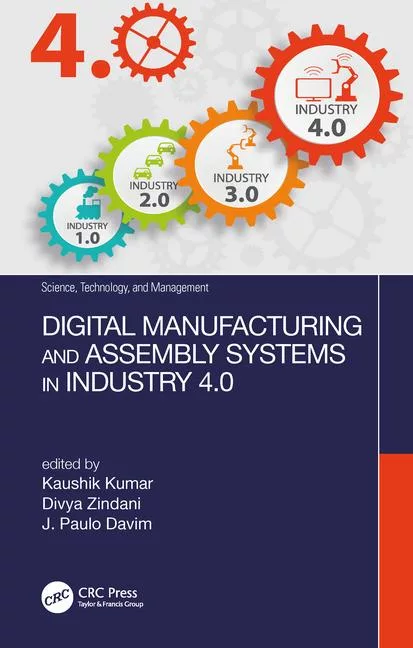
    Digital Manufacturing and Assembly Systems in Industry 4.0

  • Kaizen Assembly: Designing, Constructing, and Managing a Lean Assembly Line

See More Products

Events

View AllSubmit An Event
  • October 30, 2025

    Assembly Simulation in Action: 3 Approaches Driving OEM Savings

    On Demand Participants will gain actionable insights and real-world examples that demonstrate how digital simulation supports assembly planning, geometry assurance, and quality control. Sponsored by:
View AllSubmit An Event
×

Never miss the latest news and trends driving the manufacturing industry

Stay in the know on the latest assembly trends.

JOIN TODAY!
  • RESOURCES
    • Advertise
    • Contact Us
    • Directories
    • Manufacturing Division
    • Store
    • Want More?
  • SIGN UP TODAY
    • Create Account
    • eMagazine
    • Newsletters
    • Customer Service
    • Manage Preferences
  • SERVICES
    • Marketing Services
    • Reprints
    • Market Research
    • List Rental
    • Survey/Respondent Access
  • STAY CONNECTED
    • LinkedIn
    • Facebook
    • Instagram
    • YouTube
    • X (Twitter)
  • PRIVACY
    • PRIVACY POLICY
    • TERMS & CONDITIONS
    • DO NOT SELL MY PERSONAL INFORMATION
    • PRIVACY REQUEST
    • ACCESSIBILITY

Copyright ©2026. All Rights Reserved BNP Media, Inc. and BNP Media II, LLC.

Design, CMS, Hosting & Web Development :: ePublishing