Assembly Magazine logo
search
Ask ASSEMBLY AI
cart
facebook twitter linkedin youtube
  • Sign In
  • Create Account
  • Sign Out
  • My Account
Assembly Magazine logo
  • TRENDS
    • Ask ASSEMBLY AI
    • Trends
    • News
    • New Products
  • INDUSTRIES
    • Aerospace
    • Appliance
    • DFMA Assembly
    • Medical Devices
    • Green Manufacturing
    • Lean Manufacturing
    • Machinery Assembly
    • Electronics Assembly
    • Automotive
  • TECHNOLOGIES
    • Adhesives & Dispensing
    • Assembly Presses
    • Automated Assembly Systems
    • Manufacturing Management
    • Manufacturing Software
    • Motion Control
    • Screwdriving & Riveting
    • Robotics
    • Test & Inspection
    • Plastics & Metal Welding
    • Wire Processing
    • Workstations
  • AUTONOMOUS & ELECTRIC MOBILITY
    • AEM Magazine Archives
    • Autonomy
    • Electrification
    • Mobility Services
    • Assembly & Testing
    • AV/EM News
  • MEDIA
    • Ask ASSEMBLY AI
    • Podcasts
    • Assembly News Now
    • Assembly TV
    • Webinars
    • eBooks
  • EVENTS
    • Calendar
    • The ASSEMBLY Show
  • MORE
    • Exclusives >
      • Plant of the Year
      • Capital Spending
    • Buyers Guide >
      • Supplier Insights
    • Classifieds
    • Featured Products
    • Newsletters
    • Store
    • White Papers
    • Columns
    • Sponsor Insights
  • INFOCENTER
    • Assembly & Test Solutions
  • EMAGAZINE
    • eMagazine
    • Archive Issues
    • Advertise
    • Contact Us
    • Sign Up
ColumnsLean Manufacturing Assembly

Take Care When Applying Lean to the Back Office

By Dr. Mike Shipulski
April 2, 2015

Lean’s focus on waste may be its defining element. To reduce waste, it must be identified, understood for what it is, and then eliminated through process change. Time is a major emphasis. Engineers want to eliminate wasted time and time that does not add value. They want to make process changes that reduce operation time.

Lean’s waste lens is most effective when focused on repetitive, transactional work. The process is studied, judgments are made on value-adding vs. non-value-adding activities, and then good thinking is applied to eliminate those activities that customers won’t pay for.

On the production floor, processes are well-defined and repeated frequently. Flows are linear, so there’s little uncertainty about what to do when material arrives. Tasks are simplified to reduce reliance on documentation and mental memory. (Lean does take advantage of muscle memory, however.) Through continuous improvement, wasted motion is reduced and output per unit time increases. In the end, there’s little question people on the production floor work hard, and it’s good that the length of the workday is clearly defined and constant.

Lean is respectful of people, and engineers take great care to fit the work to the person. With the regularity of the production floor, a mismatch in capability or capacity is visually apparent almost immediately. Work piles up in front of the overloaded workstation, and everyone knows there’s a process problem. In record time, resources are added, or work content is rebalanced, or waste is designed out. The system works wonderfully.

Lean is now regularly applied outside the production floor. In theory, it works the same way. The work is studied, judgment is made about what adds value and what doesn’t, and wasted time is eliminated through process change. It does work outside the production floor, but it works differently.

Nonproduction work flows (i.e., back-office processes) are far more complex than those on the shop floor. They require much more judgment and have much more variation in the work content. Multiple demand streams are not bound by work-in-process limits. (Too many calls in the queue don’t stop other customers from calling.)

Lean theory has a simplistic answer: Straighten out the process flows, homogenize the work content, reduce judgment, and standardize the output. All great ideas, but they don’t necessarily apply to the back office. These are people-based processes with people-based inputs and people-based outputs. In fact, nuance, judgment and a personal touch are what make these processes successful. No checklist can effectively handle a customer complaint; no standard work is flexible enough to handle unpredictable situations; and customers respond very poorly to a WIP cap. When applied to these people systems in a production system way, lean eliminates waste along with the flexibility that makes these systems effective.

Looking for quick answers on assembly and manufacturing topics? Try Ask ASM, our new smart AI search tool. Ask ASM →

With these nonproduction systems, lean’s rules about capacity and work balance are not respected. In a people system, when there’s a pile of work on someone’s desk and he’s not meeting takt time, resources are not added in record time, the workload is not rebalanced, and waste is not designed out. Even worse, because process flows are so complex, the pile isn’t noticed at all. If it is noticed, management tends to think it’s a people problem not a process problem.

 Lean is most effective when used with repetitive, transactional processes with highly constrained inputs and streamlined process flows. People systems aren’t like that. While it’s helpful to take waste out of our people systems, it’s far more important to increase flexibility and give the people within the systems more autonomy and authority to use their judgment.

KEYWORDS: lean culture lean methods standard work waste elimination

Share This Story

Looking for a reprint of this article?
From high-res PDFs to custom plaques, order your copy today!

Mike Shipulski is a leading authority on lean manufacturing, product development, and design for manufacturing and assembly. His column appeared every other month, alternating with Austin Weber’s “On Campus.” E-mail Mike with comments via mike@shipulski.com or follow his blog at www.shipulski.com.


Recommended Content

JOIN TODAY
To unlock your recommendations.

Already have an account? Sign In

  • Made in the U.S.A.

    Consumer Products Manufacturing: Made in the USA

    Supply chain lessons learned during the coronavirus...
    Automated Assembly Systems
    By: Austin Weber
  • Best Practices for Press-Fit Assembly

    Best Practices for Press-Fit Assembly

    In manufacturing, ironclad formulas for success are hard...
    Assembly Presses
    By: Jim Camillo
  • aem0523leader-tesla1.jpg

    Tesla Rethinks the Assembly Line

    Engineers at Tesla Inc. have developed a new process that...
    Assembly and Testing
    By: Austin Weber
Manage My Account
  • eMagazine Subscription
  • Assembly Newsletters
  • Online Registration
  • Subscription Customer Service
  • Manage My Preferences

More Videos

Sponsored Content

Sponsored Content is a special paid section where industry companies provide high quality, objective, non-commercial content around topics of interest to the ASSEMBLY audience. All Sponsored Content is supplied by the advertising company and any opinions expressed in this article are those of the author and not necessarily reflect the views of ASSEMBLY or its parent company, BNP Media. Interested in participating in our Sponsored Content section? Contact your local rep!

close
  • ultrasonic welding
    Sponsored bySonobond Ultrasonics

    Engineering Efficiency in High-Performance Assembly: How Ultrasonic Welding Enhances Throughput, Reliability and Quality

  • UV curing system
    Sponsored byDymax

    Why UV Intensity Alone Doesn’t Define Curing Performance

  • wooden pallets
    Sponsored byLEAN Manufacturing Products

    Eliminating Waste on the Shop Floor: Applying Lean Principles to Improve Manufacturing Efficiency

Popular Stories

ASSEMBLY News Now, episode-30: Volvo Redesigns EV Manufacturing

Volvo Redesigns EV Manufacturing

Boeing CEO Kelly Ortberg announces 1 billion investment

Boeing Plans $1 Billion Wichita Investment, Workforce Training Center

GE Appliances Worker on Line

GE Appliances Expands Factory AI With 800 Gemini Enterprise Agents

Watch the latest episode of ANN now!

Events

July 24, 2025

From Shop Floor to CFO: How Manufacturers Are Closing the Loop Between Operations and Finance

On Demand Learn how manufacturers are bridging the gap between the shop floor and ERP systems to gain real-time visibility, streamline operations, and kick-start digital transformation—without waiting years.

Sponsored by:

PicoStratusGreen
July 30, 2025

Buffer Analysis and Design Fundamentals for Manufacturing Excellence

On Demand In this presentation, Dr. Herman Tang shares practical insights from his industry experience and research on buffer management in manufacturing operations.

View All Submit An Event

Poll

Difficult Assembly Processes

Which assembly process gives you the most difficulty?
View Results Poll Archive

Products

Manufacturing Cost Policy Deployment (MCPD) Profitability Scenarios: Systematic and Systemic Improvement of Manufacturing Costs

Manufacturing Cost Policy Deployment (MCPD) Profitability Scenarios: Systematic and Systemic Improvement of Manufacturing Costs

See More Products
Register for webinar - Modernizing Automotive Assembly: Why Upgrading Legacy MES is a Business Imperative

Related Articles

  • Applying Lean Principles to the Engineering Process

    See More
  • wooden pallets

    Eliminating Waste on the Shop Floor: Applying Lean Principles to Improve Manufacturing Efficiency

    See More

Related Products

See More Products
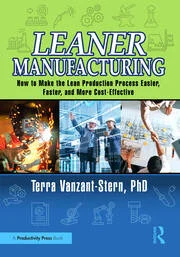
  • leaner

    Leaner Manufacturing: How to Make the Lean Production Process Easier, Faster, and More Cost-Effective

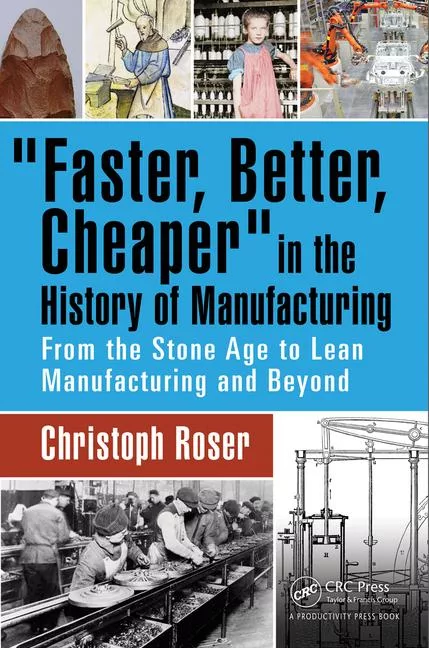
  • history.jpg

    Faster, Better, Cheaper in the History of Manufacturing: From the Stone Age to Lean Manufacturing and Beyond

  • Introduction to the Design and Behavior of Bolted Joints, Fourth Edition: Non-Gasketed Joints

See More Products

Related Directories

  • READE Western Reg. (USA) Customer Care Office

  • Lean Factory America

    Our products aid in the elimination of waste, a cornerstone of lean manufacturing, by helping to eliminate errors, overproduction, inefficient processes, inventory, unnecessary transportation of product and unnecessary movement of personnel. Solutions are also highly configurable and customizable to provide customers with systems that are safe to both their personnel and products. The result is increased manufacturing efficiency and profitability for the customer.
×

Never miss the latest news and trends driving the manufacturing industry

Stay in the know on the latest assembly trends.

JOIN TODAY!
  • RESOURCES
    • Advertise
    • Contact Us
    • Directories
    • Manufacturing Division
    • Store
    • Want More?
  • SIGN UP TODAY
    • Create Account
    • eMagazine
    • Newsletters
    • Customer Service
    • Manage Preferences
  • SERVICES
    • Marketing Services
    • Reprints
    • Market Research
    • List Rental
    • Survey/Respondent Access
  • STAY CONNECTED
    • LinkedIn
    • Facebook
    • Instagram
    • YouTube
    • X (Twitter)
  • PRIVACY
    • PRIVACY POLICY
    • TERMS & CONDITIONS
    • DO NOT SELL MY PERSONAL INFORMATION
    • PRIVACY REQUEST
    • ACCESSIBILITY

Copyright ©2026. All Rights Reserved BNP Media, Inc. and BNP Media II, LLC.

Design, CMS, Hosting & Web Development :: ePublishing