Assembly Magazine logo
search
Ask ASSEMBLY AI
cart
facebook twitter linkedin youtube
  • Sign In
  • Create Account
  • Sign Out
  • My Account
Assembly Magazine logo
  • TRENDS
    • Ask ASSEMBLY AI
    • Trends
    • News
    • New Products
  • INDUSTRIES
    • Aerospace
    • Appliance
    • DFMA Assembly
    • Medical Devices
    • Green Manufacturing
    • Lean Manufacturing
    • Machinery Assembly
    • Electronics Assembly
    • Automotive
  • TECHNOLOGIES
    • Adhesives & Dispensing
    • Assembly Presses
    • Automated Assembly Systems
    • Manufacturing Management
    • Manufacturing Software
    • Motion Control
    • Screwdriving & Riveting
    • Robotics
    • Test & Inspection
    • Plastics & Metal Welding
    • Wire Processing
    • Workstations
  • AUTONOMOUS & ELECTRIC MOBILITY
    • AEM Magazine Archives
    • Autonomy
    • Electrification
    • Mobility Services
    • Assembly & Testing
    • AV/EM News
  • MEDIA
    • Ask ASSEMBLY AI
    • Podcasts
    • Assembly News Now
    • Assembly TV
    • Webinars
    • eBooks
  • EVENTS
    • Calendar
    • The ASSEMBLY Show
  • MORE
    • Exclusives >
      • Plant of the Year
      • Capital Spending
    • Buyers Guide >
      • Supplier Insights
    • Classifieds
    • Featured Products
    • Newsletters
    • Store
    • White Papers
    • Columns
    • Sponsor Insights
  • INFOCENTER
    • Assembly & Test Solutions
  • EMAGAZINE
    • eMagazine
    • Archive Issues
    • Advertise
    • Contact Us
    • Sign Up
ColumnsMoser on Manufacturing

Made in USA: Turning preference into purchases (part 1).

By Harry Moser
moser
February 12, 2019

Studies show that Americans prefer U.S.-made products, and that this preference can help bring manufacturing back home. But can we turn consumer preference into purchases?

The Reshoring Initiative has aggregated consumer surveys from 10 sources, gleaning insight into the preferences of more than 14,000 U.S. consumers. Findings show that there is a decisive preference for U.S.-made goods: 97 percent have a positive view of goods manufactured in the U.S. Americans also have a positive opinion of companies that manufacture in the U.S.: 91 percent believe it is important to manufacture in the U.S. and think the government should take steps to support American manufacturing.

Quality, jobs and the economy are the most commonly cited reasons for which Americans prefer U.S.-made goods (Harris Interactive, Gallup, Alliance for American Manufacturing). Similarly, Americans support U.S. manufacturing out of a belief that it’s important for long-term job growth and economic stability. Eighty-five percent of Americans believe a strong manufacturing sector is important to national security (Thomas 2018). A study conducted by the Consumer Reports National Research Center indicates that more than 80 percent of respondents cited retaining manufacturing jobs and keeping U.S. manufacturing strong in the global economy as very important reasons for buying U.S.-made products. About 60 percent were concerned with the use of child labor offshore, or believed U.S.-made goods were of a higher quality.

The preference for U.S.-made goods has a generational component that leans toward older Americans. A 2018 Thomas survey found that, although 61 percent of respondents said they were more likely to buy U.S.-made products, there exists a generation gap regarding the quality of such products. Baby boomers (52 percent) and Generation X (50 percent) believe U.S.-made products are superior, while only 40 percent of millennials and Generation Z share that belief. In total, 45 percent of all respondents thought U.S.-made products were superior to products made offshore, 41 percent thought the quality was typically the same, and 14 percent thought made-in-USA quality was inferior.

While their preference is clear, whether Americans actually purchase American goods is more difficult to determine. Some surveys indicate that less than half of consumers made an effort to purchase U.S.-made goods in the past few months (Gallup). However, according to a Boston Consulting Group survey, 80 percent of American consumers would be willing to pay more for U.S.-made goods. In fact, nearly a quarter of them were willing to pay a price premium of at least 10 percent across all categories of goods surveyed. And, 60 percent of respondents reported having done so in the past month.

Americans report the highest preference for purchasing American goods where concerns about quality, safety and durability are high, such as appliances, clothing, furniture and automobiles. Indeed, Americans are willing to pay extraordinary premiums (upwards of 60 percent) for U.S.-made baby toys and furniture (Harris Interactive 2010, BCG 2012).

Winning substantial contracts via mega-retailer Walmart’s Made in USA initiative made reshoring possible for Michigan-based American Plastic Toys and Ohio-based 50 Strong. “Our customers have told us that, second to price, where products are made influences their purchase decisions,” says Cindi Marsiglio, Walmart’s vice president of U.S. manufacturing.

Looking for quick answers on assembly and manufacturing topics? Try Ask ASM, our new smart AI search tool. Ask ASM →

U.S. appliance manufacturer Whirlpool has pumped more than $1 billion into its U.S. facilities since 2010 and recently added 200 jobs. Positive factors for reshoring include consumer preference, impact on domestic economy and proximity to customers and the U.S. market.

In my next column we will look at how to turn consumer preference into purchases, bridge the generational divide, and influence consumer purchasing behavior.           

KEYWORDS: made in the USA reshoring

Share This Story

Looking for a reprint of this article?
From high-res PDFs to custom plaques, order your copy today!

Harry Moser is the president of the Reshoring Initiative. His column will appear every other month, alternating with Austin Weber’s “On Campus.” Has your company reshored production? Are you thinking about it? We’d like to hear of your success or help you achieve it. With your approval, we would love to report on your successes or opportunities in future issues. Contact harry.moser@reshorenow.org.

Recommended Content

JOIN TODAY
To unlock your recommendations.

Already have an account? Sign In

  • Made in the U.S.A.

    Consumer Products Manufacturing: Made in the USA

    Supply chain lessons learned during the coronavirus...
    Automated Assembly Systems
    By: Austin Weber
  • Best Practices for Press-Fit Assembly

    Best Practices for Press-Fit Assembly

    In manufacturing, ironclad formulas for success are hard...
    Assembly Presses
    By: Jim Camillo
  • aem0523leader-tesla1.jpg

    Tesla Rethinks the Assembly Line

    Engineers at Tesla Inc. have developed a new process that...
    Automotive Assembly
    By: Austin Weber
Manage My Account
  • eMagazine Subscription
  • Assembly Newsletters
  • Online Registration
  • Subscription Customer Service
  • Manage My Preferences

More Videos

Sponsored Content

Sponsored Content is a special paid section where industry companies provide high quality, objective, non-commercial content around topics of interest to the ASSEMBLY audience. All Sponsored Content is supplied by the advertising company and any opinions expressed in this article are those of the author and not necessarily reflect the views of ASSEMBLY or its parent company, BNP Media. Interested in participating in our Sponsored Content section? Contact your local rep!

close
  • ultrasonic welding
    Sponsored bySonobond Ultrasonics

    Engineering Efficiency in High-Performance Assembly: How Ultrasonic Welding Enhances Throughput, Reliability and Quality

  • UV curing system
    Sponsored byDymax

    Why UV Intensity Alone Doesn’t Define Curing Performance

  • wooden pallets
    Sponsored byLEAN Manufacturing Products

    Eliminating Waste on the Shop Floor: Applying Lean Principles to Improve Manufacturing Efficiency

Popular Stories

ASSEMBLY News Now, episode-30: Volvo Redesigns EV Manufacturing

Volvo Redesigns EV Manufacturing

Boeing CEO Kelly Ortberg announces 1 billion investment

Boeing Plans $1 Billion Wichita Investment, Workforce Training Center

automated consumer goods assembly system

Best Practices for Cycle Time Optimization

Watch the latest episode of ANN now!

Events

July 24, 2025

From Shop Floor to CFO: How Manufacturers Are Closing the Loop Between Operations and Finance

On Demand Learn how manufacturers are bridging the gap between the shop floor and ERP systems to gain real-time visibility, streamline operations, and kick-start digital transformation—without waiting years.

Sponsored by:

PicoStratusGreen
July 30, 2025

Buffer Analysis and Design Fundamentals for Manufacturing Excellence

On Demand In this presentation, Dr. Herman Tang shares practical insights from his industry experience and research on buffer management in manufacturing operations.

View All Submit An Event

Poll

Difficult Assembly Processes

Which assembly process gives you the most difficulty?
View Results Poll Archive

Products

Manufacturing Cost Policy Deployment (MCPD) Profitability Scenarios: Systematic and Systemic Improvement of Manufacturing Costs

Manufacturing Cost Policy Deployment (MCPD) Profitability Scenarios: Systematic and Systemic Improvement of Manufacturing Costs

See More Products
Register for webinar - Modernizing Automotive Assembly: Why Upgrading Legacy MES is a Business Imperative

Related Articles

  • moser

    Made in USA: Turning preference into purchases (part 2).

    See More
  • moser

    A deeper dive into Total Cost of Ownership (TCO): Part 1

    See More
  • moser

    Manufacturers cut out the middleman (part 1)

    See More

Related Products

See More Products
  • investment.jpg

    Investment Decisions in Advanced Manufacturing Technology

  • handbook of digital.jpg

    Handbook of Digital Innovation, Transformation, and Sustainable Development in a Post-Pandemic Era

  • history.jpg

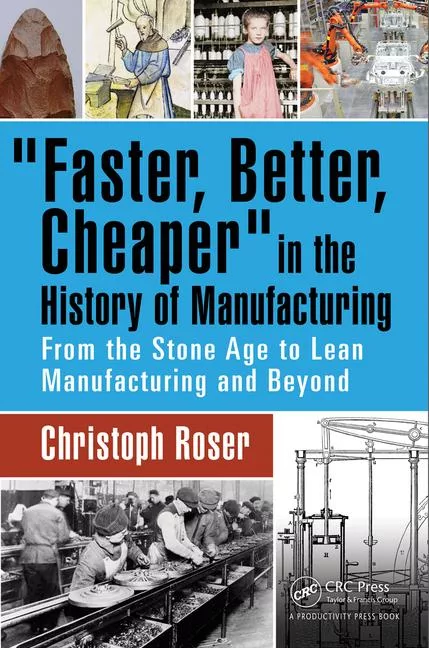
    Faster, Better, Cheaper in the History of Manufacturing: From the Stone Age to Lean Manufacturing and Beyond

See More Products

Related Directories

  • bo parts USA

  • Kwik Mark Inc.

    Kwik Mark Dot Peen Marking Machines. Made in the USA! The Best Permanent Product ID Marking Machine will engrave tags, products, or parts of any shape or material - from hardened tool steels to delicate plastics. We have the machine for all your marking needs.
  • Grant Riveters USA

    The only Riveter/Press All-In-One machine. State of the Art Process Inspector control system. The World's Oldest Riveting Machine Manufacturer 350,000+ Riveters Sold. We experience 1/2% service rate and 10 to 25 million cycles before needing parts. Experts in all riveting techniques, fastening and joining methods since 1860.
×

Never miss the latest news and trends driving the manufacturing industry

Stay in the know on the latest assembly trends.

JOIN TODAY!
  • RESOURCES
    • Advertise
    • Contact Us
    • Directories
    • Manufacturing Division
    • Store
    • Want More?
  • SIGN UP TODAY
    • Create Account
    • eMagazine
    • Newsletters
    • Customer Service
    • Manage Preferences
  • SERVICES
    • Marketing Services
    • Reprints
    • Market Research
    • List Rental
    • Survey/Respondent Access
  • STAY CONNECTED
    • LinkedIn
    • Facebook
    • Instagram
    • YouTube
    • X (Twitter)
  • PRIVACY
    • PRIVACY POLICY
    • TERMS & CONDITIONS
    • DO NOT SELL MY PERSONAL INFORMATION
    • PRIVACY REQUEST
    • ACCESSIBILITY

Copyright ©2026. All Rights Reserved BNP Media, Inc. and BNP Media II, LLC.

Design, CMS, Hosting & Web Development :: ePublishing