Assembly Magazine logo
search
Ask ASSEMBLY AI
cart
facebook twitter linkedin youtube
  • Sign In
  • Create Account
  • Sign Out
  • My Account
Assembly Magazine logo
  • TRENDS
    • Ask ASSEMBLY AI
    • Trends
    • News
    • New Products
  • INDUSTRIES
    • Aerospace
    • Appliance
    • DFMA Assembly
    • Medical Devices
    • Green Manufacturing
    • Lean Manufacturing
    • Machinery Assembly
    • Electronics Assembly
    • Automotive
  • TECHNOLOGIES
    • Adhesives & Dispensing
    • Assembly Presses
    • Automated Assembly Systems
    • Manufacturing Management
    • Manufacturing Software
    • Motion Control
    • Screwdriving & Riveting
    • Robotics
    • Test & Inspection
    • Plastics & Metal Welding
    • Wire Processing
    • Workstations
  • AUTONOMOUS & ELECTRIC MOBILITY
    • AEM Magazine Archives
    • Autonomy
    • Electrification
    • Mobility Services
    • Assembly & Testing
    • AV/EM News
  • MEDIA
    • Ask ASSEMBLY AI
    • Podcasts
    • Assembly News Now
    • Assembly TV
    • Webinars
    • eBooks
  • EVENTS
    • Calendar
    • The ASSEMBLY Show
  • MORE
    • Exclusives >
      • Plant of the Year
      • Capital Spending
    • Buyers Guide >
      • Supplier Insights
    • Classifieds
    • Featured Products
    • Newsletters
    • Store
    • White Papers
    • Columns
    • Sponsor Insights
  • INFOCENTER
    • Assembly & Test Solutions
  • EMAGAZINE
    • eMagazine
    • Archive Issues
    • Advertise
    • Contact Us
    • Sign Up
Green Manufacturing AssemblyElectronics Assembly

Researchers Demonstrate Improved Performance of Organic Photovoltaics
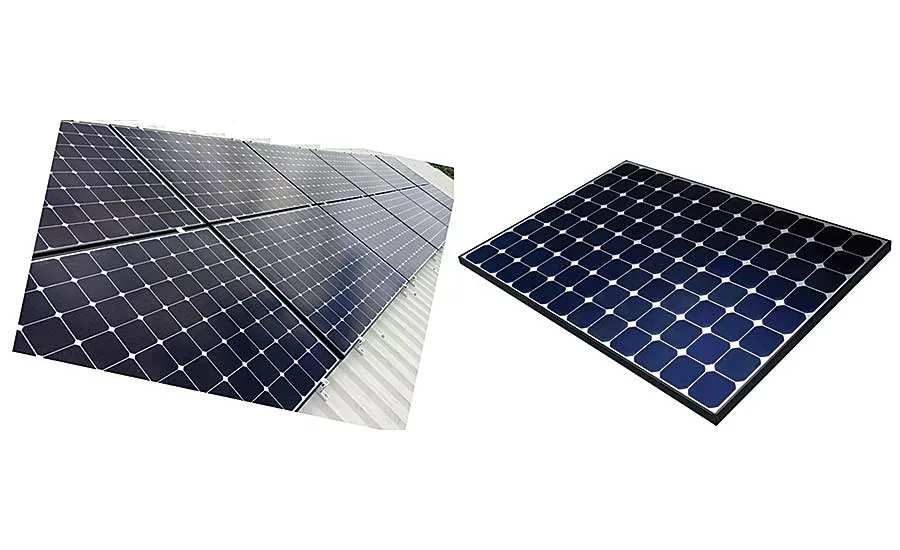
Solar Panels Save Manufacturer $1 Million in Electricity Costs

SunPower 327 solar panels feature Maxeon Gen II solar cells with a solid copper foundation that is virtually impervious to corrosion and cracking. Photos courtesy SunPower Corp.

October 17, 2022

GWANGJU, South Korea—Organic photovoltaics with a transition metal oxide (TMOs) interface layer are emerging as a promising alternative to conventional silicon-based photovoltaics. However, unwanted organic metal-binding ligands left behind in the TMO synthesis process often affect their electrical properties. Now, Gwangju Institute of Science and Technology researchers have addressed this issue using a technique called anion-induced catalytic reaction, which removes the residual ligands, resulting in a 20-fold enhancement in electrical conductivity.


Harnessing the power of the sun and converting it into electricity using photovoltaic solar cells is one of the top contenders for combating the current energy crisis. To this end, researchers have developed organic photovoltaics (OPVs) with transition metal oxide (TMO) thin-film interfacial layers as a cost-effective alternative to commercial silicon solar cells. OPVs are known for their excellent photochemical properties and low-cost mass producibility. However, the TMO layer often suffers from a degraded electrical conductivity owing to the presence of lingering organic metal-binding ligands generated during their synthesis. This greatly limits the OPVs from reaching their full potential.


A team of researchers led by Kwanghee Lee, Ph.D., a professor from Gwangju Institute of Science and Technology in Korea found a way to overcome this challenge. The team demonstrated a simple and effective way of eliminating the residual organic metal-binding ligands from molybdenum oxide (MoOx) precursor at room temperature using a technique called "anion-induced catalytic reaction" (ACR). This breakthrough was made available online on June 25  and was published in Volume 32, Issue 35 of the journal Advanced Functional Materials on Aug. 25.


When asked about the rationale behind the study, Lee says, "While OPVs with TMO thin films are headed towards power conversion efficiencies as high as 19 percent, the organic metal-binding ligands left behind the after sol-gel synthesis act like a double-edged sword, helping with the formation of the TMO thin films but deteriorating their properties as well. So, we aimed to find a way to eliminate the unwanted ligands after the synthesis process." 


Accordingly, the team prepared a TMO thin film using an organic ligand-containing ionic compound and an MoOx-based precursor by introducing ACR alongside the hydrolysis and condensation steps that take place during the sol-gel method. X-ray analysis and density functional theory calculations revealed that ACR induced a strong electrostatic repulsion via low-level anions, which expedited the hydrolysis process and resulted in a quick removal of the organic-metal binding ligands at room temperature.


The team then prepared an inverted OPV configuration using the ACR-derived MoOx thin film to test its electrical properties. To their delight, they observed a 20-fold enhancement in the film's electrical conductivity along with an excellent work function tunability compared to pristine MoOx. Further, the inverted OPV configuration showed 17.6 percent improved efficiency, with over 70 percent retention of the initial efficiency for up to 100 hours.


This novel strategy could ensure a superior light-to-electricity conversion efficiency required for commercialization and enable energy-efficient mass production of next-generation OPV solar cells. "We strongly believe that the insights provided by our findings will open up new horizons in the production of large-area, wearable, flexible, and printable electronics," concludes Lee. 

Looking for quick answers on assembly and manufacturing topics? Try Ask ASM, our new smart AI search tool. Ask ASM →

KEYWORDS: semiconductors solar cells solar panel manufacturing

Share This Story

Looking for a reprint of this article?
From high-res PDFs to custom plaques, order your copy today!

Recommended Content

JOIN TODAY
To unlock your recommendations.

Already have an account? Sign In

  • Made in the U.S.A.

    Consumer Products Manufacturing: Made in the USA

    Supply chain lessons learned during the coronavirus...
    Automated Assembly Systems
    By: Austin Weber
  • Best Practices for Press-Fit Assembly

    Best Practices for Press-Fit Assembly

    In manufacturing, ironclad formulas for success are hard...
    Assembly Presses
    By: Jim Camillo
  • aem0523leader-tesla1.jpg

    Tesla Rethinks the Assembly Line

    Engineers at Tesla Inc. have developed a new process that...
    Electrification
    By: Austin Weber
Manage My Account
  • eMagazine Subscription
  • Assembly Newsletters
  • Online Registration
  • Subscription Customer Service
  • Manage My Preferences

More Videos

Sponsored Content

Sponsored Content is a special paid section where industry companies provide high quality, objective, non-commercial content around topics of interest to the ASSEMBLY audience. All Sponsored Content is supplied by the advertising company and any opinions expressed in this article are those of the author and not necessarily reflect the views of ASSEMBLY or its parent company, BNP Media. Interested in participating in our Sponsored Content section? Contact your local rep!

close
  • ultrasonic welding
    Sponsored bySonobond Ultrasonics

    Engineering Efficiency in High-Performance Assembly: How Ultrasonic Welding Enhances Throughput, Reliability and Quality

  • UV curing system
    Sponsored byDymax

    Why UV Intensity Alone Doesn’t Define Curing Performance

  • wooden pallets
    Sponsored byLEAN Manufacturing Products

    Eliminating Waste on the Shop Floor: Applying Lean Principles to Improve Manufacturing Efficiency

Popular Stories

ASSEMBLY News Now, episode-30: Volvo Redesigns EV Manufacturing

Volvo Redesigns EV Manufacturing

Boeing CEO Kelly Ortberg announces 1 billion investment

Boeing Plans $1 Billion Wichita Investment, Workforce Training Center

GE Appliances Worker on Line

GE Appliances Expands Factory AI With 800 Gemini Enterprise Agents

Watch the latest episode of ANN now!

Events

July 24, 2025

From Shop Floor to CFO: How Manufacturers Are Closing the Loop Between Operations and Finance

On Demand Learn how manufacturers are bridging the gap between the shop floor and ERP systems to gain real-time visibility, streamline operations, and kick-start digital transformation—without waiting years.

Sponsored by:

PicoStratusGreen
July 30, 2025

Buffer Analysis and Design Fundamentals for Manufacturing Excellence

On Demand In this presentation, Dr. Herman Tang shares practical insights from his industry experience and research on buffer management in manufacturing operations.

View All Submit An Event

Poll

Difficult Assembly Processes

Which assembly process gives you the most difficulty?
View Results Poll Archive

Products

Manufacturing Cost Policy Deployment (MCPD) Profitability Scenarios: Systematic and Systemic Improvement of Manufacturing Costs

Manufacturing Cost Policy Deployment (MCPD) Profitability Scenarios: Systematic and Systemic Improvement of Manufacturing Costs

See More Products
Register for webinar - Modernizing Automotive Assembly: Why Upgrading Legacy MES is a Business Imperative

Related Articles

  • Army 3D pic 7-21

    US Army Discovers a Way to Monitor Performance of 3D-Printed Parts

    See More
  • New Adhesives Improves Performance of Lithium-Ion Batteries

    See More
  • Assembly In Action: Felt Improves Performance of Lumbar Support

    See More

Related Products

See More Products
  • smart.jpg

    Handbook of Smart Manufacturing Forecasting the Future of Industry 4.0

  • Joining and Assembly of Medical Materials and Devices, 1st Edition

  • integration.jpg

    Integration of Mechanical and Manufacturing Engineering with IoT: A Digital Transformation

See More Products

Related Directories

  • Adhesives Research Inc.

    Adhesives Research is a global leader in providing adhesive design flexibility, fast development capabilities, combined with unique turnkey solutions. Adhesives Research has a broad range of commercially available products and specially developed adhesive and coating platform technologies for the bonding, assembly and functional performance of Medical devices, Electronics and Industrial applications.
  • Avery Dennison Performance Tapes

    Avery Dennison Performance Tapes is a world-class operation focused on developing and manufacturing high-performance pressure-sensitive adhesives and tapes for a broad range of applications in automotive, appliances, electronics, building and construction, specialty industrial and personal care segments. The organization has more than 50 years of experience supplying standard and customized pressure-sensitive materials designed to deliver innovative solutions for customers’ needs across the globe. Worldwide manufacturing facilities ensure a global presence supported by local sales, technical and customer service throughout the regions.
×

Never miss the latest news and trends driving the manufacturing industry

Stay in the know on the latest assembly trends.

JOIN TODAY!
  • RESOURCES
    • Advertise
    • Contact Us
    • Directories
    • Manufacturing Division
    • Store
    • Want More?
  • SIGN UP TODAY
    • Create Account
    • eMagazine
    • Newsletters
    • Customer Service
    • Manage Preferences
  • SERVICES
    • Marketing Services
    • Reprints
    • Market Research
    • List Rental
    • Survey/Respondent Access
  • STAY CONNECTED
    • LinkedIn
    • Facebook
    • Instagram
    • YouTube
    • X (Twitter)
  • PRIVACY
    • PRIVACY POLICY
    • TERMS & CONDITIONS
    • DO NOT SELL MY PERSONAL INFORMATION
    • PRIVACY REQUEST
    • ACCESSIBILITY

Copyright ©2026. All Rights Reserved BNP Media, Inc. and BNP Media II, LLC.

Design, CMS, Hosting & Web Development :: ePublishing