Assembly Magazine logo
search
Ask ASSEMBLY AI
cart
facebook twitter linkedin youtube
  • Sign In
  • Create Account
  • Sign Out
  • My Account
Assembly Magazine logo
  • TRENDS
    • Ask ASSEMBLY AI
    • Trends
    • News
    • New Products
  • INDUSTRIES
    • Aerospace
    • Appliance
    • DFMA Assembly
    • Medical Devices
    • Green Manufacturing
    • Lean Manufacturing
    • Machinery Assembly
    • Electronics Assembly
    • Automotive
  • TECHNOLOGIES
    • Adhesives & Dispensing
    • Assembly Presses
    • Automated Assembly Systems
    • Manufacturing Management
    • Manufacturing Software
    • Motion Control
    • Screwdriving & Riveting
    • Robotics
    • Test & Inspection
    • Plastics & Metal Welding
    • Wire Processing
    • Workstations
  • AUTONOMOUS & ELECTRIC MOBILITY
    • AEM Magazine Archives
    • Autonomy
    • Electrification
    • Mobility Services
    • Assembly & Testing
    • AV/EM News
  • MEDIA
    • Ask ASSEMBLY AI
    • Podcasts
    • Assembly News Now
    • Assembly TV
    • Webinars
    • eBooks
  • EVENTS
    • Calendar
    • The ASSEMBLY Show
  • MORE
    • Exclusives >
      • Plant of the Year
      • Capital Spending
    • Buyers Guide >
      • Supplier Insights
    • Classifieds
    • Featured Products
    • Newsletters
    • Store
    • White Papers
    • Columns
    • Sponsor Insights
  • INFOCENTER
    • Assembly & Test Solutions
  • EMAGAZINE
    • eMagazine
    • Archive Issues
    • Advertise
    • Contact Us
    • Sign Up
IndustriesColumnsAerospace AssemblyElectronics AssemblyManufacturing ManagementMoser on Manufacturing

Managing U.S. Defense Industry Risk

By Harry Moser
Navy shipyard

The Navy’s shipyards report that it is nearly impossible to find qualified pipe fitters, plumbers and welders for repairs and maintenance. Photo courtesy U.S. Navy
manufacturing for national defense

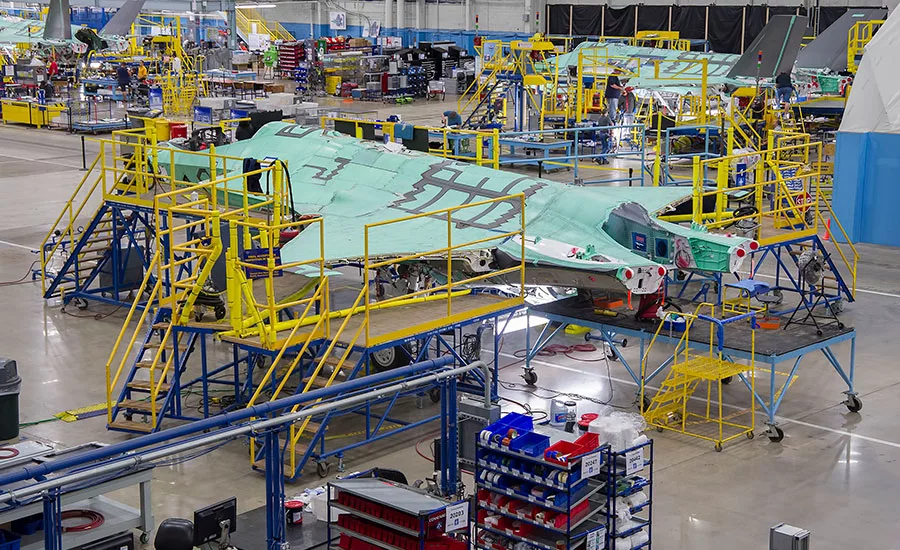
Having a larger, well-staffed U.S. manufacturing industry will provide a comprehensive framework to manage risk and support our national defense. Photo courtesy Lockheed Martin

Navy shipyard
manufacturing for national defense
June 10, 2024

U.S. workforce demographics and weak manufacturing infrastructure are undermining our national defense goals. These deficiencies threaten our military readiness, national resiliency and global competitiveness. Having a larger, well-staffed U.S. manufacturing industry will provide a comprehensive framework to manage risk and support our national defense.

Recent data shows China-owned enterprises continue to be entrenched in the supply chains for critical defense-related products. Re-establishing domestic supply chains for these products is vital.

In the past, the U.S. military could call upon and employ a large domestic industrial base. America was able to switch gears and ramp up to manufacture essential items. For example, my father worked for Singer Sewing Machines, but during World War II his department produced bombsights.

The pandemic was a painful reminder that such reserve capacity no longer exists. As the United States enters an era of fierce global competition, workforce development and manufacturing infrastructure are essential.

Regarding infrastructure, a higher priority should be placed on manufacturing infrastructure rather than transportation infrastructure. In case of a war, our transportation system would be quite adequate. In contrast, experts agree that we would run out of artillery shells and missiles in a few weeks despite a current multiyear plan to double production.


Skilled Workforce—No Small Challenge

Infrastructure aside, senior military officials say their No. 1 quagmire is hiring and retaining skilled employees. The Navy’s shipyards report that it is nearly impossible to find qualified pipe fitters, plumbers and welders for repairs and maintenance.

Matthew Paxton, president of the Shipbuilders Council of America, told the House Armed Services Committee that the No. 1 challenge the nation’s private shipyards face is the ability to attract and retain a proficient workforce to deal with the changing demands of their government customers.

Looking for quick answers on assembly and manufacturing topics? Try Ask ASM, our new smart AI search tool. Ask ASM →

In testimony to the same committee, former deputy defense secretary and current president and CEO of the National Defense Industrial Association David Norquist noted that just 1.1 million Americans are employed in the defense industry, compared to 3 million in 1985.

Creating a pipeline of skilled workers is therefore critical to our national defense goals. To achieve this, a national mind shift is needed. We must promote skills-based education and demonstrated proficiency as pathways to the high-paying new-collar careers of the future.

According to a report from Jobs for the Future, 81 percent of employers think they should be hiring based on skills rather than degree. Recently, companies like Google, IBM, Accenture, and others are putting greater emphasis on skills-based hiring and dropping some degree requirements. According to a recent Harvard Business Review study, this reset could have major implications for how employers recruit new talent.


Keeping Up

Advanced manufacturing technologies are just as important as a skilled workforce to maintaining a strong national defense.

Collaborations between universities and manufacturers are helping. For instance, Tetramer Technologies is collaborating with the University of Chicago on a $1 million U.S. Army project to expand the capabilities of infrared photodetectors used in military applications like night vision and thermal imaging. The upshot of the project will be manufacturing process improvements that will reduce costs and improve performance for civilian applications.

The government is also helping. For example, the Defense Department operates nine of the 17 U.S. Manufacturing Innovation Institutes. These institutes are engaged in research and development, growing our manufacturing ecosystems, and providing education and workforce development. For example, the DOD is forming a domestic supply chain for critical materials used in both commercial products and military systems. The Pentagon has awarded $440 million to establish a domestic supply chain ecosystem for “mine to magnet” rare earth elements by 2027.

The $1.2 trillion Bipartisan Infrastructure Law directs federal funds toward infrastructure and competitiveness spending, including $800 million dedicated for workforce development. The $280 billion CHIPS and Science Act appropriates $52.7 billion to revitalize the U.S. semiconductor industry, including a $200 million Workforce and Training Fund. The goal is to train 100,000 new technicians through apprenticeships, career and technical education, and career pathway programs, over 10 years.

Larry Fink, chairman and CEO of BlackRock, world’s largest investment firm, said this about infrastructure investments: “Infrastructure is one of the most exciting long-term investment opportunities, as a number of structural shifts reshape the global economy. We believe the expansion of both physical and digital infrastructure will continue to accelerate, as governments prioritize self-sufficiency and security through increased domestic industrial capacity, energy independence, and onshoring or near-shoring of critical sectors.


What You Can Do

Improving our industrial base to support national defense is not solely the province of the federal government, however. Manufacturers in any industry can help simply by bringing more work back from other countries. Using the “total cost of ownership” model, companies can reshore 20 or 30 percent of what is now imported without impacting margin or price.

Military readiness, global competitiveness, and continued reshoring success all require a resilient infrastructure and a larger, well-staffed U.S. manufacturing industry. Let’s collaborate to support skilled workforce development and rebuild the U.S. manufacturing base. To get help or to give help, contact me at 847-867-1144 or harry.moser@reshorenow.org.

See more articles from our June 2024 issue!

KEYWORDS: defense industry reshoring skilled labor shortage workforce development

Share This Story

Looking for a reprint of this article?
From high-res PDFs to custom plaques, order your copy today!

Harry Moser is the president of the Reshoring Initiative. His column will appear every other month, alternating with Austin Weber’s “On Campus.” Has your company reshored production? Are you thinking about it? We’d like to hear of your success or help you achieve it. With your approval, we would love to report on your successes or opportunities in future issues. Contact harry.moser@reshorenow.org.

Recommended Content

JOIN TODAY
To unlock your recommendations.

Already have an account? Sign In

  • Made in the U.S.A.

    Consumer Products Manufacturing: Made in the USA

    Supply chain lessons learned during the coronavirus...
    Automated Assembly Systems
    By: Austin Weber
  • Best Practices for Press-Fit Assembly

    Best Practices for Press-Fit Assembly

    In manufacturing, ironclad formulas for success are hard...
    Assembly Presses
    By: Jim Camillo
  • aem0523leader-tesla1.jpg

    Tesla Rethinks the Assembly Line

    Engineers at Tesla Inc. have developed a new process that...
    Electrification
    By: Austin Weber
Manage My Account
  • eMagazine Subscription
  • Assembly Newsletters
  • Online Registration
  • Subscription Customer Service
  • Manage My Preferences

More Videos

Sponsored Content

Sponsored Content is a special paid section where industry companies provide high quality, objective, non-commercial content around topics of interest to the ASSEMBLY audience. All Sponsored Content is supplied by the advertising company and any opinions expressed in this article are those of the author and not necessarily reflect the views of ASSEMBLY or its parent company, BNP Media. Interested in participating in our Sponsored Content section? Contact your local rep!

close
  • ultrasonic welding
    Sponsored bySonobond Ultrasonics

    Engineering Efficiency in High-Performance Assembly: How Ultrasonic Welding Enhances Throughput, Reliability and Quality

  • UV curing system
    Sponsored byDymax

    Why UV Intensity Alone Doesn’t Define Curing Performance

  • wooden pallets
    Sponsored byLEAN Manufacturing Products

    Eliminating Waste on the Shop Floor: Applying Lean Principles to Improve Manufacturing Efficiency

Popular Stories

ASSEMBLY News Now, episode-30: Volvo Redesigns EV Manufacturing

Volvo Redesigns EV Manufacturing

Boeing CEO Kelly Ortberg announces 1 billion investment

Boeing Plans $1 Billion Wichita Investment, Workforce Training Center

GE Appliances Worker on Line

GE Appliances Expands Factory AI With 800 Gemini Enterprise Agents

Watch the latest episode of ANN now!

Events

July 24, 2025

From Shop Floor to CFO: How Manufacturers Are Closing the Loop Between Operations and Finance

On Demand Learn how manufacturers are bridging the gap between the shop floor and ERP systems to gain real-time visibility, streamline operations, and kick-start digital transformation—without waiting years.

Sponsored by:

PicoStratusGreen
July 30, 2025

Buffer Analysis and Design Fundamentals for Manufacturing Excellence

On Demand In this presentation, Dr. Herman Tang shares practical insights from his industry experience and research on buffer management in manufacturing operations.

View All Submit An Event

Poll

Difficult Assembly Processes

Which assembly process gives you the most difficulty?
View Results Poll Archive

Products

Manufacturing Cost Policy Deployment (MCPD) Profitability Scenarios: Systematic and Systemic Improvement of Manufacturing Costs

Manufacturing Cost Policy Deployment (MCPD) Profitability Scenarios: Systematic and Systemic Improvement of Manufacturing Costs

See More Products
Register for webinar - Modernizing Automotive Assembly: Why Upgrading Legacy MES is a Business Imperative

Related Articles

  • A technician uses a tablet with eFactoryPro

    Enabling the Reshoring Surge: Best Practices for Strengthening the U.S. Workforce

    See More
  • moser

    Trump making U.S. skilled workforce great (again).

    See More

Related Products

See More Products
  • The First Snap-Fit Handbook 2e: Creating and Managing Attachments for Plastics Parts

  • Kaizen Assembly: Designing, Constructing, and Managing a Lean Assembly Line

  • risk management.jpg

    Risk Management

See More Products

Events

View AllSubmit An Event
  • April 10, 2014

    Managing an Ergonomics Process

     Attendees will develop the ability to recognize, plan, and integrate the strategic elements of ergonomics into their current business processes. This workshop is not an introductory course and is intended for those who have previously attended the Applied Industrial Ergonomics seminar.  
View AllSubmit An Event

Related Directories

  • U.S. Heatstake

×

Never miss the latest news and trends driving the manufacturing industry

Stay in the know on the latest assembly trends.

JOIN TODAY!
  • RESOURCES
    • Advertise
    • Contact Us
    • Directories
    • Manufacturing Division
    • Store
    • Want More?
  • SIGN UP TODAY
    • Create Account
    • eMagazine
    • Newsletters
    • Customer Service
    • Manage Preferences
  • SERVICES
    • Marketing Services
    • Reprints
    • Market Research
    • List Rental
    • Survey/Respondent Access
  • STAY CONNECTED
    • LinkedIn
    • Facebook
    • Instagram
    • YouTube
    • X (Twitter)
  • PRIVACY
    • PRIVACY POLICY
    • TERMS & CONDITIONS
    • DO NOT SELL MY PERSONAL INFORMATION
    • PRIVACY REQUEST
    • ACCESSIBILITY

Copyright ©2026. All Rights Reserved BNP Media, Inc. and BNP Media II, LLC.

Design, CMS, Hosting & Web Development :: ePublishing