Assembly Magazine logo
search
Ask ASSEMBLY AI
cart
facebook twitter linkedin youtube
  • Sign In
  • Create Account
  • Sign Out
  • My Account
Assembly Magazine logo
  • TRENDS
    • Ask ASSEMBLY AI
    • Trends
    • News
    • New Products
  • INDUSTRIES
    • Aerospace
    • Appliance
    • DFMA Assembly
    • Medical Devices
    • Green Manufacturing
    • Lean Manufacturing
    • Machinery Assembly
    • Electronics Assembly
    • Automotive
  • TECHNOLOGIES
    • Adhesives & Dispensing
    • Assembly Presses
    • Automated Assembly Systems
    • Manufacturing Management
    • Manufacturing Software
    • Motion Control
    • Screwdriving & Riveting
    • Robotics
    • Test & Inspection
    • Plastics & Metal Welding
    • Wire Processing
    • Workstations
  • AUTONOMOUS & ELECTRIC MOBILITY
    • AEM Magazine Archives
    • Autonomy
    • Electrification
    • Mobility Services
    • Assembly & Testing
    • AV/EM News
  • MEDIA
    • Ask ASSEMBLY AI
    • Podcasts
    • Assembly News Now
    • Assembly TV
    • Webinars
    • eBooks
  • EVENTS
    • Calendar
    • The ASSEMBLY Show
  • MORE
    • Exclusives >
      • Plant of the Year
      • Capital Spending
    • Buyers Guide >
      • Supplier Insights
    • Classifieds
    • Featured Products
    • Newsletters
    • Store
    • White Papers
    • Columns
    • Sponsor Insights
  • INFOCENTER
    • Assembly & Test Solutions
  • EMAGAZINE
    • eMagazine
    • Archive Issues
    • Advertise
    • Contact Us
    • Sign Up
Autonomous & Electric MobilityAssembly and TestingAV/EM NewsElectrification

New EV Battery Enclosure Lowers Carbon Emissions
By Austin Weber
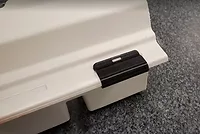
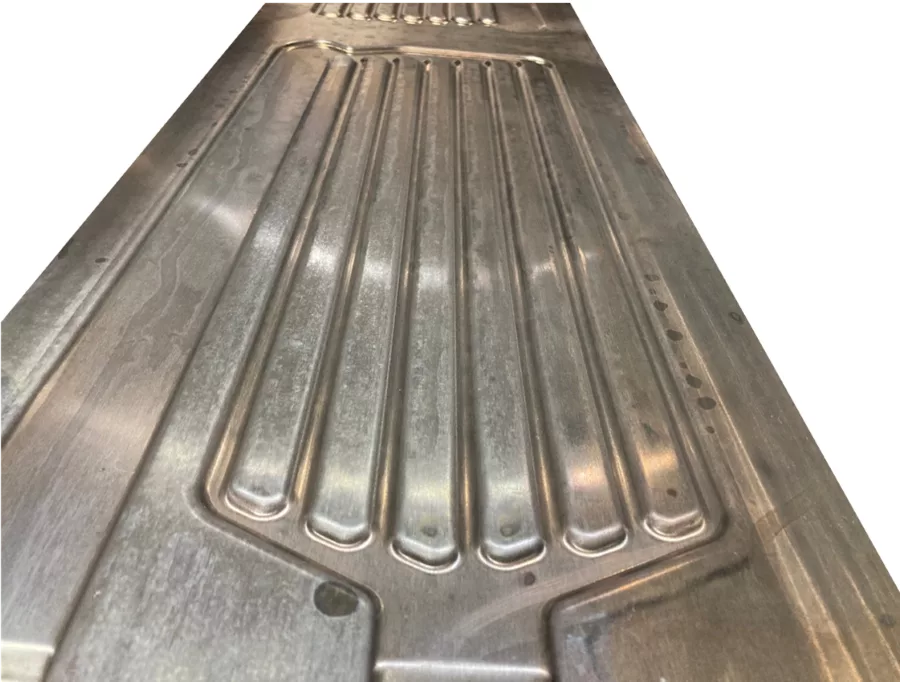
Fraunhoferbatterycase.png

Photo courtesy Fraunhofer Institute for Machine Tools and Forming Technology 

October 8, 2024

CHEMNITZ, Germany—A European research project called COOLBat is developing next-generation battery enclosures for electric vehicles. The goal of the initiative is to improve charging power and range, while lowering environmental impact.

Engineers at the Fraunhofer Institute for Machine Tools and Forming Technology (IWU) are examining new ways to make battery enclosures lighter and cut carbon dioxide emissions by 15 percent. They aim to achieve this by combining individual systems, packing more functions into a smaller installation space, and using new heat-conductive materials and bio-based flame retardant coatings.

“Integrating new lightweight construction methods and more functions in a smaller installation space with fewer interfaces makes it possible to reduce weight while also cutting carbon emissions,” says Rico Schmerler, an engineer in the battery systems department at Fraunhofer IWU who is working on the project. “Reducing mass lets us increase energy density, and thus range, even as the number of battery cells stays the same. By making the enclosure lid out of a fiber composite material, we were able to reduce the mass by more than 60 percent compared to the reference out of steel.”

Another option for reducing weight is combining individual systems in the enclosure that previously performed thermal and mechanical functions separately. For example, cooling channels cast at the Fraunhofer Institute for Manufacturing Technology and Advanced Materials are incorporated directly into load-bearing structures such as cross beams.

The cooling unit function is combined with underride protection in a single component, the base plate. Aluminum foam inside the base plate absorbs the energy from stone impacts and accidents. Combined with a phase-change material, a kind of wax that can be used to store and later release a wealth of thermal and cooling energy, the aluminum foam also lowers the amount of energy needed to cool EV batteries.

According to Schmerler, this configuration protects battery cells from mechanical loads and overheating at once. A fluid flows through the channels, cooling the cells not only from below but also from the sides. This reduces the electricity needed to cool the cells and eliminates the need for cooling elements elsewhere in the vehicle.

“We’re focusing on functionally integrated structures,” explains Schmerler. “Tasks that used to be handled by different modules inside the battery are being integrated into a single component—the base assembly, in this case—to shrink the installation space and streamline interfaces. These base plates will provide protection from overheating and avert damage to the battery core in case of an accident.”

Schmerler and his colleagues are using batteries from a Mercedes-Benz EQS sport utility vehicle for their R&D project.

Looking for quick answers on assembly and manufacturing topics? Try Ask ASM, our new smart AI search tool. Ask ASM →

KEYWORDS: battery cooling battery design battery technology electric vehicle battery electric vehicles lightweighting sustainability

Share This Story

Looking for a reprint of this article?
From high-res PDFs to custom plaques, order your copy today!

Austinweber headshot
Austin has been senior editor for ASSEMBLY Magazine since September 1999. He has more than 21 years of b-to-b publishing experience and has written about a wide variety of manufacturing and engineering topics. Austin is a graduate of the University of Michigan.

Recommended Content

JOIN TODAY
To unlock your recommendations.

Already have an account? Sign In

  • Made in the U.S.A.

    Consumer Products Manufacturing: Made in the USA

    Supply chain lessons learned during the coronavirus...
    Automated Assembly Systems
    By: Austin Weber
  • Best Practices for Press-Fit Assembly

    Best Practices for Press-Fit Assembly

    In manufacturing, ironclad formulas for success are hard...
    Assembly Presses
    By: Jim Camillo
  • aem0523leader-tesla1.jpg

    Tesla Rethinks the Assembly Line

    Engineers at Tesla Inc. have developed a new process that...
    Assembly and Testing
    By: Austin Weber
Manage My Account
  • eMagazine Subscription
  • Assembly Newsletters
  • Online Registration
  • Subscription Customer Service
  • Manage My Preferences

More Videos

Sponsored Content

Sponsored Content is a special paid section where industry companies provide high quality, objective, non-commercial content around topics of interest to the ASSEMBLY audience. All Sponsored Content is supplied by the advertising company and any opinions expressed in this article are those of the author and not necessarily reflect the views of ASSEMBLY or its parent company, BNP Media. Interested in participating in our Sponsored Content section? Contact your local rep!

close
  • ultrasonic welding
    Sponsored bySonobond Ultrasonics

    Engineering Efficiency in High-Performance Assembly: How Ultrasonic Welding Enhances Throughput, Reliability and Quality

  • UV curing system
    Sponsored byDymax

    Why UV Intensity Alone Doesn’t Define Curing Performance

  • wooden pallets
    Sponsored byLEAN Manufacturing Products

    Eliminating Waste on the Shop Floor: Applying Lean Principles to Improve Manufacturing Efficiency

Popular Stories

ASSEMBLY News Now, episode-30: Volvo Redesigns EV Manufacturing

Volvo Redesigns EV Manufacturing

Boeing CEO Kelly Ortberg announces 1 billion investment

Boeing Plans $1 Billion Wichita Investment, Workforce Training Center

GE Appliances Worker on Line

GE Appliances Expands Factory AI With 800 Gemini Enterprise Agents

Watch the latest episode of ANN now!

Events

July 24, 2025

From Shop Floor to CFO: How Manufacturers Are Closing the Loop Between Operations and Finance

On Demand Learn how manufacturers are bridging the gap between the shop floor and ERP systems to gain real-time visibility, streamline operations, and kick-start digital transformation—without waiting years.

Sponsored by:

PicoStratusGreen
July 30, 2025

Buffer Analysis and Design Fundamentals for Manufacturing Excellence

On Demand In this presentation, Dr. Herman Tang shares practical insights from his industry experience and research on buffer management in manufacturing operations.

View All Submit An Event

Poll

Difficult Assembly Processes

Which assembly process gives you the most difficulty?
View Results Poll Archive

Products

Manufacturing Cost Policy Deployment (MCPD) Profitability Scenarios: Systematic and Systemic Improvement of Manufacturing Costs

Manufacturing Cost Policy Deployment (MCPD) Profitability Scenarios: Systematic and Systemic Improvement of Manufacturing Costs

See More Products
Register for webinar - Modernizing Automotive Assembly: Why Upgrading Legacy MES is a Business Imperative

Related Articles

  • Continental Structural.png

    Continental Structural Plastics Improves EV Battery Enclosure Assembly

    See More
  • StoreDot.png

    New EV Battery Promises 5-Minute Charge Times

    See More
  • EVPlant.JPG

    Top Cities for New EV Battery Supplier Plants Cited in Report

    See More

Related Products

See More Products
  • assembly june 2019

    ASSEMBLY June 2019 Issue

  • november 2019 assembly

    ASSEMBLY November 2019 Issue

See More Products

Events

View AllSubmit An Event
  • June 9, 2026

    The Battery Show Europe

    The Battery Show Europe returns to Stuttgart, Germany to bring together engineers, OEM’s, Tier 1 & 2 suppliers and innovators shaping the future of battery and H/EV technology.
View AllSubmit An Event

Related Directories

  • Carbon

×

Never miss the latest news and trends driving the manufacturing industry

Stay in the know on the latest assembly trends.

JOIN TODAY!
  • RESOURCES
    • Advertise
    • Contact Us
    • Directories
    • Manufacturing Division
    • Store
    • Want More?
  • SIGN UP TODAY
    • Create Account
    • eMagazine
    • Newsletters
    • Customer Service
    • Manage Preferences
  • SERVICES
    • Marketing Services
    • Reprints
    • Market Research
    • List Rental
    • Survey/Respondent Access
  • STAY CONNECTED
    • LinkedIn
    • Facebook
    • Instagram
    • YouTube
    • X (Twitter)
  • PRIVACY
    • PRIVACY POLICY
    • TERMS & CONDITIONS
    • DO NOT SELL MY PERSONAL INFORMATION
    • PRIVACY REQUEST
    • ACCESSIBILITY

Copyright ©2026. All Rights Reserved BNP Media, Inc. and BNP Media II, LLC.

Design, CMS, Hosting & Web Development :: ePublishing