New Adhesive Bonds Polypropylene
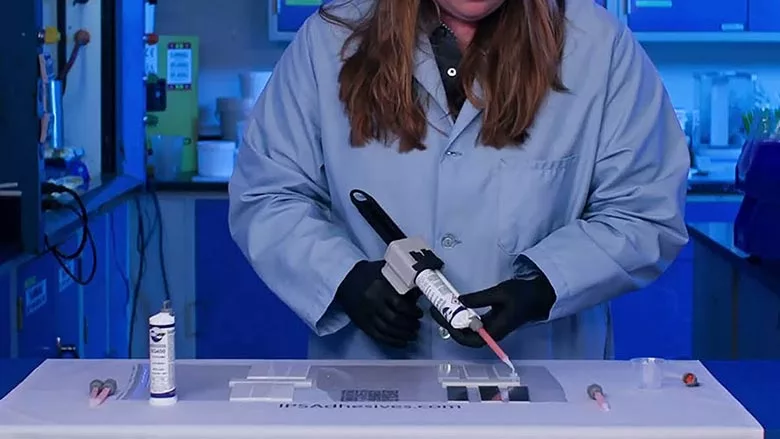
Most suppliers will test their adhesives on sample parts.
Photo courtesy IPS Adhesives
Approximately one-fourth of today’s plastics applications involve polypropylene (PP), a popular choice because of its strength, durability, moisture resistance, and relatively low cost. But with such advantages comes a challenge: PP has low surface energy (LSE), making it difficult to use adhesives for bonding. That means engineers often opt for more costly joining methods, such as welding or mechanical fastening.
Now, however, advances in adhesive chemistry have spawned a new generation of adhesives designed specifically for bonding LSE materials like PP, giving engineers new options for adding value to their product designs and making life easier for assemblers across many industries.
Polypropylene has a low surface energy, which means its molecules do not readily attract or adhere to other substances. This property is due to its non-polar molecular structure, composed mostly of carbon and hydrogen atoms without polar functional groups like hydroxyl (OH), a structure that offers fewer sites for the hydrogen binding, which is necessary for adhesion to many surfaces.
PP is chemically inert and resistant to many solvents, acids and bases. This resistance also reduces its reactivity with adhesives and coatings, making it challenging to establish strong bonds. Polypropylene often has a semicrystalline structure, where polymer chains are arranged in ordered crystalline regions. This structure reduces the surface area available for bonding, as compared to materials with an amorphous structure.
Bonding Options
Because of its low surface energy, anyone wishing to fasten PP to other substrates has limited options. When bonding PP to itself, designers might increase the surface energy through hot welding techniques or plasma treatments. Increasing the surface temperature of PP may also enable it to bond to more standard adhesives that do bond to metals. Such approaches, however, can be complex and add a step to the process.
Fastening PP to metals such as stainless steel, aluminum or other materials often involves mechanical fasteners, such as rivets, screws and clips. These methods can be effective, but also add complexity, weight and cost.
Today, thanks to advances in adhesive chemistry, engineers can specify adhesives specifically formulated to bond PP to metals, other plastics, and many other substrates. Many adhesive manufacturers offer formulas designed to bond to low surface energy materials. Specific formulations vary in installation practices and performance, so a comprehensive evaluation of product claims, features and benefits is essential.
Looking for quick answers on assembly and manufacturing topics? Try Ask ASM, our new smart AI search tool. Ask ASM
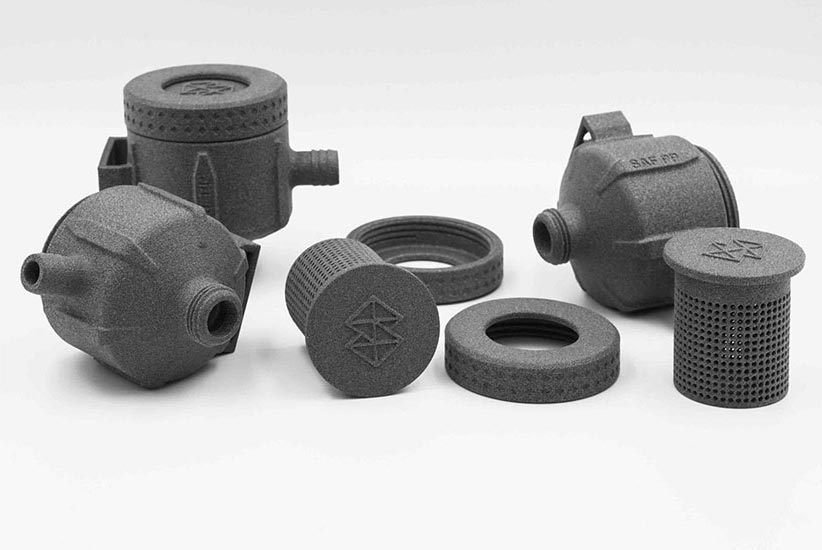
PP is commonly used for various containment systems for fuels, chemicals, wastewater and hazardous materials. Photo courtesy Tri-Tech 3D
Selecting an Adhesive for LSE Materials
Adhesives for LSE materials differ regarding what they can bond, surface treatment requirements, test data, environmental resistance characteristics, curing and set times, and sag performance. When evaluating adhesives, consider the following:
- Surface compatibility. Read the fine print. While many packages say they bond plastic, some work well with certain plastics, but not others due to differences in surface characteristics. Surface preparation requirements may also be stated. If PP must be bonded, be sure it is specifically mentioned.
- Implementation. Review and follow vendor guidelines closely. LSE bonding can be tricky, and there is little tolerance for variation from the established procedure.
- The curing and setting time. How long does it take the bond to set initially and finally cure? Most LSE adhesives will set within about six hours and cure fully in about 24 hours. Be wary of any process that claims faster or significantly longer duration.
- Test results. LSE adhesives are relatively new on the market, so many companies may still be testing their adhesives on various materials, but some results are emerging. Most vendors will publish what they have tested and will provide samples so you can do your own testing.
- Low Sag. Low sag is the ability of the adhesive to resist flowing or slumping when it is applied to a substrate vertically or overhead. This property is valuable, particularly when bonding two surfaces that are not in a horizontal position. A low-sag adhesive will not drip or run, enabling more precise application. More precision improves bonding by maintaining a consistent bonding surface. It also saves money by reducing waste and improves overall productivity by ensuring consistent application.
- Bond strength: After allowing the adhesive to cure fully according to the manufacturer’s instructions, test the bond strength. Try to peel or stress the bond to see if it holds up to normal use conditions. It is important to do this 24 hours, and then maybe each month. If you get past three months, you can be confident that you have a permanent bond. (Note that it is often the case that the substrate will fail before the adhesive.)
- Environmental stability: Review environmental factors such as temperature variations, moisture, UV exposure, and chemicals, depending on where the plastic will be used.
- Support: Vendors are anxious to expand applications for their products, so most will be more than happy to work closely with manufacturers to understand how their adhesives can achieve new bonds.

In the automotive industry, PP is used for a variety of interior, exterior and under-the-hood applications. For example, the material is used in the center floor console trim, front-seat back boards and instrument-panel trim of this SUV. Photo courtesy Jaguar Land Rover
Applications
Polypropylene is used in transportation, consumer electronics, consumer goods, packaging, outdoor furniture, signage, industrial prototyping, and a wealth of other applications.
The transportation industry, especially the automotive industry, is among the largest consumers of PP, because of its light weight and moldability. To increase surface energy, many automotive manufacturers rely on plasma surface treatment, which can be expensive. Removing this step from the process can save thousands of dollars and shorten overall cycle times.
Others join PP parts with threaded fasteners or clips. Another option is to design snap fits into plastic components. Choosing a mechanical fastener for a transportation application can lead to a heavier, noisier, and more expensive assembly than using an adhesive. Assembly of large components, such as truck panels, must maintain high strength joints without adding the weight of fasteners.
Builders often choose PP for applications like facades and cladding due to its weather resistance and aesthetic appeal. They use several tactics to overcome the LSE of the material, including surface treatments, primers and mechanical fasteners. Adhesives allow these panels to be securely attached without fasteners, maintaining a sleek, uninterrupted appearance. Low-sag formulations are ideal for building applications, because they enhance aesthetics.
Designers of consumer products often start out using fasteners. Adhesives, however, offer advantages in terms of aesthetic appeal (no visible fasteners), structural integrity, and simplification of assembly processes. For instance, one manufacturer needed a smooth PP surface for a product that required a particular touch and feel. However, the plastic part also had to be joined to an aluminum backing to provide structural integrity. An adhesive that could bond PP to aluminum was perfect for this application.
Many modern packaging materials include combinations of PP and other LSE materials. An adhesive that can reliably bond these materials allows for more versatile and innovative packaging designs.
Threated fasteners and rivets are traditionally used to assemble outdoor furniture, providing strong, reliable joints. But, fasteners often require periodic maintenance to prevent rust. High-strength adhesives that can bond plastics and metals, especially decorative aluminum components, present new opportunities for furniture designers to add value and cut costs.
Signage often involves LSE materials, such as PP, polyethylene (PE) and powder-coated metals. Many signage and display designers prefer these materials for their durability, light weight, cost-effectiveness and environmental resistance. LSE adhesives are formulated to adhere well to these substrates.
Durability is a particularly important design consideration for signage applications. PP can withstand outdoor environments, including exposure to UV radiation, temperature fluctuations, moisture and chemicals. This durability ensures that signage remains securely bonded and maintains its integrity over time. Adhesives also often provide a clean, seamless bond without visible gaps or residues, which is crucial for maintaining a professional appearance.

SCIGRIP SG400LSE is specifically formulated for strong, reliable bonding on LSE materials, such as PP and polyethylene. The new adhesive requires no surface preparation and has low sag. Photo courtesy IPS Adhesives
Prototyping frequently involves a variety of materials, including LSE plastics like PP, PE and Teflon (PTFE). LSE adhesives enable engineers to bond these challenging materials effectively, expanding the range of prototype designs and functionalities.
Using adhesives specially formulated to bond to LSE substrates allows for more intricate and innovative prototype designs. Designers can incorporate different materials with varying properties (such as flexibility, durability or chemical resistance) into prototypes without being limited by bonding constraints. They can also streamline the prototyping process by reducing the need for mechanical fasteners, complex welding processes, or surface treatments that may require additional time and resources. This efficiency can lead to faster turnaround times and reduced prototyping costs.
PP is commonly used for various storage and containment systems for fuels, chemicals, wastewater and hazardous materials. An adhesive that bonds well to PP can help ensure leak-proof joints and seams, enhancing the reliability and safety of storage systems without mechanical fasteners. In each of these applications, the ability to bond polypropylene effectively with adhesives contributes to improved durability, safety, and operational efficiency. It enables manufacturers to create robust and reliable containers and tanks that meet stringent performance requirements across diverse industries.
These examples are just a glimpse of what can be achieved when engineers are no longer restricted by the inability to bond PP. This capability enhances durability, strength and cost-effectiveness in existing PP applications and also opens doors to entirely new applications.
For more information on adhesive bonding, read these articles:
Adhesive Bonding: Energizing Low-Surface Energy Plastics
Bonding Breakthrough for Polyolefins
New Tech for Adhesive Bonding
Looking for a reprint of this article?
From high-res PDFs to custom plaques, order your copy today!