Configuration Management Software Facilitates Customization
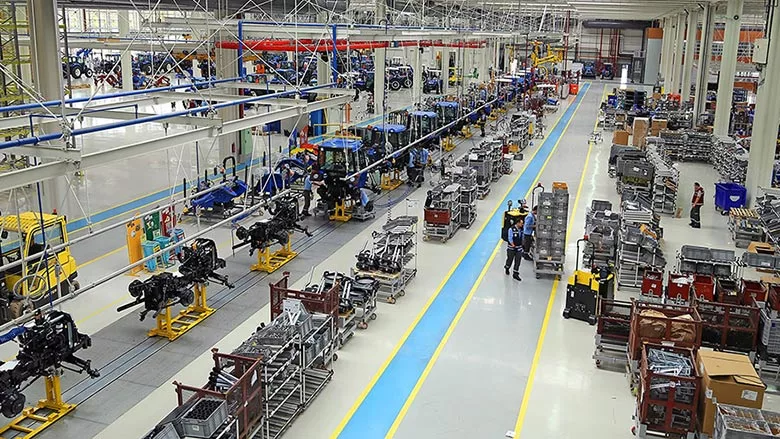
CLM software connects manufacturing, sales and engineering departments to ensure that everyone is on the same page as configurable products are created and sold. Photo courtesy CNH Industrial
Product manufacturing today is all about customization. Whether it’s the color of a car’s side mirrors, the specific size of a wind turbine, or the type of powder coating for industrial machinery, demand for configurability continues to grow.
With that growth comes increasing complexity. Manufacturers must ensure that they can sell, manufacture and service all these configurations in a way that’s quick, efficient and accurate. Underpinning this challenge is the various software versions of product groups, which can cause delays in time to market, greater expense and a greater possibility of errors.
Organizations need a way to connect manufacturing, sales and engineering departments to create alignment as these configurable products are created and sold. They must be able to show consumers what options are available, and they need to a way to calculate the cost of product variants. All too frequently, however, different departments lack alignment and aren’t looking at the same data, which can cause numerous challenges.
Modern manufacturers need configuration lifecycle management (CLM), which has the potential to transform how companies approach configurable products.

CNH uses CLM software to create a seamless user experience for all its customers, regardless of what brand they are ordering. Photo courtesy CNH Industrial
What Is CLM?
CLM gathers and manages configuration knowledge and rules so manufacturers can make products based on a shareable, central product model. It provides a configuration platform so that all business functions and systems—engineering, sales, production and service—are integrated.
CLM integrates these four functions’ systems from the customers’ point of view so manufacturers can design and launch new products for less money and with greater efficiency. By accelerating time to market and creating a frictionless life cycle for their configurable products, companies gain a competitive advantage.
Here’s what this might look like in practice: An engineer uses CLM’s comprehensive product and feature catalog to design and manage complex product configurations with greater efficiency. A sales staffer discusses product options with a customer, checking in real time to see whether those options are valid in combination. A member of the production team uses CLM to make sure that the products they are manufacturing align with the configured specifications that sales and engineering provide. And technicians servicing industrial machinery have the exact specifications ahead of time, making maintenance and repair fast and profitable. By aligning all of these functions around a shared source of truth, companies save time, increase efficiency, and strengthen the customer experience.
Looking for quick answers on assembly and manufacturing topics? Try Ask ASM, our new smart AI search tool. Ask ASM

CLM software gathers and manages configuration knowledge and rules so manufacturers can make products based on a shareable, central product model. Photo courtesy CNH Industrial
CLM software and product lifecycle management (PLM) software are closely related, but have different concepts. Think of PLM as the source for product configurations, because it’s where manufacturers design and engineer products. Though a PLM system provides management for product variants and configuration management, it’s usually geared toward the needs of engineers, helping them decisions during the design and engineering phases of the product. These decisions are sometimes offered to customers, but they are typically only of interest to engineers. Since choices and rules concerning localization, market availability and so on are beyond the purview of the engineering team, they are not included in PLMs.
By combining PLM with CLM, the information generated by engineers during the product development process is shared across the company. No longer siloed in engineering, these rules are combined with product rules from other departments, creating a centralized data hub accessible throughout the organization. This centralized configuration data is continually updated and refined, ensuring complete accuracy throughout the value chain.
In addition to PLM systems, CLM integrates with a company’s other enterprise applications, including enterprise resource planning (ERP) software, customer relationship management (CRM) software, and configure-price-quote (CPQ) software, to create a complete feedback loop of accurate configuration data. Joining these systems at the enterprise level maximizes the product life cycle and the productivity of teams across the enterprise.
This makes CLM the foundational element of digital transformation for discrete manufacturing by enabling companies to address increasing demand for rules, variants and digital offerings. It also empowers manufacturers to offer new business models like smart services, product-as-a-service and green products.

Working with Configit, Nord implemented a CLM process that unites information from CRM and ERP software and external processes with partners and dealers. Photo courtesy Nord Drivesystems
CLM in Discrete Manufacturing
Discrete manufacturing produces distinct components, materials, parts or subassemblies that are then assembled into a final product. CLM works here, too. It connects the CPQ, PLM and ERP systems through the product configuration data to make a single, shared source of all valid product configurations. The valid data then goes to the various departments: engineering, manufacturing, marketing, sales and service.
Manufacturers can use CLM to scale production so they can innovate, improve quality, and increase productivity. Implementing CLM software means customers choose only from valid options as they order products. In addition, manufacturers can use these configurations for more efficient maintenance because they know exactly which options, features and specifications are in each product. There’s also a sales opportunity, since the sales staff can recommend upgrades that are compatible with each product.

In addition to PLM systems, CLM integrates with a company’s other enterprise applications, including ERP, CRM and CPQ software. Photo courtesy Nord Drivesystems
One manufacturer that is using CLM software to its advantage is tractor company CNH Industrial. A Configit customer since 2012, CNH first launched its dealer portal, eQuipment, using Configit Runtime and Configit Model. The portal is being used in more than 120 countries.
In 2018, CNH began an initiative to align is manufacturing software applications and to bring all its various brands under the same central application. This initiative was developed based on experience and feedback from eQuipment users. The goal was to create a seamless user experience for all CNH customers, regardless of what brand they were ordering.
Configit’s Sales Configurator, powered by Virtual Tabulation (VT) technology, formed the basis of the company’s new sales app, which includes its global dealer network. The Sales Configurator extracts proprietary data from SAP and converts it into VT files. When orders are complete, they are automatically uploaded to SAP, allowing SAP to handle the entire ERP and execution of orders.
During order fulfillment, configurations are verified against the VT files to ensure they are complete and consistent.
CLM software isn’t just for manufacturers of large, complex assemblies like tractors. Manufacturers of any configurable or customizable product can benefit from the software.
Once such company is Demant, one of the world’s largest manufacturers of hearing aids. With headquarters in Denmark and production sites in Poland and Mexico, Demant employs some 15,000 people around the world.
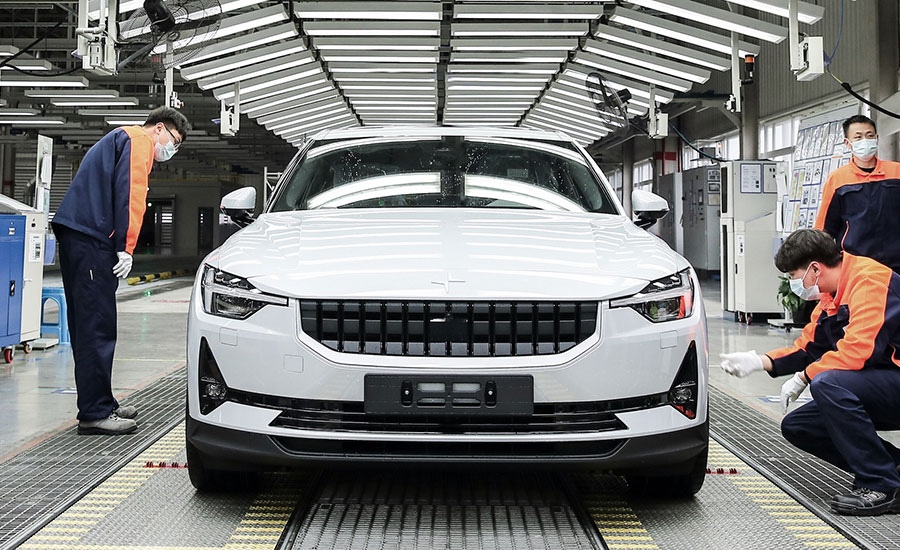
By aligning all of company functions around a shared source of truth, CLM software saves companies time, increases efficiency, and strengthens the customer experience. Photo courtesy Zhejiang Geely Holding Group Co. Ltd.
In 2014, Demant was facing challenges related to managing large volumes of product data. Because this data was maintained locally in different system domains, the result was high data inconsistency, inadequate support for complexity and mass customization, and misinterpretation of orders due to inefficient communication.
Demant’s goal was to create a strong foundation that enabled controlled product master data and supported the entire value chain. This centralized enterprise software would be fed with data from back-end source systems to deliver a single source of product variant definition based on a common language, delivery form and communication.
Working with Configit, Demant created an enterprise product data services (EPDS) system for its Oticon brand. Using Configit’s modeling software, EPDS contains nearly 1,000 attributes, or feature families. Each attribute value receives a unique ID used in the communication contract, enabling an independent modeling structure and flexible renaming attributes and values without a negative impact. This also enables communication across countries free of language or brand context issues.
EPDS provides a single point of contact for Demant’s product master data, sharing product variant information and inter-product relations across all enterprise systems. Because EPDS collects, connects and provides all systems, including R&D platforms, sales systems, production and quality logging, it results in consolidated configuration data across the whole suite of online services. This enables Demant to provide a unified and high-quality customer journey throughout the product life cycle, such as e-shop catalogs fed directly with language and country localization product data, providing full accessory overview, and correct validation of items in for service.
This global master data supports working in a local market context, enabling language, color and variant localization. Whether a customer is shopping using a website or a paper catalog, all product information is identical. Technical product data sheets, for example, are created using content from the master data fed into a design template, with the only manual involvement occurring early on during the design phase of each template.
Customers today are used to getting what they want. For manufacturers, this ranges from difficult to impossible without a clear configuration process. Overcoming the complexity of today’s configurable products requires a CLM approach, which can work in concert with PLM to create a single source of truth.
For more information on configuration management and manufacturing software, read these articles:
Configuration Management How-To
The Ship of Theseus: Lessons for Configuration Management
Modern Tools for Modern Product Development
Looking for a reprint of this article?
From high-res PDFs to custom plaques, order your copy today!