Making Sense of Machine Data With Time Series Databases

Video: pingingz / Creatas Video+ / Getty Images Plus
Manufacturing is becoming more data-driven by the day. Machines on the factory floor generate overwhelming volumes of sensor data, tracking everything from temperature and pressure to vibration and energy consumption. Yet, despite this wealth of information, studies show that up to 73 percent of manufacturing data remains unused, creating a phenomenon known as data overload.
This untapped data represents missed opportunities. When properly harnessed, it can fuel real-time decision-making, optimize processes, and even prevent costly downtime. In this article, we explore how transforming raw machine data into actionable insights can optimize manufacturing, moving from data overload to operational intelligence.
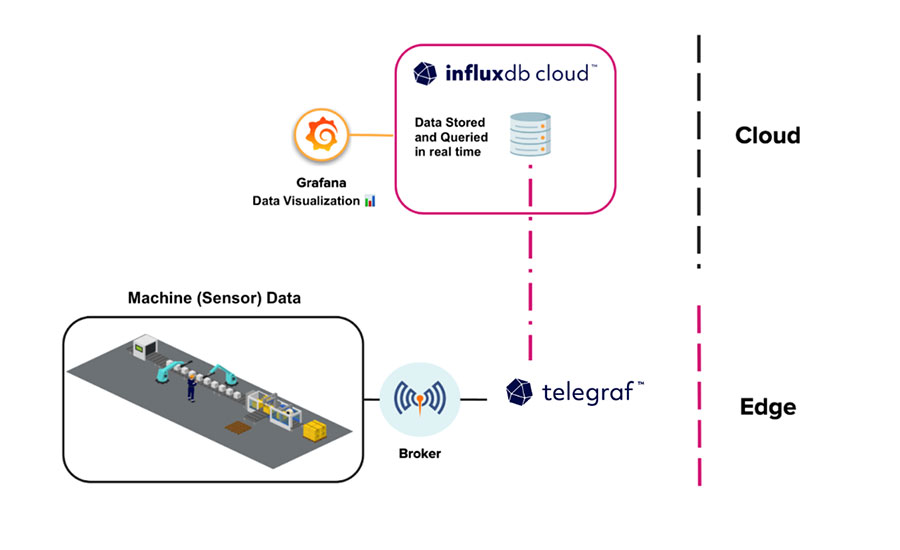
A comprehensive data pipeline is essential to unlock the full potential of machine data. This diagram illustrates the typical journey of data in real-time, from sensor to actionable insight, showing each step and the technology involved. Illustration courtesy InfluxData Inc.
Why Traditional Data Management Falls Short
There are many reasons why traditional data management systems fall short.
One is rigid, proprietary technology and data silos. Many legacy systems, such as “data historians,” are built using proprietary technology that locks manufacturers into a specific ecosystem. This setup hampers flexibility and makes it challenging to adopt new technologies, integrate with modern data platforms, or scale operations effectively. As manufacturers strive for digital transformation, they face a dilemma: how can they seamlessly connect legacy equipment and data systems with the latest cloud services, analytics tools, or machine learning models?
Additionally, on-premises and closed systems create silos and connectivity challenges. Data is often isolated in different parts of the factory, making it difficult to get a comprehensive view of operations. The lack of integration prevents teams from collaborating effectively and slows down decision-making, reducing the overall agility of the organization.
Another major issue with traditional systems is their inability to process data in real-time. Data historians are primarily designed for storing historical records, often delaying insights. This lag can be costly.
For example, in an automotive plant, a spike in a welding robot’s vibration levels might signal an impending breakdown. If this anomaly isn’t detected immediately, it could lead to unplanned downtime, costing the company thousands or even millions of dollars.
Looking for quick answers on assembly and manufacturing topics? Try Ask ASM, our new smart AI search tool. Ask ASM
Without real-time monitoring and alerting, manufacturers are forced into a reactive mode, addressing problems only after they’ve caused significant disruptions.
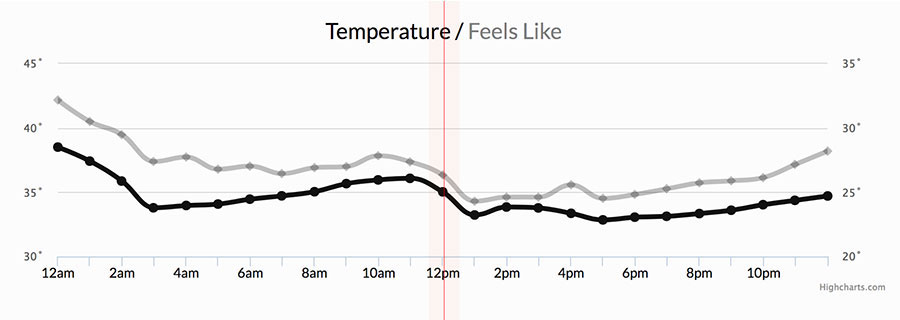
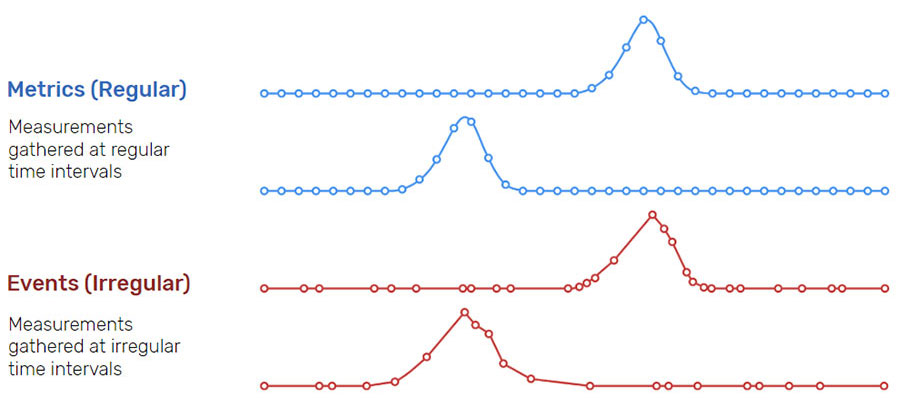
A time series database efficiently handles large volumes of time-stamped data from sensors and machines. Unlike traditional databases, it’s optimized for high-volume data streams, enabling real-time monitoring of metrics (measurements gathered at regular time intervals) and events (measurements gathered at irregular time intervals). Illustration courtesy InfluxData Inc.
A Better Way: Time Series Database
A time series database management system (DBMS) efficiently handles large volumes of time-stamped data from sensors and machines. Unlike traditional databases, it’s optimized for high-volume data streams, enabling real-time monitoring of metrics and events, performing fast analysis, and enabling predictive insights using forecasting.
A time series DBMS is optimized for handling time series data: Each entry is associated with a time stamp. Time series data may be produced by sensors, smart meters or RFID tags.
Time series DBMS are designed to efficiently collect, store and query various time series with high transaction volumes. Although time series data can be managed with other types of DBMS (from key-value stores to relational systems), it often requires specialized systems.
One of the top time series DBMS today is InfluxDB. It enables manufacturers to turn data into actionable intelligence, improving efficiency and reducing downtime. InfluxDB’s open source nature removes vendor lock-in, fostering flexibility and cost efficiency, while its cloud offering provides scalability with hybrid options for on-premises or edge deployments. This ensures data integrity even during connectivity disruptions. It seamlessly integrates with modern protocols like MQTT, Kafka, and OPC-UA and works with tools like Grafana for clear, actionable insights. Its cost-effective, scalable model makes it ideal for efficiently managing data in today’s Industry 4.0 landscape.
With real-time processing and machine learning, InfluxDB is crucial for predictive maintenance in Industrial IoT. Unlike scheduled maintenance, which often results in unnecessary servicing, or the costly “fix-when-broke” method, intelligent predictive maintenance enables proactive intervention, forecasting issues before they occur and optimizing maintenance schedules.
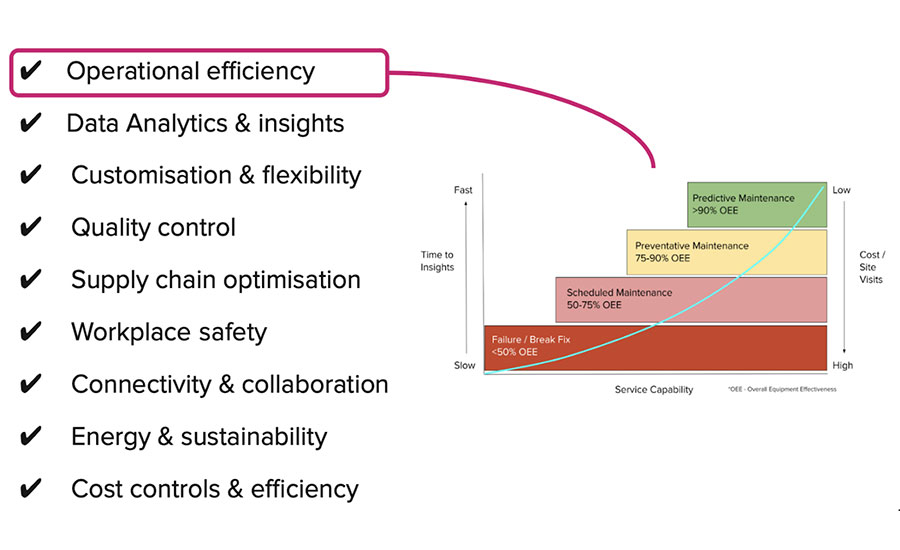
Ultimately, predictive maintenance is less costly and more efficient than scheduled maintenance or worse, waiting until a machine breaks down. Illustration courtesy InfluxData Inc.
Unlocking the Potential of Machine Data
A comprehensive data pipeline is essential to unlock the full potential of machine data. To get a sense of that, it’s useful to outline a typical data journey in real-time, from sensor to actionable insight, highlighting each step and the technology involved.
The first step is collecting data from machines. Sensors on machinery collect critical metrics, such as temperature, vibration and speed. Using brokers, protocols like MQTT, Modbus and OPC-UA gather this data, integrating with tools like Telegraf to send data to InfluxDB. For larger-scale operations, software like Kafka can handle data streaming, while Node-RED offers simple, visual data flow programming.
For some manufacturers, the next step might be local storage of that data. For manufacturers with limited or intermittent cloud access, InfluxDB’s open source version allows local data storage on-site. This setup maintains data access continuity and adds redundancy, ensuring no data is lost if network connectivity to the cloud is interrupted.
Other manufacturers might choose to keep their data in centralized cloud storage. InfluxDB Cloud offers high-speed ingestion and scalable storage, consolidating real-time and historical data into a single platform. Its edge data replication capability adds an extra layer of data protection, so manufacturers have uninterrupted access to data, even during network disruptions.
Once data has been collected, the next step is real-time visualization and alerting. Tools like Grafana and Power BI enable manufacturers to visualize and analyze their data through custom dashboards. Operators can continuously monitor key metrics like machine vibration levels or temperature thresholds to quickly assess equipment health.
Automated alerts can be configured to notify plant managers and IT staff via SMS, Slack or email if certain thresholds are met. For example, a rise in machine vibration beyond safe limits could trigger an alert to initiate an inspection, preventing unplanned breakdowns.
Finally, manufacturers can apply advanced analytics and predictive maintenance with machine learning. InfluxDB’s time series data can feed into advanced analytics models for deeper insights and predictions. Using platforms like TensorFlow or EdgeML, manufacturers can analyze the root causes of equipment failure and uncover optimization opportunities that further reduce costs and downtime.
Turning machine data into actionable insights is no longer a luxury; it’s a necessity for manufacturers looking to stay competitive. By implementing a data pipeline from sensors to the cloud, manufacturers can break free from the constraints of data overload, achieve real-time operational intelligence, and shift from reactive to proactive maintenance.
For more information on manufacturing software, read these articles:
Translating Manufacturing Data for the IIoT
Data Analytics and the Smart Factory
Predictive Maintenance vs. Predictive Analytics: What’s the Difference?
Looking for a reprint of this article?
From high-res PDFs to custom plaques, order your copy today!