BMW Unveils New Wiring Architecture
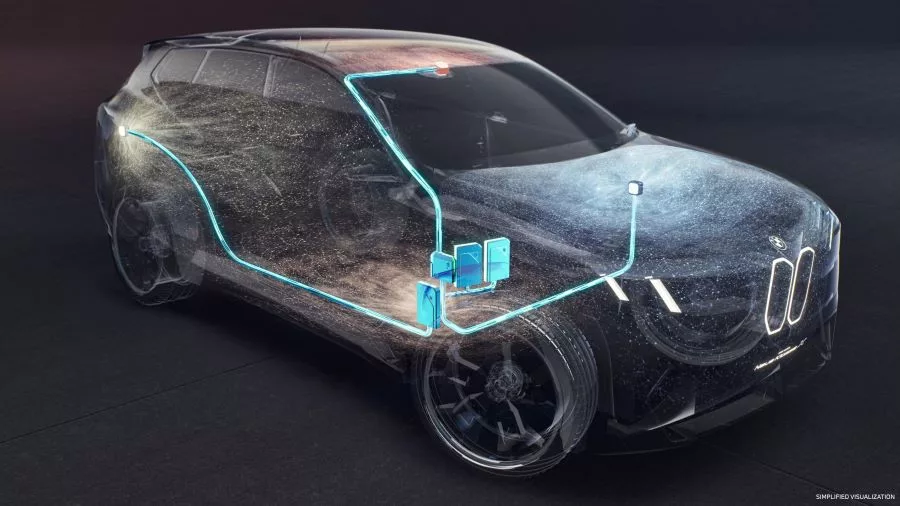
Illustration courtesy BMW AG
BMW AG plans to use a next-generation wiring architecture for its Neue Klasse vehicles. All drivetrain variants and vehicle segments will feature a “digital nervous system.”
A key component of the system is a “radically simplified wiring harness” based on a zonal architecture. It uses 600 meters less wiring, resulting in a 30 percent weight savings compared to the previous vehicles.
The zonal wiring harness is divided into four zones: front end, center, rear and roof. Because the harness is divided into multiple parts, it is easier and more ergonomic for assemblers to install.
Four high-perforrmance computers that BMW calls “superbrains” are connected via high-speed data connections to smaller control units—the zonal controllers—that manage and consolidate the data flow of the electronics in and out of the zones. The wiring in the vehicle is therefore zone-related and can thus be shorter, thinner and lighter.
"Technology openness is the key to [our] success,” says Frank Weber, board member for development at BMW. “[Our new] electronic architecture made up of powerful superbrains and highly interconnected software platforms allow us to decouple the development of the vehicle and software from each other. More than ever before, all future BMW models will remain digitally up to date via over-the-air upgrades and will receive updates even from the next and subsequent vehicle generations."
According to Weber, a crucial prerequisite for thinner and lighter wiring are "Smart eFuses.” The digital fuses replace up to 150 traditional fuses.
“Smart eFuses can be intelligently programmed for digitally controlled energy distribution to components,” explains Weber. “The selective activation of components allows for the design of intelligent power modes for various vehicle states, such as driving, parking, charging and upgrading, in which unnecessary consumers can be identified and switched off. Thus, the eFuses make a significant contribution to the 20 percent improved energy efficiency.”
The first vehicles built on the Neue Klasse platform, such as the BMW iX3 electric sport utility vehicle, will be produced at the automaker’s new state-of-the-art assembly plant in Debrecen, Hungary.
Looking for quick answers on assembly and manufacturing topics? Try Ask ASM, our new smart AI search tool. Ask ASM
Looking for a reprint of this article?
From high-res PDFs to custom plaques, order your copy today!