Plug-In Hybrids Are Prone to More Defects Than Other Vehicle Segments
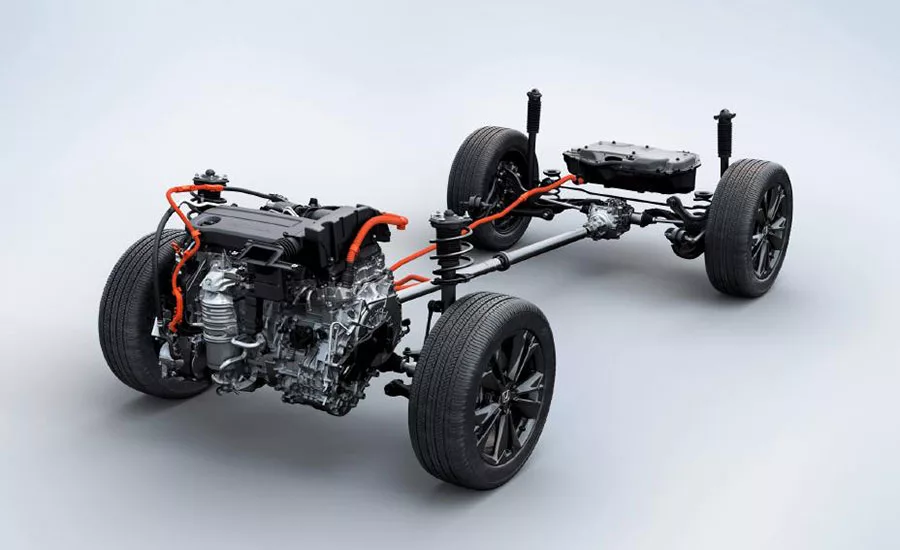
Plug-in hybrid vehicles have not been as popular as other segments. Photo courtesy Honda Motor Co.
TROY, MI—Plug-in hybrid vehicles (PHEV) are popular with some motorists, because they use both a gasoline engine and an electric motor. They can be charged by plugging into an external power source. That enables PHEVs to operate in pure electric mode for a certain range before switching to a traditional gas-powered engine.
However, they tend to have more defects than their battery electric counterparts, according to a recent study conducted by J.D. Power. Its 2025 U.S. Initial Quality Study claims that PHEVs have more problems per 100 vehicles (PP100) than other vehicle segments.
“For the first time, PHEVs, on average, have more problems than their BEV counterparts—237 PP100 vs. 212 PP100, respectively,” explains Frank Hanley, senior director of auto benchmarking at J.D. Power [a lower score reflects higher vehicle quality]. “Gasoline (184 PP100) and hybrid (196 PP100) vehicles have fewer problems than PHEVs and BEVs.”
In the past year, Hanley says virtually every major automaker has made a pivot to PHEVs as a bridge between gas-powered vehicles and fully electric vehicles. On paper, it makes a ton of sense. However, in reality it’s creating new challenges and headaches.
Despite recent efforts by OEMs to offer PHEVs as an alternative to full EV adoption, market share for the vehicles remains below 2 percent of the total automobile market. This compares with more than 9 percent for BEVs and more than 10 percent for pure hybrids.
Overall, the number of problems cited by all new vehicle buyers in the first 90 days of ownership has improved slightly. But, infotainment remains the most problematic vehicle category in the study. People are having more touchscreen-related problems, due to the inclusion of non-audio-related features like climate controls, garage door openers and even glove box releases.
“While customers do find the larger touchscreens visually appealing, their functionality within the vehicle is an increasing source of frustration,” claims Hanley. “Customers are having to tap and swipe through multiple screens to access key vehicle functions like climate settings and built-in garage door openers.
Looking for quick answers on assembly and manufacturing topics? Try Ask ASM, our new smart AI search tool. Ask ASM
“Owners find these things to be overly complicated and too distracting to use while driving,” Hanley points out. “By retaining dedicated physical controls for some of these interactions, automakers can alleviate pain points and simplify the overall customer experience.”
Simple things like cupholders are also a growing source of consumer frustration. “While it seemed like [automakers] had cupholders figured out, given that owners are now bringing more reusable containers into their vehicles, manufacturers are struggling to keep up with being able to accommodate all the different shapes and sizes that are increasingly available,” says Hanley.
Looking for a reprint of this article?
From high-res PDFs to custom plaques, order your copy today!