Manufacturers Win, and Lose, With OBBBA
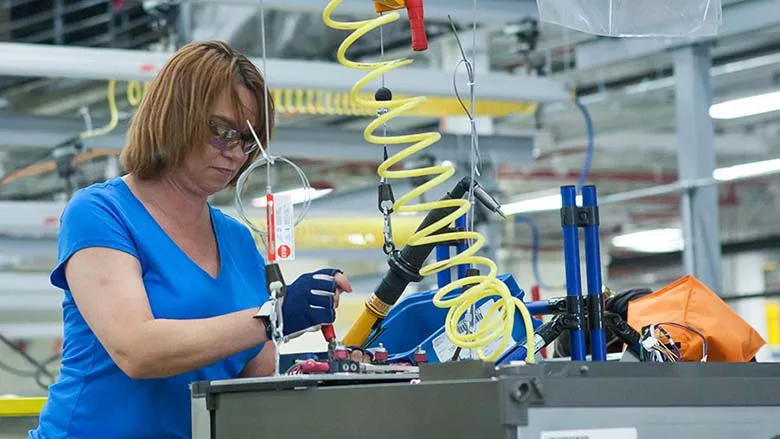
The OBBBA provides U.S. manufacturers with a host of tax incentives for investing in domestic production facilities.
Photo courtesy GE Appliances
On July 4, President Donald Trump signed into law the One Big Beautiful Bill Act (OBBBA), which enacts the tax and spending policies at the core of his second-term agenda.
Controversial and polarizing, the act passed the House and Senate entirely along party lines after months of wrangling. At 940 pages, the act covers a lot of ground, most of which is beyond the scope of ASSEMBLY.
For U.S. manufacturers, however, there’s much in the act to be happy about. These include:
- Permanent 100 percent bonus depreciation. This allows businesses to immediately deduct the full cost of qualifying property, such as machinery and equipment, put into use on or after Jan. 19, 2025. This is intended to encourage investment and reduce taxable income in periods of high investment.
- Expanded Section 179 expensing. The maximum deduction under Section 179 is increased to $2.5 million, with a phase-out starting at $4 million, for tax years beginning after Dec. 31, 2024. Both amounts are indexed for inflation. This provision allows businesses to immediately expense the full cost of qualifying equipment, software and certain improvements to nonresidential real property, rather than depreciating them over time. Manufacturers investing in automation, logistics systems or facility improvements may benefit from greater flexibility in managing taxable income, especially when coordinating with bonus depreciation to optimize deductions.
- Qualified production property incentive. A new 100 percent deduction is available for new nonresidential real property used for manufacturing, production or refining tangible personal property, provided construction began after Jan. 19, 2025, and the property is in service before Jan. 1, 2031. This provision aims to incentivize investment in new production facilities. The deduction applies to new buildings and improvements, but excludes property for offices, lodging, parking, sales, research, software development, or engineering.
- Research and development expensing. The OBBBA permanently permits the immediate deduction of eligible domestic R&D costs for tax years starting after Dec. 31, 2024, with potential retroactive deductions for small businesses.
- Business interest limitation based on earnings before interest, taxes, depreciation, and amortization (EBITDA). The act restores a more favorable EBITDA-based calculation for limiting business interest deductions, effective for tax years beginning after December 31, 2024.
- New markets tax credit (NMTC) permanency: The NMTC program is made permanent with an annual allocation of $5 billion. This program supports investment in low-income communities through tax credits, which could benefit manufacturing businesses located in these areas.
That’s the good news. On the downside, the OBBBA repeals many of the green energy tax credits from the Inflation Reduction Act. This could decrease demand for clean energy technologies like electric vehicles and solar panels, impacting the growth of the clean manufacturing sector in the U.S. This could lead to cancellation of planned clean-energy manufacturing facilities, and it could slow down the deployment of clean electricity.
All in all, U.S. manufacturers should be happier with lower tax bills. Charles Crain, managing vice president of policy for the National Association of Manufacturers, called the OBBBA “a big win” for U.S. manufacturers. Time will tell if it leads to increased capital investment, reshoring and jobs.
Looking for quick answers on assembly and manufacturing topics? Try Ask ASM, our new smart AI search tool. Ask ASM
Looking for a reprint of this article?
From high-res PDFs to custom plaques, order your copy today!