See It at the Show
Electric Press Is Intrinsically Safe for Hazardous Locations
On July 29, two young girls and an adult man were killed after a huge explosion tore through the Horizon Biofuels factory in Fremont, NE, some 32 miles northwest of Omaha. The factory processes wood waste to make animal bedding and wood pellets for heating and smoking food. Authorities believe the blast was likely the result of wood dust igniting in a tall elevator tower.
Unfortunately, such incidents are not uncommon, and they underscore the importance of taking steps to prevent dust explosions. When fine particles of combustible material become suspended in the air, they can ignite, causing an explosion.
Five factors are needed for a dust explosion: oxygen, heat, fuel, dispersion and confinement. Heat can be anything that could ignite the dust, such as a static electricity or a hot machine component. Dust is the fuel. It can be any flammable material, such as sawdust, grain dust, powdered metal, pharmaceutical ingredients, and textile dust. Dispersion occurs when large amounts of dust become suspended in the air. Confinement means the dusty air is in an enclosed area, such as a grain elevator.
There are two phases to a dust explosion. The initial blast commonly occurs at a transfer point, such as an enclosed conveyor. The constant stream of fuel creates suspended dust that then contacts an ignition source. The first explosion will send out shock waves that dislodge static dust that has been resting on the floor, shelves and rafters, putting more fuel into the air. Phase 2 often consists of multiple explosions, as each explosion will cause another. This chain of events can happen so quickly that it might seem as if there is just one very large explosion.
The Occupational Safety and Health Administration defines two classes of locations that pose a risk of explosion. Class I locations are where flammable gases, vapors or liquids may be present. Class II locations are where combustible dusts may be present. Each class is further divided into two divisions. In Division 1 locations, hazardous atmospheres exist under normal conditions. In Division 2 locations, hazardous atmospheres exist only under abnormal conditions, such as during maintenance or equipment failure.
The risk of dust explosions isn’t limited to grain elevators or sawmills. They can happen in manufacturing, too. For example, powdered materials are often compressed to make brake pads for the automotive industry or gaskets for aerospace applications.
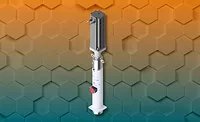
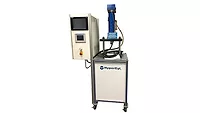
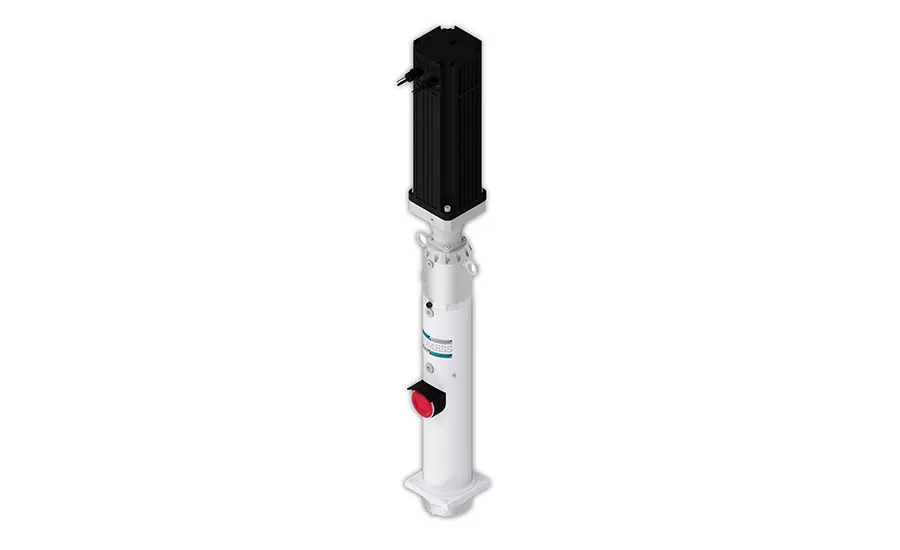
Engineers cannot use any old press for such applications. It must be designed to operate in hazardous environments. Now, Promess Inc. has introduced the H-Series, a line of intrinsically safe, fully electric presses engineered for use in Class II, Division 1 hazardous environments, as well as clean room and food-grade manufacturing locations.
Looking for quick answers on assembly and manufacturing topics? Try Ask ASM, our new smart AI search tool. Ask ASM
Building on decades of expertise in servo-controlled pressing, Promess designed the H-Series specifically for environments where hazardous dust may be present. By combining intrinsic safety with full programmability, the H-Series allows manufacturers to improve safety standards while maintaining the highest levels of precision and control.
Available as a standalone servo-electric press or a fully integrated turnkey station, with force capabilities of from 10 kilonewtons to more than 500 kilonewtons, the H-Series offers a flexible system for operations involving energetic or other hazardous materials. The system is fully programmable, enabling closed-loop movement to position, force, or external sensor input with integrated signature monitoring, data acquisition and storage. Applications include powder compaction, press fit, staking, crimping, forming and riveting.
“The H-Series was developed to meet the unique challenges of hazardous manufacturing,” says John Lytle, president of Promess. “By combining safety, programmability, and electric precision, we’re enabling our customers to operate smarter and more safely than with other press technologies.”
The H-Series is ideal for industries where safe and accurate assembly processes are essential, such as defense, chemical, medical, energy and aerospace.
For more information on assembly presses, click www.promessinc.com or visit the company’s booth at The ASSEMBLY Show. Promess is one of numerous suppliers of presses that will be exhibiting at the show, which will take place Oct. 21-23 at the Donald E. Stephens Convention Center in Rosemont, IL. Others include Creform, Flex Craft, and Industrial Profile Systems.
Besides suppliers of presses, you’ll find more than 130 suppliers of automation, fastening tools, robots, motion control technology, parts feeders, workstations, software, test and measurement systems, and other assembly technologies. For more information, visit www.theassemblyshow.com.
Looking for a reprint of this article?
From high-res PDFs to custom plaques, order your copy today!