Behavioral Science Can Unlock More Carbon Reductions From Electric Vehicles
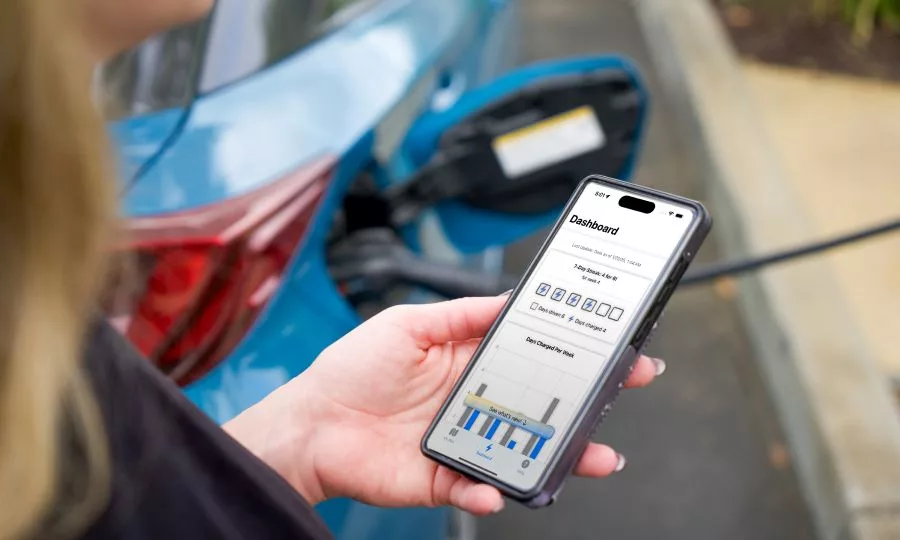
Toyota's ChargeMinder applies behavioral science to EV charging. Photo courtesy Toyota Motor Corp.
PALO ALTO, CA—The Toyota Research Institute (TRI) recently conducted research on electric vehicle charging habits. It discovered that behavioral science-based interventions can significantly improve behavior.
The studies, conducted in the U.S. and Japan, tested ChargeMinder, a prototype app developed by TRI’s Human-Centered Artificial Intelligence (HCAI) division, which incorporates insights from behavioral science to improve EV charging behavior.
ChargeMinder applies behavioral science to EV charging by delivering just-in-time reminders; providing positive reinforcement with streaks, summaries and encouraging messages; and educational quizzes that leverage memory science to enhance learning.
“ChargeMinder integrates more than a dozen interventions based on well-replicated findings from behavioral science research that have been tailored for specific charging behavior change goals,” says Gill Pratt, Ph.D., chief scientist at Toyota Motor Corp. and CEO of the Toyota Research Institute. “These interventions are surfaced through in-app features and mobile push notifications.
“The ChargeMinder platform can also securely and anonymously ingest and surface user data from multiple sources, including vehicle telematics and charging locations,” explains Pratt. “With this data, we can provide a personalized intervention experience and conduct advanced data analytics while preserving user privacy.
“Technology is not the only way to reduce emissions,” Pratt points out. “People’s choices matter, too. Science-based behavioral interventions can help us reduce carbon emissions as much as possible, as soon as possible, and increase customer satisfaction.”
“Behavioral science is a powerful, scalable tool to help achieve carbon neutrality,” adds Laura Libby, Ph.D., manager of the carbon neutrality and human-centered artificial intelligence at TRI. “Research in behavioral science shows that small, targeted interventions can have a large impact on people’s decisions and actions. Furthermore, compared to other causes of behavior change, such as public charging infrastructure initiatives and consumer financial incentives, behavioral interventions are inexpensive and can be deployed quickly.”
According to Libby, technologies that account for how people think, feel and behave will play a crucial role in the future of lower-carbon mobility. She and her colleagues plan to extend ChargeMinder research to focus on personalized, data-driven interventions, making EV charging even more consistent with Toyota’s global carbon neutrality strategy.
Looking for quick answers on assembly and manufacturing topics? Try Ask ASM, our new smart AI search tool. Ask ASM
Looking for a reprint of this article?
From high-res PDFs to custom plaques, order your copy today!