Assembly Magazine logo
search
Ask ASSEMBLY AI
cart
facebook twitter linkedin youtube
  • Sign In
  • Create Account
  • Sign Out
  • My Account
Assembly Magazine logo
  • TRENDS
    • Ask ASSEMBLY AI
    • Trends
    • News
    • New Products
  • INDUSTRIES
    • Aerospace
    • Appliance
    • DFMA Assembly
    • Medical Devices
    • Green Manufacturing
    • Lean Manufacturing
    • Machinery Assembly
    • Electronics Assembly
    • Automotive
  • TECHNOLOGIES
    • Adhesives & Dispensing
    • Assembly Presses
    • Automated Assembly Systems
    • Manufacturing Management
    • Manufacturing Software
    • Motion Control
    • Screwdriving & Riveting
    • Robotics
    • Test & Inspection
    • Plastics & Metal Welding
    • Wire Processing
    • Workstations
  • AUTONOMOUS & ELECTRIC MOBILITY
    • AEM Magazine Archives
    • Autonomy
    • Electrification
    • Mobility Services
    • Assembly & Testing
    • AV/EM News
  • MEDIA
    • Ask ASSEMBLY AI
    • Podcasts
    • Assembly News Now
    • Assembly TV
    • Webinars
    • eBooks
  • EVENTS
    • Calendar
    • The ASSEMBLY Show
  • MORE
    • Exclusives >
      • Plant of the Year
      • Capital Spending
    • Buyers Guide >
      • Supplier Insights
    • Classifieds
    • Featured Products
    • Newsletters
    • Store
    • White Papers
    • Columns
    • Sponsor Insights
  • INFOCENTER
    • Assembly & Test Solutions
  • EMAGAZINE
    • eMagazine
    • Archive Issues
    • Advertise
    • Contact Us
    • Sign Up
Autonomous & Electric MobilityAssembly and TestingAV/EM NewsElectrification

Busbars: The Backbone Behind Electric Vehicles
By Austin Weber
Busbar.jpg
November 23, 2020
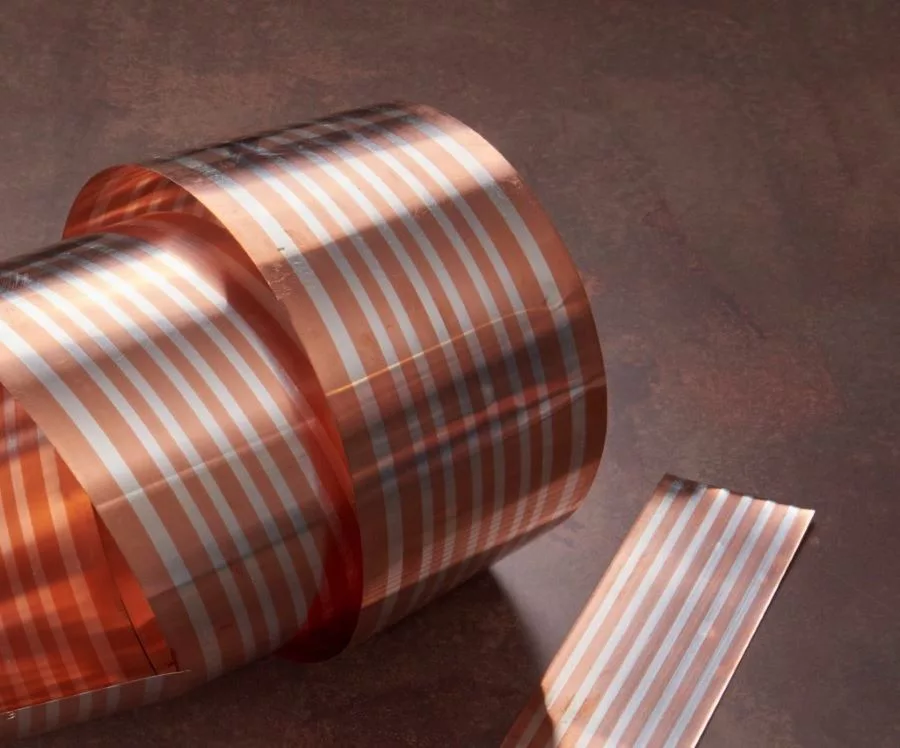
The humble busbar is one of the least glamorous components in an electric vehicle. But, metallic strips and bars in different sizes and complexities are essential for distributing power from high-energy battery packs to e-motors, e-axles and other devices.
The most commonly used materials used for metal-stamped busbars are conductive alloys such as aluminum, bronze and copper.
“Busbars must be both strong and lightweight, which allows vehicles to extend their range before recharging,” says Kurt Moders, president of Kenmode Precision Metal Stamping. Kenmode is a 60-year-old firm in suburban Chicago that has invested in new technology to stay “ahead of the curve to meet new requirements for our customers…as the demand for electric vehicles grows exponentially.”
To meet the need for new busbar designs, including larger parts, Kenmode recently added a 300-ton press for metal stamping.
"Every busbar design is different from one battery to the next because of fit and function,” explains Moders. “We work with our customers' engineers to find the most economical way to produce the busbars needed. One recent project for an electric vehicle required 13 new tool designs for the metal-stamped busbars….”
Another old company adapting to growing demand for new-age vehicles is Samuel Taylor Ltd. (STL). The 121-year-old British firm has been mass-producing electrical contacts since 1927. It was recently awarded funds from Innovate UK to develop a new type of busbar.
EVBus is a collaborative project between STL and TWI Ltd. that is developing a copper-to-aluminum bonding technique for use in zero-emission vehicle (ZEV) busbars.
“Joining copper to aluminum would allow for lightweighting of EV busbars, while maintaining electrical properties,” says Carl Siviter, sales and marketing manager at STL. “Busbars are an integral part of EV battery packs. Improving the busbar can lead to lighter packs, therefore extending the range of ZEVs.
“Successful bonding will allow the resulting product to be laser welded to parent copper or aluminum, thereby solving the issues currently associated with laser welding dissimilar materials,” explains Siviter. “The goal of the project is to investigate the feasibility of bonding copper to aluminum directly, or using interlayer materials.
“[We] aim to use this process to manufacture and market busbars for EVs,” adds Siviter. “[Our] expertise in providing specialist busbars for EV [applications] represents a significant area of potential growth for the company. There is a significant challenge in producing an aluminum product range, but success in this technology will assist in developing lighter, greener vehicles of the future.”
KEYWORDS: electric vehicles electrical components manufacturing

Share This Story

Looking for a reprint of this article?
From high-res PDFs to custom plaques, order your copy today!

Austinweber headshot
Austin has been senior editor for ASSEMBLY Magazine since September 1999. He has more than 21 years of b-to-b publishing experience and has written about a wide variety of manufacturing and engineering topics. Austin is a graduate of the University of Michigan.

Recommended Content

JOIN TODAY
To unlock your recommendations.

Already have an account? Sign In

  • Made in the U.S.A.

    Consumer Products Manufacturing: Made in the USA

    Supply chain lessons learned during the coronavirus...
    Automated Assembly Systems
    By: Austin Weber
  • Best Practices for Press-Fit Assembly

    Best Practices for Press-Fit Assembly

    In manufacturing, ironclad formulas for success are hard...
    Assembly Presses
    By: Jim Camillo
  • aem0523leader-tesla1.jpg

    Tesla Rethinks the Assembly Line

    Engineers at Tesla Inc. have developed a new process that...
    Assembly and Testing
    By: Austin Weber
Manage My Account
  • eMagazine Subscription
  • Assembly Newsletters
  • Online Registration
  • Subscription Customer Service
  • Manage My Preferences

More Videos

Sponsored Content

Sponsored Content is a special paid section where industry companies provide high quality, objective, non-commercial content around topics of interest to the ASSEMBLY audience. All Sponsored Content is supplied by the advertising company and any opinions expressed in this article are those of the author and not necessarily reflect the views of ASSEMBLY or its parent company, BNP Media. Interested in participating in our Sponsored Content section? Contact your local rep!

close
  • ultrasonic welding
    Sponsored bySonobond Ultrasonics

    Engineering Efficiency in High-Performance Assembly: How Ultrasonic Welding Enhances Throughput, Reliability and Quality

  • UV curing system
    Sponsored byDymax

    Why UV Intensity Alone Doesn’t Define Curing Performance

  • wooden pallets
    Sponsored byLEAN Manufacturing Products

    Eliminating Waste on the Shop Floor: Applying Lean Principles to Improve Manufacturing Efficiency

Popular Stories

ASSEMBLY News Now, episode-30: Volvo Redesigns EV Manufacturing

Volvo Redesigns EV Manufacturing

automated consumer goods assembly system

Best Practices for Cycle Time Optimization

Toyota factory workers assembling vehicles on an automotive production line using advanced manufacturing automation and Factory of the Future technologies in a high-volume assembly plant

Tariffs, AI and Automation Reshape Global Manufacturing Strategy

Watch the latest episode of ANN now!

Events

July 24, 2025

From Shop Floor to CFO: How Manufacturers Are Closing the Loop Between Operations and Finance

On Demand Learn how manufacturers are bridging the gap between the shop floor and ERP systems to gain real-time visibility, streamline operations, and kick-start digital transformation—without waiting years.

Sponsored by:

PicoStratusGreen
July 30, 2025

Buffer Analysis and Design Fundamentals for Manufacturing Excellence

On Demand In this presentation, Dr. Herman Tang shares practical insights from his industry experience and research on buffer management in manufacturing operations.

View All Submit An Event

Poll

Difficult Assembly Processes

Which assembly process gives you the most difficulty?
View Results Poll Archive

Products

Manufacturing Cost Policy Deployment (MCPD) Profitability Scenarios: Systematic and Systemic Improvement of Manufacturing Costs

Manufacturing Cost Policy Deployment (MCPD) Profitability Scenarios: Systematic and Systemic Improvement of Manufacturing Costs

See More Products
Register for webinar - Modernizing Automotive Assembly: Why Upgrading Legacy MES is a Business Imperative

Related Articles

  • VWEmden.jpg

    Electric Vehicles May Be Cheaper to Produce by 2027

    See More
  • Toyota ChargeMinder

    Behavioral Science Can Unlock More Carbon Reductions From Electric Vehicles

    See More
  • Reducing Weight of Evs

    Reducing Weight of Electric Vehicles

    See More

Related Products

See More Products
  • foreman.jpg

    The Foreman on the Assembly Line

  • history.jpg

    Faster, Better, Cheaper in the History of Manufacturing: From the Stone Age to Lean Manufacturing and Beyond

  • digitalization.jpg

    The Digitalization of the 21st Century Supply Chain

See More Products

Related Directories

  • Aegis Software

    Aegis Software delivers a uniquely adaptive manufacturing execution solution (MES) platform, built on an IIoT backbone, to improve manufacturing speed, control, and visibility across the entire enterprise and throughout the supply chain. FactoryLogix® is enabling manufacturing excellence in more than 2,200 factories across aerospace, defense, electronics, medical, and automotive industries.
  • Bendix Commercial Vehicle Systems LLC

×

Never miss the latest news and trends driving the manufacturing industry

Stay in the know on the latest assembly trends.

JOIN TODAY!
  • RESOURCES
    • Advertise
    • Contact Us
    • Directories
    • Manufacturing Division
    • Store
    • Want More?
  • SIGN UP TODAY
    • Create Account
    • eMagazine
    • Newsletters
    • Customer Service
    • Manage Preferences
  • SERVICES
    • Marketing Services
    • Reprints
    • Market Research
    • List Rental
    • Survey/Respondent Access
  • STAY CONNECTED
    • LinkedIn
    • Facebook
    • Instagram
    • YouTube
    • X (Twitter)
  • PRIVACY
    • PRIVACY POLICY
    • TERMS & CONDITIONS
    • DO NOT SELL MY PERSONAL INFORMATION
    • PRIVACY REQUEST
    • ACCESSIBILITY

Copyright ©2026. All Rights Reserved BNP Media, Inc. and BNP Media II, LLC.

Design, CMS, Hosting & Web Development :: ePublishing