Assembly Magazine logo
search
Ask ASSEMBLY AI
cart
facebook twitter linkedin youtube
  • Sign In
  • Create Account
  • Sign Out
  • My Account
Assembly Magazine logo
  • TRENDS
    • Ask ASSEMBLY AI
    • Trends
    • News
    • New Products
  • INDUSTRIES
    • Aerospace
    • Appliance
    • DFMA Assembly
    • Medical Devices
    • Green Manufacturing
    • Lean Manufacturing
    • Machinery Assembly
    • Electronics Assembly
    • Automotive
  • TECHNOLOGIES
    • Adhesives & Dispensing
    • Assembly Presses
    • Automated Assembly Systems
    • Manufacturing Management
    • Manufacturing Software
    • Motion Control
    • Screwdriving & Riveting
    • Robotics
    • Test & Inspection
    • Plastics & Metal Welding
    • Wire Processing
    • Workstations
  • AUTONOMOUS & ELECTRIC MOBILITY
    • AEM Magazine Archives
    • Autonomy
    • Electrification
    • Mobility Services
    • Assembly & Testing
    • AV/EM News
  • MEDIA
    • Ask ASSEMBLY AI
    • Podcasts
    • Assembly News Now
    • Assembly TV
    • Webinars
    • eBooks
  • EVENTS
    • Calendar
    • The ASSEMBLY Show
  • MORE
    • Exclusives >
      • Plant of the Year
      • Capital Spending
    • Buyers Guide >
      • Supplier Insights
    • Classifieds
    • Featured Products
    • Newsletters
    • Store
    • White Papers
    • Columns
    • Sponsor Insights
  • INFOCENTER
    • Assembly & Test Solutions
  • EMAGAZINE
    • eMagazine
    • Archive Issues
    • Advertise
    • Contact Us
    • Sign Up
New ProductsAdhesives & Dispensing Assembly

New & Noteworthy

Dual-Cure Potting Compound and Other New Bonding Products
By John Sprovieri
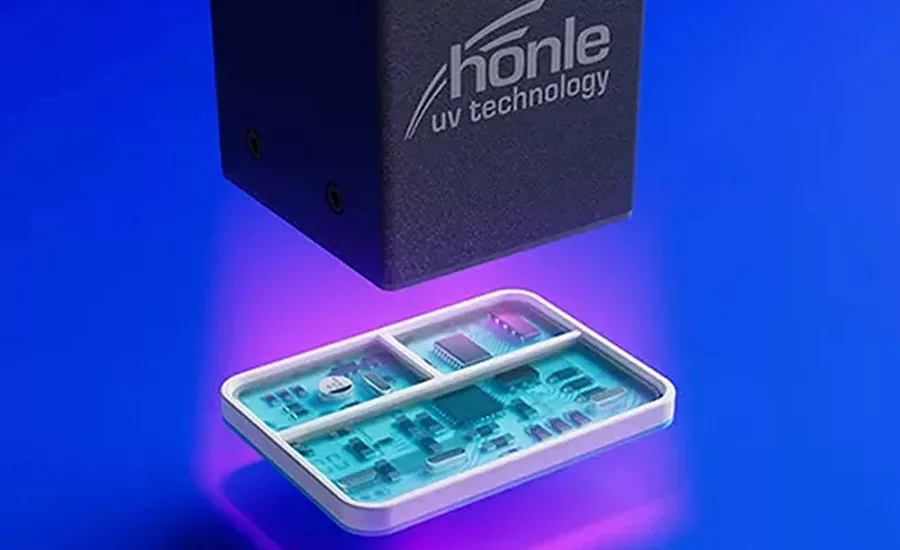
Vitralit UD 8060 F potting material
Photo courtesy Panacol
November 24, 2025

Light-curing adhesives are one-part, solvent-free liquids. Upon exposure to light of the correct intensity and spectral output, the photoinitiator in the adhesive initiates cure, yielding a thermoset polymer that adheres to a variety of substrates. These adhesives cure rapidly on demand, minimizing work in process and offering virtually unlimited repositioning time before curing occurs.

The only limitation of these adhesives has been depth of cure and curing in shaded areas. Dual-cure adhesives are changing that. A new potting material from Panacol is a good example. Read about that and other new adhesive and dispensing technology in this month’s “New and Noteworthy.”


Dual-Cure Potting Material for Electronics Assembly

Vitralit UD 8060 F is a one-component potting material for electronics and sensor assembly. The initial cure is accomplished with UV or visible light in a seconds. The adhesive will then use atmospheric humidity and surface moisture to complete curing in areas that are shadowed from light exposure. This second phase of curing occurs without imparting thermal stress on sensitive electronic components. The material is formulated with a modified isocyanate acrylate. It can be cured by irradiating with broad spectrum UV-A or by using wavelengths of 365 or 405 nanometers.

The rapid build-up of mechanical strength prevents warping of the bonded substrates and enables the components to be processed or transported quickly. This makes the material ideal for applications with shadow zones or complex component geometry.

The material is characterized by a high elongation at break of up to 130 percent and good adhesion to various substrates, such as polycarbonate, polymethyl methacrylate, FR4, copper and aluminum. Its temperature resistance ranges from -40 to 130 C. The adhesive also demonstrates good resistance to humid conditions. Bond strength values remain consistent after exposure to 85 C and 85 percent humidity for 120 hours.

Compared to other products in the Vitralit 80 series, Vitralit UD 8060 F offers a particularly soft, flexible bond that can absorb mechanical stresses well. This property makes the adhesive ideal for bonding materials with varying thermal expansion coefficients, and for applications in which vibration loads can occur. This transparent adhesive contains a fluorescent tracer that is only seen when exposed to UV light. This permits fast visual inspection for enhanced quality control.

Panacol
www.panacol.com

Looking for quick answers on assembly and manufacturing topics? Try Ask ASM, our new smart AI search tool. Ask ASM →
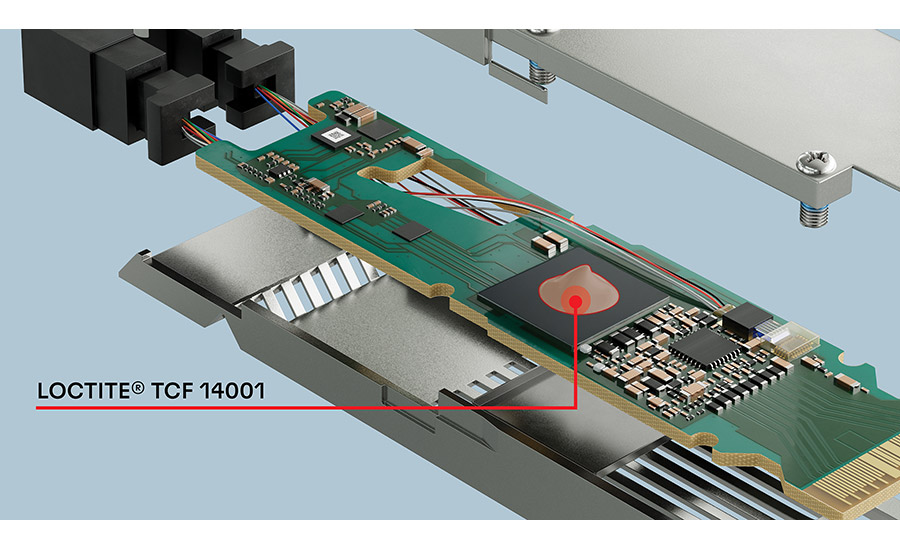
 

Loctite TCF 14001 thermal interface material

Photo courtesy Henkel Corp.

Thermal Interface Material for AI Data Centers

Loctite TCF 14001 is a liquid silicone thermal interface material for AI data center optical components. Designed for 800G and 1.6T transceiver technologies, this 14.5 watts per meter Kelvin gap filler is among the highest thermally conductive liquid materials on the market, enabling elevated transceiver performance through robust heat management.

Escalating AI workloads pose significant bandwidth and latency challenges that can only be addressed by more powerful, high-speed optical technology. While next-generation 800G, 1.6T, and coherent optical transceivers are meeting speed, distance, latency and bandwidth demands, their high-power density chip designs result in increased heat generation. Exceptional thermal control is required to fully exploit their performance potential.

A low-volatility, two-part silicone material, Loctite TCF 14001 exhibits minimal outgassing and very low oil bleed, protecting against any optical interference. The formulation enables precise automated dispensing with stable flow, while its strong interface adhesion and good gap variation tolerance across a range of chip sizes ensure thermal performance continuity even when high thermal loads may induce stress and chip warpage.

Henkel Corp.
https://next.henkel-adhesives.com


Vipro-HEAD printheads for additive manufacturing

Photo courtesy ViscoTec

Dispense Head for Medical Additive Manufacturing

Vipro-HEAD printheads for additive manufacturing are now available for medical-grade applications. Product-contacting components are made of either stainless steel or elastomers and plastics with FDA certification. An autoclavable version that can be sterilized at up to 121 C is also available.

The following print heads have been adapted or further developed as part of the medical grade series: vipro-HEAD 3; vipro-HEAD 5; vipro-HEAD 5/5 for two-component applications; and vipro-HEAD 5 with heating function.

Thanks to these adjustments, materials that are important for medical technology can be processed, including hydrogels, silicones, polycaprolactones and ceramics. This opens up new possibilities for additive manufacturing of patient-specific implants, prototyping, and development of innovative therapy products, even in batch sizes of one.

Typical applications include bone or breast implants; flexible implants, such as silicone vascular structures; tablets for individualized drug release; and wearables.

Printed line width ranges from 100 to 150 microns. Maximum flow volume is 6 milliliters per minute per print head half. 

ViscoTec
www.viscotec.com 


Delo-Activis 330 valve

Photo courtesy DELO Industrial Adhesives

Valve Dispenses and Cures Adhesives in One Step

The Delo-Activis 330 valve is easy to integrate into existing assembly lines and is ideal for dispensing volumes as small as 4 microliters. The valve combines dispensing and curing of adhesive in a single step, offering maximum design flexibility, high process reliability, and up to 98 percent reduction in carbon emissions.

The valve is compatible with DELO’s line of “activation on the flow” adhesives, which now includes eight formulations. The adhesives cover a wide performance spectrum: from low‑viscosity to pasty; from transparent to black; and from soft‑elastic to high‑strength.

During dispensing, the adhesive is pre‑activated through integrated irradiation, initiating curing before the material even reaches the component. This ensures reliable bonding even in shadowed areas and with materials that are opaque to light. An optional post light fixation step prevents slipping or leaking, allowing immediate further processing of components.

DELO Industrial Adhesives
www.delo-adhesives.com

KEYWORDS: additive manufacturing electronics potting thermal interface materials UV cure adhesives

Share This Story

Looking for a reprint of this article?
From high-res PDFs to custom plaques, order your copy today!

John has been with ASSEMBLY magazine since February 1997. John was formerly with a national medical news magazine, and has written for Pathology Today and the Green Bay Press-Gazette. John holds a B.A. in journalism from Northwestern University, Medill School of Journalism.

Recommended Content

JOIN TODAY
To unlock your recommendations.

Already have an account? Sign In

  • Made in the U.S.A.

    Consumer Products Manufacturing: Made in the USA

    Supply chain lessons learned during the coronavirus...
    Automated Assembly Systems
    By: Austin Weber
  • Best Practices for Press-Fit Assembly

    Best Practices for Press-Fit Assembly

    In manufacturing, ironclad formulas for success are hard...
    Assembly Presses
    By: Jim Camillo
  • aem0523leader-tesla1.jpg

    Tesla Rethinks the Assembly Line

    Engineers at Tesla Inc. have developed a new process that...
    Electrification
    By: Austin Weber
Manage My Account
  • eMagazine Subscription
  • Assembly Newsletters
  • Online Registration
  • Subscription Customer Service
  • Manage My Preferences

More Videos

Sponsored Content

Sponsored Content is a special paid section where industry companies provide high quality, objective, non-commercial content around topics of interest to the ASSEMBLY audience. All Sponsored Content is supplied by the advertising company and any opinions expressed in this article are those of the author and not necessarily reflect the views of ASSEMBLY or its parent company, BNP Media. Interested in participating in our Sponsored Content section? Contact your local rep!

close
  • ultrasonic welding
    Sponsored bySonobond Ultrasonics

    Engineering Efficiency in High-Performance Assembly: How Ultrasonic Welding Enhances Throughput, Reliability and Quality

  • UV curing system
    Sponsored byDymax

    Why UV Intensity Alone Doesn’t Define Curing Performance

  • wooden pallets
    Sponsored byLEAN Manufacturing Products

    Eliminating Waste on the Shop Floor: Applying Lean Principles to Improve Manufacturing Efficiency

Popular Stories

ASSEMBLY News Now, episode-30: Volvo Redesigns EV Manufacturing

Volvo Redesigns EV Manufacturing

Boeing CEO Kelly Ortberg announces 1 billion investment

Boeing Plans $1 Billion Wichita Investment, Workforce Training Center

automated consumer goods assembly system

Best Practices for Cycle Time Optimization

Watch the latest episode of ANN now!

Events

July 24, 2025

From Shop Floor to CFO: How Manufacturers Are Closing the Loop Between Operations and Finance

On Demand Learn how manufacturers are bridging the gap between the shop floor and ERP systems to gain real-time visibility, streamline operations, and kick-start digital transformation—without waiting years.

Sponsored by:

PicoStratusGreen
July 30, 2025

Buffer Analysis and Design Fundamentals for Manufacturing Excellence

On Demand In this presentation, Dr. Herman Tang shares practical insights from his industry experience and research on buffer management in manufacturing operations.

View All Submit An Event

Poll

Difficult Assembly Processes

Which assembly process gives you the most difficulty?
View Results Poll Archive

Products

Manufacturing Cost Policy Deployment (MCPD) Profitability Scenarios: Systematic and Systemic Improvement of Manufacturing Costs

Manufacturing Cost Policy Deployment (MCPD) Profitability Scenarios: Systematic and Systemic Improvement of Manufacturing Costs

See More Products
Register for webinar - Modernizing Automotive Assembly: Why Upgrading Legacy MES is a Business Imperative

Related Articles

  • EpoxySet's EC-1015HP epoxy potting compound

    Potting Compound Resists Cracks

    See More
  • Electronics OEM Stays Current, Productive With Potting Compound

    See More
  • UV-8675 acrylated urethane adhesive from EpoxySet

    New Adhesive Bonding Technology

    See More

Related Products

See More Products
  • Testing Adhesive Joints: Best Practices

  • Welding and Joining of Aerospace Materials, 1st Edition

  • 0001349.jpeg

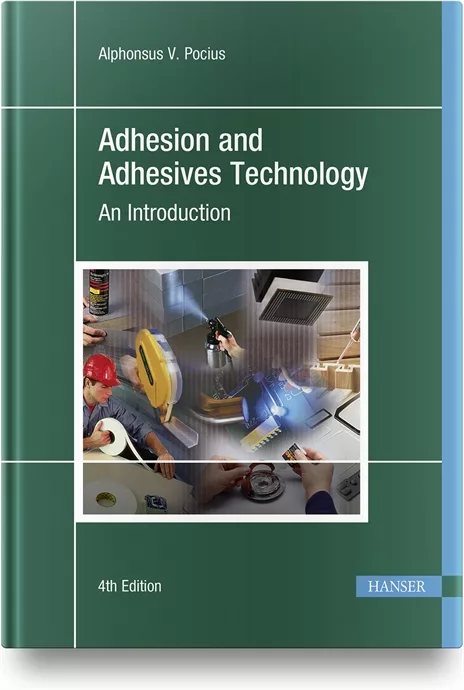
    Adhesion and Adhesives Technology 4e

See More Products

Related Directories

  • Master Bond Inc.

    Master Bond is a custom formulator of adhesives, sealants, coatings, potting and encapsulation compounds with over 3,000 grades of one and two part epoxies, silicones and UV curable compounds. Systems meet precise application requirements and are employed in high-tech industries including aerospace, electronics, automotive, optical, medical, oil and chemical processing.
×

Never miss the latest news and trends driving the manufacturing industry

Stay in the know on the latest assembly trends.

JOIN TODAY!
  • RESOURCES
    • Advertise
    • Contact Us
    • Directories
    • Manufacturing Division
    • Store
    • Want More?
  • SIGN UP TODAY
    • Create Account
    • eMagazine
    • Newsletters
    • Customer Service
    • Manage Preferences
  • SERVICES
    • Marketing Services
    • Reprints
    • Market Research
    • List Rental
    • Survey/Respondent Access
  • STAY CONNECTED
    • LinkedIn
    • Facebook
    • Instagram
    • YouTube
    • X (Twitter)
  • PRIVACY
    • PRIVACY POLICY
    • TERMS & CONDITIONS
    • DO NOT SELL MY PERSONAL INFORMATION
    • PRIVACY REQUEST
    • ACCESSIBILITY

Copyright ©2026. All Rights Reserved BNP Media, Inc. and BNP Media II, LLC.

Design, CMS, Hosting & Web Development :: ePublishing