Assembly Lines
Research Project Aims to Expand Aluminum Use in Auto Industry
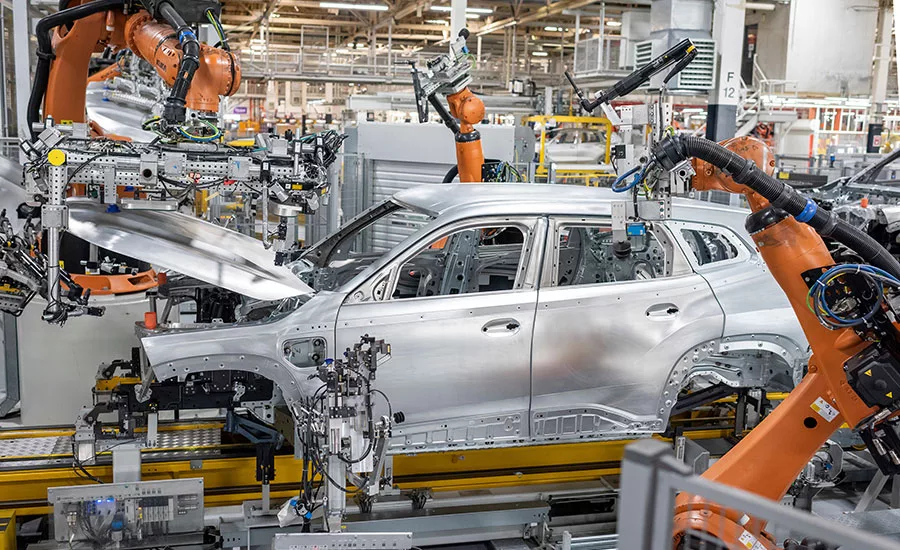
A new research project aims to advance aluminum recycling in the auto industry.
ANN ARBOR, MI—The University of Michigan College of Engineering and Norsk Hydro have embarked on a five-year research project that aims to advance aluminum recycling in the auto industry.
The initiative includes the establishment of the Center for Recycling, Extrusion and Aluminum Technology (CREATe). It builds on an effort already underway, funded by the U.S. Department of Energy, to establish a Midwest circular economy in automotive aluminum.
“This partnership brings together top minds in materials science and manufacturing to expand what’s possible in recycling aluminum, a metal that packs incredible strength into a lightweight form and has become one of the world’s most widely used engineering materials,” says Karen Thole, Ph.D., dean of engineering at the University of Michigan. “[We] see tremendous potential in this research and this region to shape a more resilient future together.”
“Demand for aluminum has been increasing over the past decade as its utility in energy efficiency became apparent,” adds Eivind Kallevik, president and CEO of Hydro. “Lightweight aluminum alloys contribute to better fuel economy in cars and trucks, and they’re essential components of solar panels and power lines.”
While aluminum is considered endlessly recyclable, each cycle introduces impurities—especially iron—that can weaken the metal and limit its use in high-performance applications. The goal of CREATe is to develop aluminum alloys that remain strong even after multiple life cycles. It includes three projects focused on how to address impurities.
One team will explore whether adding chemical elements to alloys can effectively change the shape of iron-based impurities so they no longer make the alloys more brittle.
Another group of engineers will take aim at iron impurities with an electrical, rather than chemical, approach. They’ll explore whether applying a low electric current to recycled aluminum while it’s solidifying can reduce the effect of iron impurities.
A third team will use advanced computational tools and experiments to design alloys and processes that can tolerate higher percentages of recycled material.
Hydro is one of the world’s largest aluminum companies. It opened a $150 million metal recycling plant in southwest Michigan in 2023 as part of a push to grow its U.S. manufacturing capabilities. The company also operates two R&D facilities in that state that focus on recycling and extruded products.Looking for quick answers on assembly and manufacturing topics? Try Ask ASM, our new smart AI search tool. Ask ASM
Looking for a reprint of this article?
From high-res PDFs to custom plaques, order your copy today!