Samsung Electronics to Adopt AI-Driven Factories
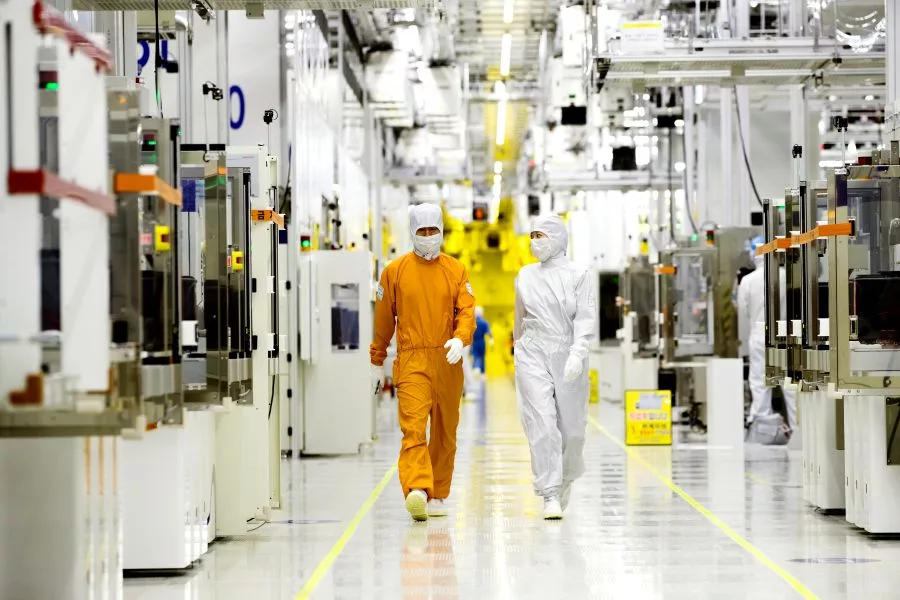
Samsung Electronics plans to transition all of its manufacturing operations into AI-driven factories by 2030. Photo courtesy Samsung Electronics
SEOUL—Samsung Electronics plans to transition all manufacturing operations into AI-driven factories by 2030. The goal of the initiative is to fully integrate artificial intelligence technology across its entire manufacturing value chain, from inbound material logistics and production to quality inspection and final shipment.
Samsung will implement digital twin-based simulations throughout its manufacturing processes and deploy specialized AI agents dedicated to quality control, production and logistics. By strengthening data-driven analysis and prevalidation through these agents, the company hopes to elevate quality standards, operational efficiency and productivity across its global manufacturing network, which includes a semiconductor plant in Austin, TX, and a washing machine assembly plant in Newberry, SC.
“The next phase of manufacturing innovation lies in building autonomous environments where AI truly understands operational contexts in real time and independently executes optimal decisions,” says Young Soo Lee, executive vice president and head of global technology research at Samsung Electronics. “We are committed to leading the transformation toward AI-powered global manufacturing innovation.
“At the center of this transformation is Agentic AI, which is capable of autonomously planning, executing and optimizing decisions to achieve defined objectives,” explains Lee. “[We are] extending its expertise into manufacturing to create a robust foundation for on-site autonomy.”
Through purpose-built AI agents, Samsung will optimize production workflows, predictive maintenance, repair operations and logistics coordination, enabling “standardized, world-class excellence across every global site.”
According to Lee, Samsung is also introducing humanoid and task-specialized robotics across its production lines, including assembly robots for precision manufacturing tasks. “In infrastructure environments where human access is limited or hazardous, [we will] deploy digital twin-integrated environmental safety robots designed to systematically monitor conditions, identify potential risks and proactively mitigate on-site hazards,” he points out.
Looking for quick answers on assembly and manufacturing topics? Try Ask ASM, our new smart AI search tool. Ask ASM
Looking for a reprint of this article?
From high-res PDFs to custom plaques, order your copy today!