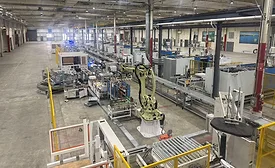
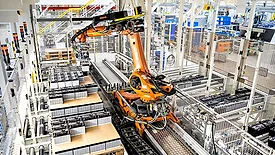
MELBOURNE, Ark. — Oobotic has opened its first U.S. manufacturing facility in Melbourne, Ark., where the company plans to produce consumer products using automated manufacturing systems and AI-enabled production technology.
Tariffs have reduced direct imports from China, but that doesn't mean manufacturing is coming back to the United States. Patrick Van den Bossche of Kearney explains why companies are building supply chain flexibility instead of committing to reshoring — and why much of the production leaving China is simply moving somewhere else.
Mexico has become one of the biggest beneficiaries of recent supply chain shifts, but much of the value in those products still comes from components sourced in Asia. Patrick Van den Bossche explains how upcoming USMCA discussions could reshape nearshoring strategies, regional content rules and the future economics of North American manufacturing.
The U.S.-Mexico-Canada Agreement, or USMCA, is heading toward its first formal review on July 1. Patrick Lozada, Senior Director of Global Policy at the National Electrical Manufacturers Association, explains how the USMCA supports manufacturing, regional supply chains, standards alignment and long-term investment certainty.
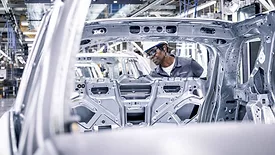
BOSTON — Artificial intelligence, advanced automation and rising tariff pressure are beginning to reshape where automotive and aerospace manufacturers choose to build products, potentially reducing some of the long-standing cost advantages of lower-wage production regions, according to a new report from Boston Consulting Group.
MACON, Ga.— Unified Legacy plans to invest $125 million in a new manufacturing facility in Macon, Ga., expanding domestic production capacity for the aerospace, defense and industrial sectors while creating 500 jobs over the next several years.
Tariffs aren’t impacting every manufacturer the same way. Eddy Azad, founder and CEO of Parsec Automation, explains why some companies gain an advantage while others struggle—and why preparation ultimately determines the outcome.
PERRYSBURG, Ohio—Whirlpool Corp. is expanding its U.S. manufacturing footprint with new investment in Ohio, building on decades of production history and positioning its operations for future growth.
In January, Samsung Electronics forecast a worsening chip shortage this year, thanks to burgeoning demand for AI data centers. The race to build AI infrastructure has prompted chipmakers to divert manufacturing capacity toward high-bandwidth memory for AI servers, squeezing the supply of conventional memory chips.