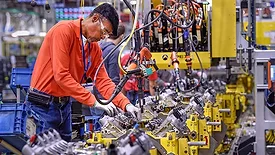
BIRMINGHAM, Mich. — Manufacturers are increasingly treating automation maintenance as a production strategy rather than a reactive repair function as factories become more dependent on robotics, automated systems and continuous uptime.
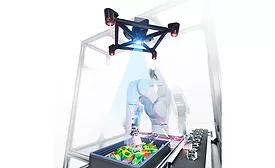
From predictive maintenance sensors and cloud-based machine vision platforms to high-resolution inspection cameras and 3D vision-guided robotics, these technologies are helping manufacturers reduce downtime, accelerate setup, and improve quality across assembly and production operations.
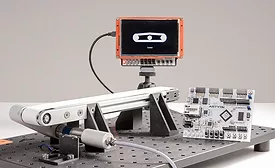
PRINCETON, NJ—Engineers at Brown University, Princeton University and Rice University have developed a low-power, inexpensive way for machines in factories to share information wirelessly.
Engineers at the University of Virginia (UVA) have created a more efficient way to optimize manufacturing systems, improving both speed and quality while reducing waste.
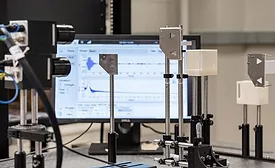
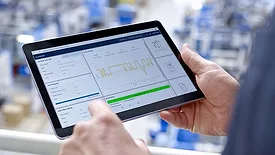
Engineers at the Fraunhofer Institute for Photonic Microsystems (IPMS) here have developed a new system that combines sensor technology, data acquisition and AI-based data evaluation for condition monitoring and predictive maintenance.
WASHINGTON—The National Association of Manufacturers has released a report on artificial intelligence that examines why the technology is important and explains how leading companies are using it to improve productivity.
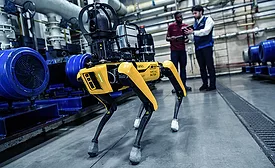
Equipped with visual, thermal and acoustic sensors, the machine is used to collect valuable data for the plant’s digital twin, while also serving as a watchdog overseeing operations.
How can manufacturers make the critical transition from data to action? How do they effectively navigate the overabundance of data to pick out what’s meaningful? How do they use these insights to drive overall productivity and efficiency in an automotive context?
The answer to these questions involves deploying a three-tiered IIoT approach that provides automotive OEMs and suppliers with a comprehensive digital roadmap for their operations.