In many automotive parts, a small defect can cause big problems. This explains why Tier 1 suppliers increasingly use machine vision to inspect parts used for steering, air bags, seat belts, brakes, electronic controls and exhaust.
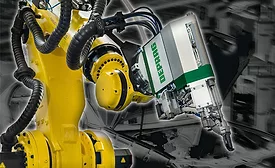
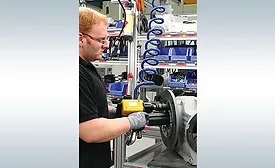
Fastening tools are the workhorses of any assembly operation. Consider a high-volume automotive plant. If a vehicle contains 1,000 threaded fasteners and an assembly line is turning out 250,000 vehicles annually, that’s more than 250 million run-downs each year.
What are the most challenging issues that pertain to white goods from the perspective of fastener assembly?
November 8, 2018
In the past, white goods were offered by the manufacturer and the customers, generally, had no design input. However, as the demand for customization increased and the competitive market expanded, manufacturing was under pressure to produce a smarter, more reliable and more attractive product.
In the early days of air transport, pilots relied on a nationwide network of beacons for night time navigation. A hundred years later, the first generation of autonomous vehicles may also rely on light beams to navigate safely.
DEARBORN, MI—Engineers at Ford Motor Co. are developing car parts made out of graphene, a two-dimensional nanomaterial. Graphene is 200 times stronger than steel and one of the most conductive materials in the world.
DULLES, VA—Airbus and Northrop Grumman Corp are partnering to develop next-generation composite manufacturing technology. The three-year Wing of Tomorrow program will explore complex composite wing stiffener forming automation and out-of-autoclave material systems.
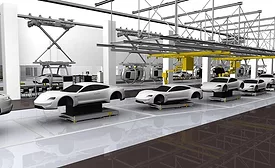
ZUFFENHAUSEN, Germany—Engineers at Porsche are setting up a new type of assembly line at its factory here to build a new type of sports car. The all-electric Taycan will be assembled in a “factory within a factory” as part of the Porsche Production 4.0 initiative.
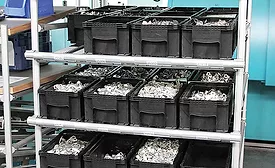
Auto-Kabel, the global automotive supplier, manufactures cable and lead sets for power supply applications. The friction welding machines deployed in the process must always have an adequate supply of material without excessive safety stocks.