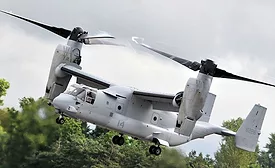
RIDLEY PARK, PA—Boeing announced last week that it’s manufacturing facility here will take on a $4.2 billion contract to build 58 variants of V-22 Ospreys for the U.S. Navy, Marine Corps, Air Force and government of Japan over the next 6 years.
DECATUR, AL—Production is expected to start later this year at the new GE Aviation facility in Limestone County, according to a company spokesman. The factory will be the only U.S. location to mass produce silicon carbide materials.
Increasing demand for smart devices and embedded intelligence is driving manufacturers in a variety of industries to invest in new production tools and technologies. Additive manufacturing, advanced sensors, augmented reality, cloud-based computing, collaborative robots and digital twins are just a few of the many trends transforming factory floors today.
Aerospace manufacturing continues to soar. For example, through March 31, Boeing's commercial aircraft division had a backlog of 5,835 orders, while rival Airbus had a backlog of 7,189 jets.
Additive manufacturing is no longer just for prototyping. More and more, the technology is being used to make production-ready parts. That's forcing engineers to begin thinking about joint designs and assembly processes.
PALMDALE, CA—Northrop Grumman entered full-rate production on the F-35 Lightning II’s centre fuselage in May to meet increasing order quantities from the Pentagon and international customers. According to FlightGlobal, Northrop hired 1,000 additional employees here between the beginning of 2017 and the end of the first quarter 2018 to accommodate the increased production.
If it rolls, floats or flies, lightweighting is one of the biggest challenges facing manufacturers today. The push for new materials is forcing engineers in a variety of industries to explore cost-effective alternatives and develop new assembly processes.
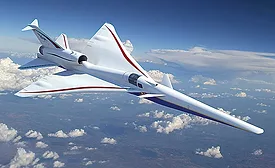
A new generation of supersonic aircraft could dramatically change commercial flight. While the basic technology has been around for decades, it's been plagued by noise issues. Due to sonic booms, supersonic jetliners are unable to fly over land.
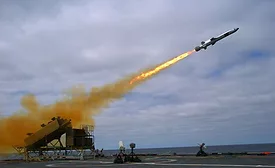
TUCSON, AZ—Raytheon Missile Systems and its Norway-based partner will arm the U.S. Navy’s new littoral combat ships with a long-range surface attack missile, in a program that could be worth nearly $850 million, reports the Arizona Daily Star.