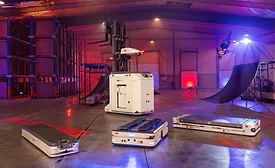
AUBURN HILLS, Mich. — ABB Robotics has introduced the Flexley Stack F712, an autonomous forklift that expands the company's autonomous mobile robot lineup for manufacturing applications.
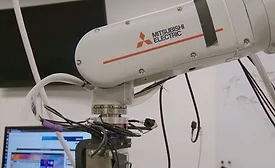
BOSTON — Manufacturing companies are increasingly developing software, data and AI platforms alongside traditional products as manufacturers look to connect production systems, workforce knowledge and operational data. Now Mitsubishi Electric has created a dedicated space just for that sort of innovation.
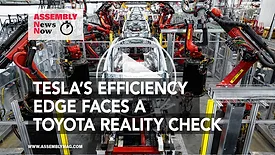
In this episode of ASSEMBLY News Now, we look at how Tesla stacks up against Toyota and BYD, and what the numbers suggest about manufacturing efficiency, workforce scale and the changing competitive landscape in the global auto industry.
WASHINGTON — Siemens Small Business Lending Inc. has been approved as a Small Business Lending Company, allowing the Siemens Financial Services-owned company to originate U.S. Small Business Administration 7(a) loans for small businesses.
Tariffs have reduced direct imports from China, but that doesn't mean manufacturing is coming back to the United States. Patrick Van den Bossche of Kearney explains why companies are building supply chain flexibility instead of committing to reshoring — and why much of the production leaving China is simply moving somewhere else.
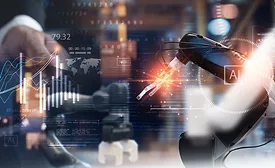
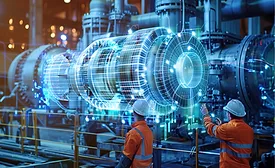
NEW YORK — AI-enabled digital twins are moving deeper into high-volume manufacturing as producers look for faster ways to reduce waste, improve quality and adjust production processes in real time.
Manufacturers are rapidly adopting AI, but most deployments remain limited to small-scale pilots. In this episode, Mike Sabin, CEO of Revalize, explains why scaling AI across the enterprise is proving far more difficult than expected.
Jon Sobel, CEO and co-founder of Sight Machine, discusses how the company’s updated AI platform is designed to help process experts turn plant-floor signals, equipment data and operational knowledge into recommendations that can improve production performance.
Mexico has become one of the biggest beneficiaries of recent supply chain shifts, but much of the value in those products still comes from components sourced in Asia. Patrick Van den Bossche explains how upcoming USMCA discussions could reshape nearshoring strategies, regional content rules and the future economics of North American manufacturing.
AI is changing machine vision, but not in the way many manufacturers expect. Matt Moschner, CEO of Cognex, explains where AI vision systems outperform traditional tools, where they don’t and why most real-world applications rely on a hybrid approach.
 RSS
RSS