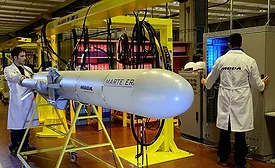
Missiles are the premier weapon of modern warfare. According to consulting firm Polaris Market Research, global sales of rockets and missiles are expected to increase from $58.3 billion in 2021 to $73.8 billion in 2026, growing at a cumulative annual rate of 4.8 percent.
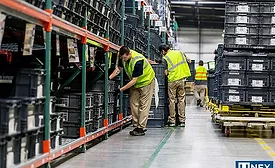
Atypical car contains some 30,000 parts, including fasteners, from dozens of suppliers. All these components must arrive at an OEM’s assembly plant in the right sequence at the exact moment that they’re needed. It’s a massive undertaking.
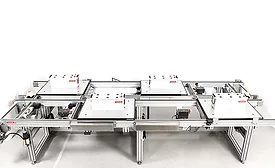
Transportation—moving parts or assemblies from place to place in a factory—is one of the seven wastes specified in the principles of lean manufacturing. Transportation does not add value.
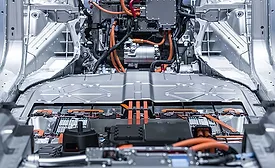
The need to extend the range of electric vehicles is pushing automakers to adopt higher battery voltages. Most passenger EVs are powered by a 400-volt battery pack, while electric buses and trucks are powered by 600-volt battery packs.
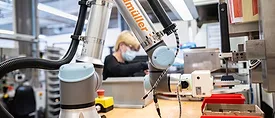
Machine tending is, by far, the most popular application for collaborative robots. It’s a perfect fit for a cobot’s unique ability to work alongside or together with people without safety fencing.
What gets you out of bed in the morning? Whatever the reason, new evidence suggests that people who work in manufacturing are more eager to get up and go than people in other professions.
Roller bearings are a critical component of modern machinery. When the bearing is in operation, the cage must be able to withstand centrifugal force, shock and vibration, especially with complex loads rotating at high speeds.
Manufacturers in Germany, like those in the United States, are coping with three major issues: a highly dynamic market, increasing competition due to globalization, and a shortage of skilled workers.