WASHINGTON — The Trump administration announced Wednesday that it will seek to renegotiate the U.S.-Mexico-Canada Agreement (USMCA) rather than renew the trade pact, a move that could create new uncertainty for manufacturers with integrated North American supply chains.
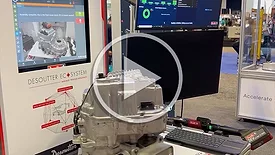
What happens when assembly systems, process control, motion tracking and production data all operate in separate silos? In this episode of ASSEMBLY Audible, Russ Hughes of Desoutter Industrial Tools discusses the manufacturing challenges that inspired the Desoutter Ecosystem and why manufacturers are increasingly focused on connecting fragmented assembly operations across the factory floor.
WASHINGTON — Siemens Small Business Lending Inc. has been approved as a Small Business Lending Company, allowing the Siemens Financial Services-owned company to originate U.S. Small Business Administration 7(a) loans for small businesses.
BIRMINGHAM, Mich. — Ford has rehired some 300 experienced engineers and technical specialists over the past three years after determining that artificial intelligence and automated quality systems alone were not enough to improve vehicle quality.
Joe Teague, owner and organizer of the Advanced Manufacturing Expo, says humanoid robots will be a major part of this year’s event in Grand Rapids. DOBOT will bring Atom, its humanoid robot, for a keynote and live demonstration.
GOTHENBURG, Sweden — Coretura, the software-defined vehicle platform company founded by Daimler Truck and Volvo Group, has signed an engineering agreement with Accenture to accelerate development of a software platform for trucks, buses and other medium- and heavy-duty commercial vehicles.
As manufacturers push for lighter designs, faster cycle times and more reliable joints, new fastening technologies are helping simplify assembly while improving performance.
New sensing technology gives manufacturers visibility into adhesive mix quality at the point of dispense, helping reduce scrap, minimize waste and improve traceability.
Unlike one-part adhesives, which are ready to use straight from the container, two-part systems require precise metering and mixing before they can be applied.
Tariffs have reduced direct imports from China, but that doesn't mean manufacturing is coming back to the United States. Patrick Van den Bossche of Kearney explains why companies are building supply chain flexibility instead of committing to reshoring — and why much of the production leaving China is simply moving somewhere else.