Adhesive Bonding
Real-Time Monitoring Brings Process Control to Two-Part Adhesive Dispensing
New sensing technology gives manufacturers visibility into adhesive mix quality at the point of dispense, helping reduce scrap, minimize waste and improve traceability.
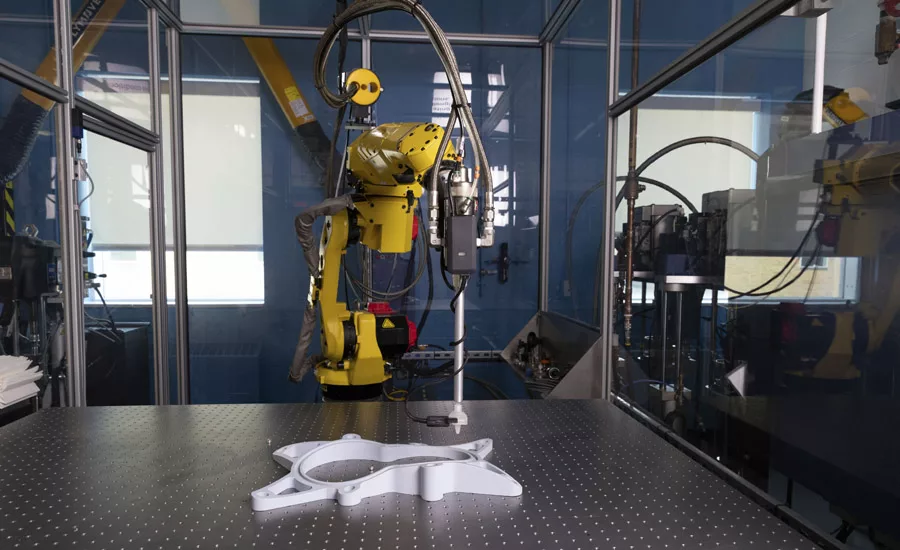
The 3M Adhesive Mix Monitor uses a disposable sensor installed between the static mixer and dispense point to evaluate adhesive mix quality in real time.
Two-part structural adhesives offer manufacturers significant advantages, including strong bond performance, long shelf life and compatibility with a wide range of materials. But unlike one-part adhesives, which are ready to use straight from the container, two-part systems require precise metering and mixing before they can be applied.
If the resin and hardener are not combined at the proper ratio, or if the materials are not thoroughly mixed, the adhesive may fail to cure properly or achieve its intended strength. Because curing begins as soon as the two components meet, manufacturers typically rely on automated meter-mix-and-dispense systems to combine materials directly on the assembly line.
“The most common issues in two-part adhesive dispensing are incorrect mix ratio, premature curing inside the static mixer, and excessive purging at the start of dispense,” says Alissa Wenner, application engineering specialist in 3M’s Industrial Adhesives and Tapes Division. “These can be caused by numerous things. Differences in plant temperature can affect the speed at which the adhesive might cure in the static mixer. Worn pumps and seals can cause off-mix ratio dispensing.”
Problems can arise before production starts and continue throughout the dispensing process.
“The cost can build quickly, because the problem is rarely limited to the adhesive itself,” Wenner says. “Manufacturers can end up with more quality checks, rework, rejected parts, downtime and clogged mixers that interrupt production.”
Seeing Inside the Adhesive Stream
Manufacturers have traditionally relied on setup validation, laboratory testing and periodic quality checks to confirm that a dispensing process remains within specification. The challenge is that those methods provide only snapshots of performance.
The 3M Adhesive Mix Monitor is designed to evaluate the adhesive stream itself after the two components have been mixed but before the material is applied to the assembly.
Looking for quick answers on assembly and manufacturing topics? Try Ask ASM, our new smart AI search tool. Ask ASM
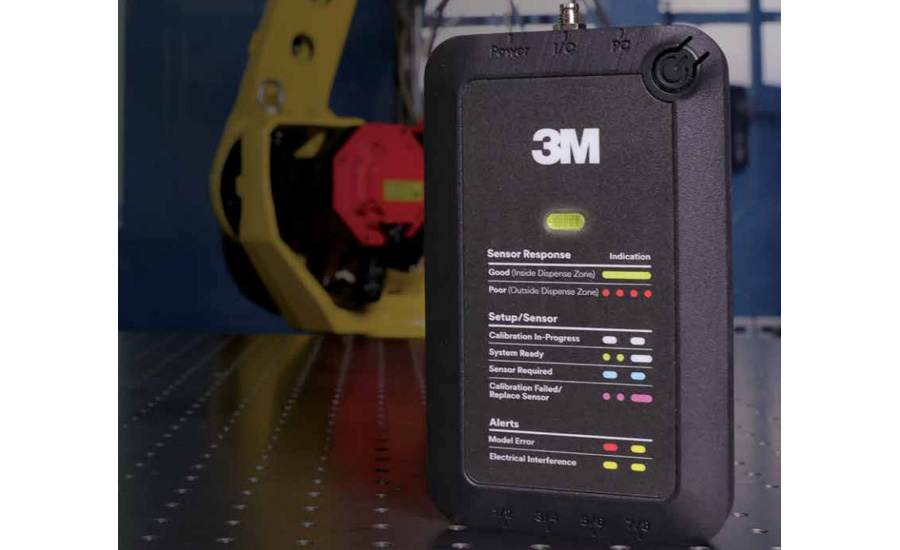
The 3M Adhesive Mix Monitor processing unit provides operators with a simple pass-fail indication and can stream time-stamped dispensing data to a PLC or manufacturing execution system. Photo courtesy 3M
“The sensor is installed on the outlet end of the static mixer, so it sits between the mixing step and the moment the adhesive is laid onto the part,” Wenner says.
As adhesive flows through the mixer and into the sensor, the system measures temperature and electrical properties. Those measurements are then used with a 3M adhesive mixing model to predict the mix ratio being dispensed in real time at the point of application.
For operators, the system presents the information through a simple pass-fail indication.
“Green means the adhesive is within the preset dispense zone, and red means it is outside those limits,” Wenner explains. “If the process begins drifting out of specification, the operator sees that change immediately through the red light and can stop, purge or troubleshoot before the issue affects more parts.”
Detecting Problems Before Scrap Happens
Process drift and mix ratio issues may go unnoticed until they affect product quality.
“One common example is at startup,” Wenner says. “The adhesive feed pump pressure may be out of range, the feed pumps may be low or empty, or startup checks may not have been completed properly.”
She also notes that the adhesive may still be off-ratio during startup as dispensing begins.
“In that case, the system can show that more purge is needed before production starts, helping prevent material from being applied before the process is on target.”
During production, problems can also develop when material lines become partially clogged, air bubbles disrupt material flow, or pump components begin wearing.
From a quality perspective, the system allows manufacturers to stop production as soon as an issue is detected, potentially reducing scrap and limiting the scope of production problems.
Fast-curing adhesives present another challenge.
“The chemical reaction can release heat as the adhesive cures,” Wenner explains. “That matters because if adhesive sits too long in the mixer and starts curing there, it may not dispense the same way as fresh material.”
Fast-curing adhesives can begin curing inside the mixer during pauses in dispensing, creating potential consistency issues before the adhesive ever reaches the assembly.
Bringing Traceability to Adhesive Dispensing
Beyond quality control, the technology adds a new level of traceability to adhesive dispensing operations.
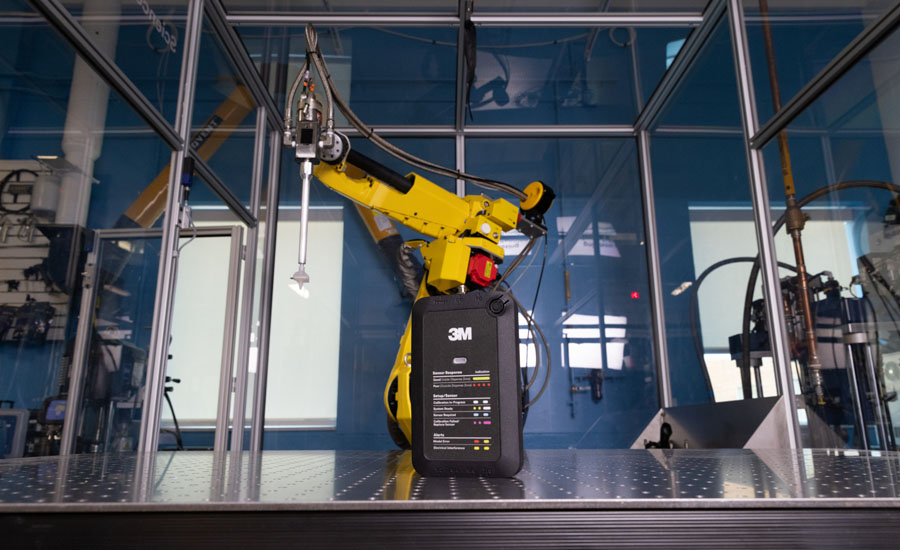
The 3M Adhesive Mix Monitor helps manufacturers identify mix-ratio issues, curing behavior and other dispensing problems before adhesive is applied to a part. Photo courtesy 3M
“The 3M Adhesive Mix Monitor can connect to a PC or PLC and stream time-stamped data to a manufacturing execution system,” Wenner says. “This provides valuable visibility into the dispensing process and helps support process monitoring, traceability and troubleshooting.”
The technology may be particularly useful in industries that require extensive process documentation, including aerospace, automotive, defense, electronics, marine and medical device manufacturing.
Toward Smarter Dispensing Systems
Today, the Adhesive Mix Monitor functions primarily as a monitoring, alert and data-streaming platform.
However, because the system can stream real-time dispensing data into manufacturing control systems, it may eventually serve as the foundation for more advanced dispensing workflows. That capability could represent an important step toward greater visibility and control over one of assembly’s most difficult-to-monitor processes.
The technology provides a level of visibility into the mixed adhesive stream that has traditionally been difficult to achieve, helping manufacturers identify problems before they become scrap, rework or downtime.
Looking for a reprint of this article?
From high-res PDFs to custom plaques, order your copy today!