Robotics
China Courts Restrict AI Job Cuts as Government Pushes AI Robotics Growth

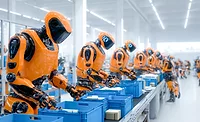
BIRMINGHAM, Mich. — China is accelerating adoption of robotics and artificial intelligence in manufacturing while courts are simultaneously limiting how companies can use those technologies to replace workers.
The country’s 15th Five-Year Plan places robotics at the center of industrial growth, with a focus on integrating AI into physical systems and expanding deployment of industrial robots across manufacturing. China already accounts for more than half of global robot installations and maintains the world’s largest installed base of industrial robots.
At the same time, Chinese courts have ruled that companies cannot use AI-driven automation as justification for terminating employees under existing labor law. In recent cases, courts determined that adopting AI systems does not constitute a “major change in objective circumstances,” meaning employers must pursue alternatives such as retraining, reassignment or negotiation before reducing headcount.
Legal guidance emphasizes that the costs associated with technological change should not be borne solely by employees.
The rulings come as China directs industry to expand use of robotics and AI, creating tension between automation goals and labor protection. Manufacturers are being required to retain or transition workers affected by those changes.
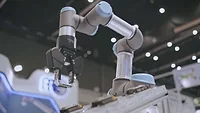
Despite the focus on advanced robotics, industrial robots are expected to remain the primary technology on assembly lines. High-speed, precision-driven tasks favor specialized systems with simpler control schemes, while humanoid robots remain largely confined to pilot projects.
Broad adoption of AI-enabled industrial robotics is expected over the next five to 10 years, with humanoid systems following later.
Looking for quick answers on assembly and manufacturing topics? Try Ask ASM, our new smart AI search tool. Ask ASM
Looking for a reprint of this article?
From high-res PDFs to custom plaques, order your copy today!