Robotics
Drones, Humanoids and AI Vehicles Are Driving Robotics Growth
BIRMINGHAM, Mich. — Robotics technologies are expanding across manufacturing, logistics and autonomous driving applications as advances in artificial intelligence, sensing and automation continue accelerating development, according to research firm IDTechEx.
The company’s latest robotics and autonomy research highlights growing investment in humanoid robots, drones and autonomous vehicle technologies designed to improve industrial efficiency, automate inspections and support increasingly independent machine operation.
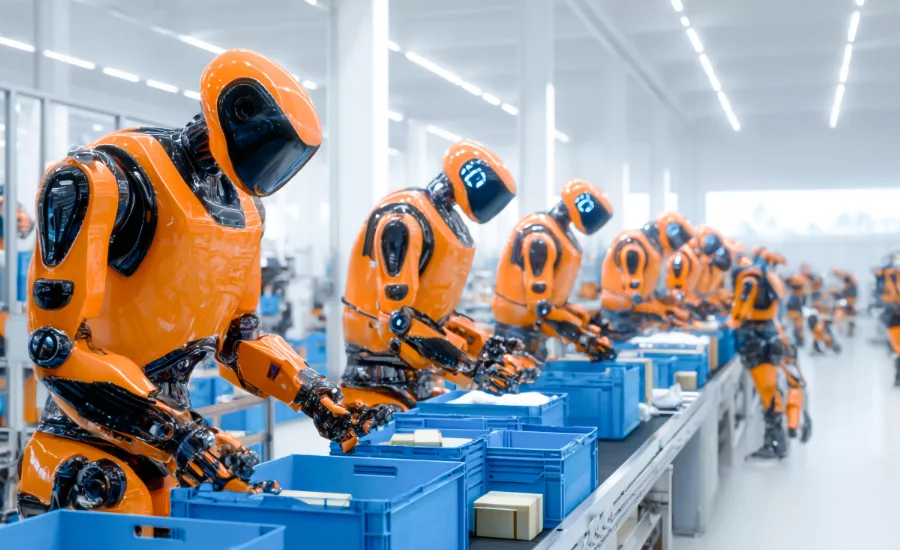
In manufacturing, humanoid robots are drawing increased attention for material handling, inspection and other industrial applications where human-like mobility and dexterity could help automate more variable tasks. IDTechEx said improvements in tactile sensing, lightweight materials and power efficiency remain critical development goals for humanoid systems.
The research firm also identified several barriers slowing broader humanoid adoption, including fragmented supply chains, sensor durability limitations, inconsistent training data and a lack of established large-scale industrial use cases. Despite these pain points, IDTechEx reports that the industry has received increased attention, noting the future may see increased uptake of these robots, such as in automotive manufacturing.
Outside the factory, drones are increasingly being deployed across agriculture, logistics, energy and infrastructure inspection applications. IDTechEx projects the global drone market could reach $147.8 billion by 2036.
Inspection and maintenance applications are expected to become one of the fastest-growing drone segments as utilities and industrial operators use drones to inspect powerlines, pipelines and wind turbines while reducing dangerous manual inspection work.
Autonomous driving technologies are also continuing to advance through expanded use of radar, cameras and sensing systems that support increasingly sophisticated driver-assistance capabilities.
Looking for quick answers on assembly and manufacturing topics? Try Ask ASM, our new smart AI search tool. Ask ASM
Level 2+ is now an increasingly common level of vehicle autonomy, where drivers can take their hands of the wheel while maintaining eyes on the road, leaving the car to do the steering. However, according to the report, Level 3 will be trickier to achieve, as it will see drivers permitted to take their eyes off the road.
IDTechEx's report, "Autonomous Driving Software and AI in Automotive 2026-2046: Technologies, Markets, Players", explains one of the barriers to achieving Level 3 is "an unwillingness of automotive manufacturers to accept full responsibility and liability for potential collisions, meaning the software and hardware reliability must be robust before this can be reached." However, the firm predicts that in 10 years, "these types of vehicles will be more common, showcasing a move to more robot-like vehicles that have even more independence, and rely less on human decision making and reaction times."
The research firm said the broader robotics industry is increasingly centered on systems capable of sensing environments, making decisions and operating with greater independence across manufacturing and transportation environments.
Looking for a reprint of this article?
From high-res PDFs to custom plaques, order your copy today!