On Campus
University of Michigan Tackles Industry 5.0 Transformation
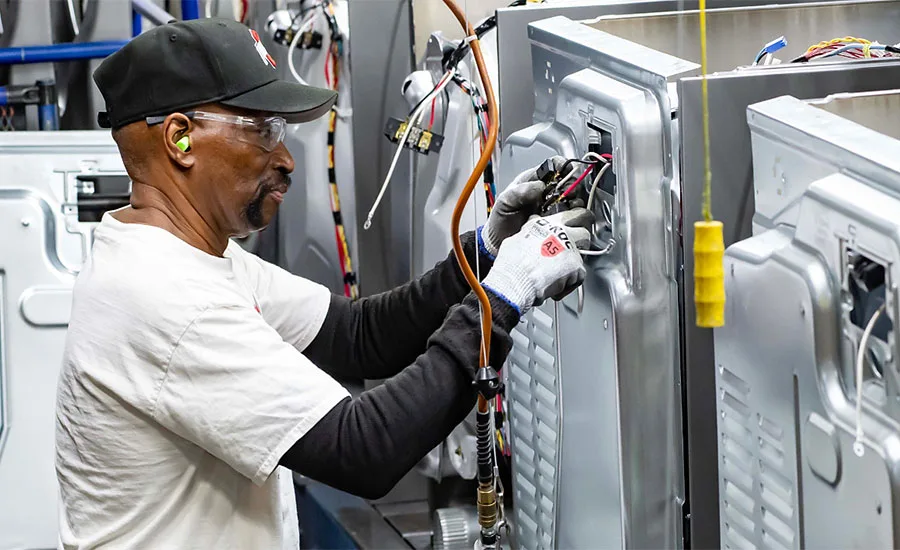
Industry 5.0 enables manufacturers to build systems that are more robust, adaptable and aligned with broader economic and societal needs.
As the Industry 5.0 era transforms manufacturing, academic curriculums and research initiatives must evolve to meet new challenges, demands and opportunities. The University of Michigan’s new Advanced Manufacturing Institute (UMAMI) is at the forefront of that change. It’s bridging the gap between basic research and real-world industrial deployment.
UMAMI brings together engineers, behavioral scientists and business experts to develop Industry 5.0 systems and technology. In addition to the school of engineering, it includes researchers from other departments, such as the Institute for Social Research, the Ross School of Business and the School for Environment and Sustainability.
“Industry 5.0 is generally viewed as a paradigm where advanced technologies such as AI and automation are integrated with human expertise, sustainability and resilience,” says Chinedum Okwudire, Ph.D., a mechanical engineering professor who also serves as director of UMAMI. “It emphasizes human-centered systems that augment workers rather than replace them, while prioritizing environmentally responsible and adaptable production.
“Industry 5.0 is best understood not as a new revolution in manufacturing, but as a necessary correction to Industry 4.0,” explains Okwudire. “While Industry 4.0 emphasized digitalization, automation and efficiency, it was largely silent on the human, sustainability and resilience dimensions of manufacturing.
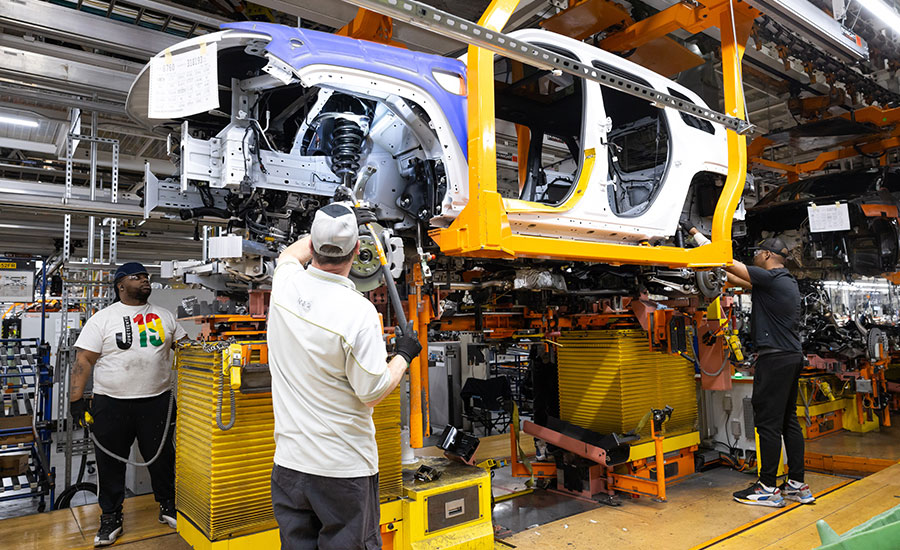
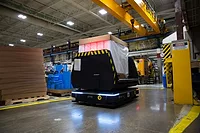
Industry 4.0 emphasizes digitalization, automation and efficiency, but it ignored the human, sustainability and resilience dimensions of manufacturing. Photo courtesy Stellantis
“Industry 5.0 brings these elements to the forefront, emphasizing systems that are not only technologically advanced but also human-centered, environmentally responsible and adaptable to disruption,” notes Okwudire. “Industry 5.0 is important, because manufacturers (and society at large) are realizing that technology alone is not sufficient for long-term success,” Okwudire points out. “Companies must also address workforce challenges, environmental pressures and supply chain disruptions.
“By incorporating human-centered design, sustainability and resilience into technological innovation, Industry 5.0 enables manufacturers to build systems that are more robust, adaptable and aligned with broader economic and societal needs,” claims Okwudire.
UMAMI builds on physical infrastructure and industry partnerships to transfer manufacturing innovations from the research lab to the factory floor. The goal is to bridge the “valley of death” that exists between research and industrial deployment in manufacturing.
Looking for quick answers on assembly and manufacturing topics? Try Ask ASM, our new smart AI search tool. Ask ASM
“In the context of manufacturing research and technology adoption, the ‘valley of death’ refers to the gap between basic research and real-world industrial deployment,” explains Okwudire. “Technologies often perform well in controlled lab settings, but fail to scale due to integration challenges, cost constraints and uncertainty around return on investment.
“In manufacturing, this gap is especially pronounced, because solutions must work reliably within complex, often high-volume production environments,” says Okwudire. UMAMI is addressing the valley of death by tightly coupling research with real-world manufacturing needs through a deliberately designed ecosystem.
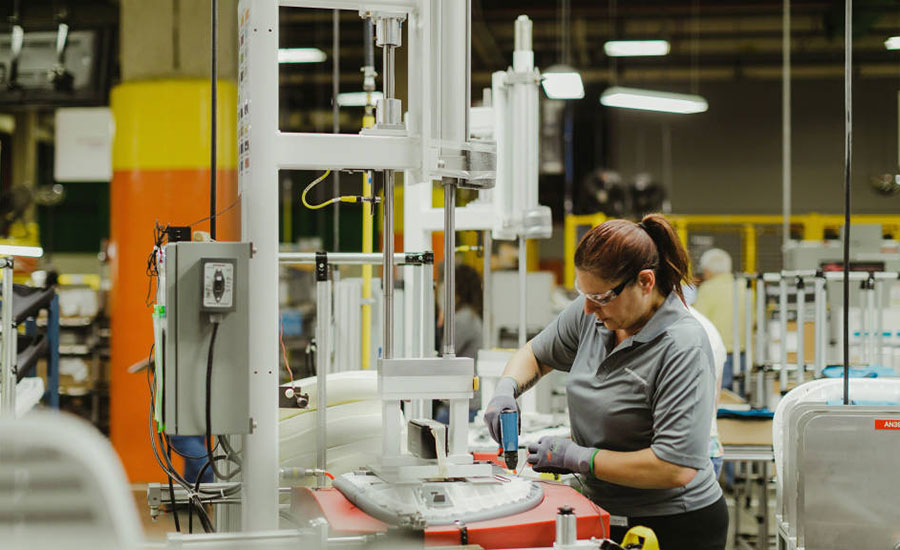
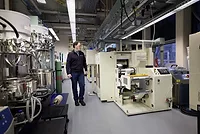
Industry 5.0 focuses on human-centered systems that augment workers rather than replace them, while prioritizing environmentally responsible and adaptable production. Photo courtesy Steelcase Inc.
“A central component is our Doctor of Engineering (DEng) program, which complements the traditional Ph.D. degree program,” notes Okwudire. “While Ph.D. students focus on advancing fundamental knowledge, DEng students focus on translating that knowledge into scalable industrial solutions. Success in the DEng program is measured not by publications, but by return on investment for the sponsoring companies, including prototypes, process improvements, patents and real-world deployment. “Complementing this is our manufacturing work-study program, specifically targeted at small- and medium-sized manufacturers, a segment that often lacks internal R&D capacity and is underserved by traditional university research models,” Okwudire points out. “Through industry-funded projects, undergraduate and master’s students contribute directly to applied R&D efforts, delivering measurable impact while gaining hands-on experience. “Together, these programs create a talent pipeline and a rapid feedback loop between discovery and application,” says Okwudire. “This ensures that innovations are developed, tested and refined in practical settings, while preparing students with the real-world experience needed to lead in modern manufacturing.”
The University of Michigan also recently invested more than $4 million to upgrade its state-of-the-art manufacturing lab. Renovations include additive manufacturing equipment and an open-concept design that encourages collaboration and learning.
“Some aspects of the space weren’t serving our needs as well as they used to,” explains Okwudire. “This new setup reflects where we are. The manufacturing faculty are very much into teamwork and collaboration, and this space will allow us to really highlight that mindset.”
Earlier this year, Okwudire and his colleagues were honored by the American Society of Mechanical Engineers for their next-generation educational efforts. They received the 2026 Donald N. Zwiep Innovation in Education Award for “transforming manufacturing education through multi-expert instruction, project-based learning, additive manufacturing and digitally enabled industry-integrated systems.”
“Modern manufacturing is multidisciplinary, digital and globally distributed,” says Okwudire. “Multi-expert instruction and inclusive hands-on learning better reflect how manufacturing actually works: through collaboration, iteration and real-world problem solving.”
“Our students are deeply interested in manufacturing, and many go on to careers in the sector,” adds Okwudire. “Our goal is to ensure they are well-equipped for a new era of manufacturing—one that is digital, interconnected and rapidly evolving—by providing them with the skills to innovate, adapt and lead in industry.”
Looking for a reprint of this article?
From high-res PDFs to custom plaques, order your copy today!