Assembly Magazine logo
search
Ask ASSEMBLY AI
cart
facebook twitter linkedin youtube
  • Sign In
  • Create Account
  • Sign Out
  • My Account
Assembly Magazine logo
  • TRENDS
    • Ask ASSEMBLY AI
    • Trends
    • News
    • New Products
  • INDUSTRIES
    • Aerospace
    • Appliance
    • DFMA Assembly
    • Medical Devices
    • Green Manufacturing
    • Lean Manufacturing
    • Machinery Assembly
    • Electronics Assembly
    • Automotive
  • TECHNOLOGIES
    • Adhesives & Dispensing
    • Assembly Presses
    • Automated Assembly Systems
    • Manufacturing Management
    • Manufacturing Software
    • Motion Control
    • Screwdriving & Riveting
    • Robotics
    • Test & Inspection
    • Plastics & Metal Welding
    • Wire Processing
    • Workstations
  • AUTONOMOUS & ELECTRIC MOBILITY
    • AEM Magazine Archives
    • Autonomy
    • Electrification
    • Mobility Services
    • Assembly & Testing
    • AV/EM News
  • MEDIA
    • Ask ASSEMBLY AI
    • Podcasts
    • Assembly News Now
    • Assembly TV
    • Webinars
    • eBooks
  • EVENTS
    • Calendar
    • The ASSEMBLY Show
  • MORE
    • Exclusives >
      • Plant of the Year
      • Capital Spending
    • Buyers Guide >
      • Supplier Insights
    • Classifieds
    • Featured Products
    • Newsletters
    • Store
    • White Papers
    • Columns
    • Sponsor Insights
  • INFOCENTER
    • Assembly & Test Solutions
  • EMAGAZINE
    • eMagazine
    • Archive Issues
    • Advertise
    • Contact Us
    • Sign Up
Columns

X-Y-Z: Pass the Pallet

By John Sprovieri
January 1, 2004

In asynchronous assembly systems, modular pallet-transfer conveyors get the right parts to the right spot, at the right time.

The most common pallet-transfer conveyor carries pallets on twin strands of belt or chain. Each strand rides in a track within an extruded aluminum profile. The profiles are separated by space, and only the edges of the pallet are supported. The strands provide just enough friction to move the pallet. But, if the pallet encounters a gate or another pallet, it stops and the strands slide freely beneath it.

The strands can be belts, roller chain or flat-top chain. Belts are made from static-dissipative rubber, and generate the most friction for moving pallets. They are used when pallets must be positioned precisely. With thick belts made from low-durometer rubber, the product may be able to ride directly on the conveyor, without a pallet. One drawback of belts is that they are more difficult to repair or resize than roller chain or flat-top chain.

As its name implies, roller chain consists of steel and plastic rollers linked together in a chain. Roller chain can carry heavy loads with minimal chain tension and power consumption. "With roller chain, starts and stops have a low impact," explains Kevin D. Gingerich, marketing services manager for Bosch Rexroth Corp. Linear Motion and Assembly Technologies (Buchanan, MI). "The chain moves forward, but the rollers can spin. So, pallets accelerate slowly after stopping, which is good if you have a sensitive product or a heavy product, and you don't want to jerk it too much on the conveyor."

Flat-top chain is a roller chain topped with flat caps of low-friction plastic or steel. Because it can flex from side to side, flat-top chain is used for carousel and serpentine layouts. An advantage of both roller chain and flat-top chain is that individual links can be removed for easy repair or resizing.

Pallet-transfer conveyors are available for handling products as small as cosmetics cases or as large as kitchen appliances. The conveyors can be arranged in many ways: side-by-side, rectangular, carousel, serpentine or even one atop the other.

"Because the conveyors are built with extruded aluminum framing, they are like tracks for a model train," says Gingerich. "You can easily add new sections."

Looking for quick answers on assembly and manufacturing topics? Try Ask ASM, our new smart AI search tool. Ask ASM →

Many options are available for moving pallets from one conveyor to another, says Joe McCollum, senior technical specialist with Siemens Dematic Material Handling Automation Div. (Grand Rapids, MI). Transfer modules lift and shift pallets from one conveyor directly across to another. They can be used at the end of a line or in the middle of one. Elevator modules are used in over-and-under conveyor setups, or to transfer pallets to another level of the factory. Curved modules or turntables transfer pallets between parallel conveyor sections.

There are also many options for stopping pallets. Cushioned stops bring pallets to a gentle halt. Lift-and-tilt and lift-and-rotate modules facilitate manual assembly operations. Lift-and-locate units raise pallets off the conveyor for automated processes. Dowel pins in the stops engage holes in the pallet for precise positioning. If the process exerts downward force on the pallet, such as a pressing operation, cams can be used to lift the pallets instead of pneumatic cylinders.

Hold-down rails can be attached to the sides of the tracks to prevent pallets from tipping, says Richard A. Shore, president of Automation and Modular Components Inc. (Auburn Hills, MI). These rails are used at stations where screwdriving or other operations might tilt the pallet. Another way to provide additional locating accuracy is with guide rails. Located below the conveyor track, the rails match corresponding slots underneath the pallet. The rails are tall enough to slide into the slots and stabilize the pallet, but not so tall that they lift the pallet off the strands.

Share This Story

Looking for a reprint of this article?
From high-res PDFs to custom plaques, order your copy today!

John has been with ASSEMBLY magazine since February 1997. John was formerly with a national medical news magazine, and has written for Pathology Today and the Green Bay Press-Gazette. John holds a B.A. in journalism from Northwestern University, Medill School of Journalism.

Recommended Content

JOIN TODAY
To unlock your recommendations.

Already have an account? Sign In

  • Made in the U.S.A.

    Consumer Products Manufacturing: Made in the USA

    Supply chain lessons learned during the coronavirus...
    Automated Assembly Systems
    By: Austin Weber
  • Best Practices for Press-Fit Assembly

    Best Practices for Press-Fit Assembly

    In manufacturing, ironclad formulas for success are hard...
    Assembly Presses
    By: Jim Camillo
  • aem0523leader-tesla1.jpg

    Tesla Rethinks the Assembly Line

    Engineers at Tesla Inc. have developed a new process that...
    Assembly and Testing
    By: Austin Weber
Manage My Account
  • eMagazine Subscription
  • Assembly Newsletters
  • Online Registration
  • Subscription Customer Service
  • Manage My Preferences

More Videos

Sponsored Content

Sponsored Content is a special paid section where industry companies provide high quality, objective, non-commercial content around topics of interest to the ASSEMBLY audience. All Sponsored Content is supplied by the advertising company and any opinions expressed in this article are those of the author and not necessarily reflect the views of ASSEMBLY or its parent company, BNP Media. Interested in participating in our Sponsored Content section? Contact your local rep!

close
  • ultrasonic welding
    Sponsored bySonobond Ultrasonics

    Engineering Efficiency in High-Performance Assembly: How Ultrasonic Welding Enhances Throughput, Reliability and Quality

  • UV curing system
    Sponsored byDymax

    Why UV Intensity Alone Doesn’t Define Curing Performance

  • wooden pallets
    Sponsored byLEAN Manufacturing Products

    Eliminating Waste on the Shop Floor: Applying Lean Principles to Improve Manufacturing Efficiency

Popular Stories

Ferrari

Ferrari Unveils Four-Door EV

ASSEMBLY News Now, episode-30: Volvo Redesigns EV Manufacturing

Volvo Redesigns EV Manufacturing

workstation

Knife Maker Redesigns Assembly Line

Watch the latest episode of ANN now!

Events

July 24, 2025

From Shop Floor to CFO: How Manufacturers Are Closing the Loop Between Operations and Finance

On Demand Learn how manufacturers are bridging the gap between the shop floor and ERP systems to gain real-time visibility, streamline operations, and kick-start digital transformation—without waiting years.

Sponsored by:

PicoStratusGreen
July 30, 2025

Buffer Analysis and Design Fundamentals for Manufacturing Excellence

On Demand In this presentation, Dr. Herman Tang shares practical insights from his industry experience and research on buffer management in manufacturing operations.

View All Submit An Event

Poll

Difficult Assembly Processes

Which assembly process gives you the most difficulty?
View Results Poll Archive

Products

Manufacturing Cost Policy Deployment (MCPD) Profitability Scenarios: Systematic and Systemic Improvement of Manufacturing Costs

Manufacturing Cost Policy Deployment (MCPD) Profitability Scenarios: Systematic and Systemic Improvement of Manufacturing Costs

See More Products
ebook

Related Articles

  • Editorial: Pass the Buck

    See More
  • X-Y-Z: Encoders Read the Line

    See More
  • X-Y-Z: Clearing the Air About FRLs

    See More

Related Products

See More Products
  • foreman.jpg

    The Foreman on the Assembly Line

  • history.jpg

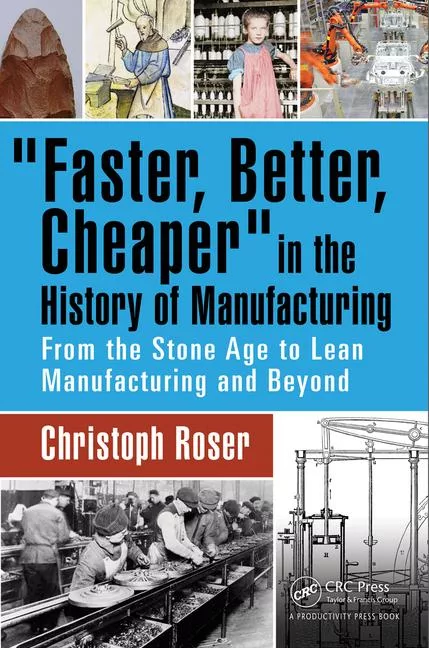
    Faster, Better, Cheaper in the History of Manufacturing: From the Stone Age to Lean Manufacturing and Beyond

  • digitalization.jpg

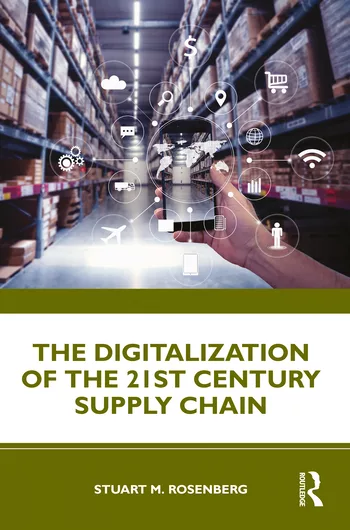
    The Digitalization of the 21st Century Supply Chain

See More Products

Related Directories

  • XenomatiX

  • UnitX

×

Never miss the latest news and trends driving the manufacturing industry

Stay in the know on the latest assembly trends.

JOIN TODAY!
  • RESOURCES
    • Advertise
    • Contact Us
    • Directories
    • Manufacturing Division
    • Store
    • Want More?
  • SIGN UP TODAY
    • Create Account
    • eMagazine
    • Newsletters
    • Customer Service
    • Manage Preferences
  • SERVICES
    • Marketing Services
    • Reprints
    • Market Research
    • List Rental
    • Survey/Respondent Access
  • STAY CONNECTED
    • LinkedIn
    • Facebook
    • Instagram
    • YouTube
    • X (Twitter)
  • PRIVACY
    • PRIVACY POLICY
    • TERMS & CONDITIONS
    • DO NOT SELL MY PERSONAL INFORMATION
    • PRIVACY REQUEST
    • ACCESSIBILITY

Copyright ©2026. All Rights Reserved BNP Media, Inc. and BNP Media II, LLC.

Design, CMS, Hosting & Web Development :: ePublishing